
What actually is AnythingLLM?
AnythingLLM is an all-in-one tool for building AI chatbots on your own data, no code, no vector databases, no manual server configuration. You upload documents, connect a language model of your choice, and get a chatbot that answers based on your own data, instead of whatever some provider scraped off the internet.
How AnythingLLM probably got started
My guess is the problem at the start was pretty concrete and pretty mundane: companies and individual users wanted ChatGPT-style answers, but on their own documents.
For developers in early 2023, actually building that was a nightmare. You had to understand LangChain, set up a vector database, generate embeddings, wire the whole thing up to an LLM, and then build an interface on top. Doable, but a hassle. For everyone else, it was simply out of reach.
That's exactly where AnythingLLM comes in: a tool that packs document upload, chunking, embedding, LLM connection, and chat into a single app. A Docker container, a few clicks, done. This isn't a new concept, RAG as a principle was already well known. But the packaging was new, and packaging is often the entire difference in micro-SaaS.
If you're looking for an idea yourself where the technology already exists and only the packaging is missing, it's worth checking out our article on finding a SaaS idea in 2026, this exact pattern shows up there again and again.
The wedge: open source as a distribution channel
AnythingLLM's wedge isn't a clever feature, it's the decision to make the product fully open source while simultaneously building a paid offering on top. This is the same principle you see from companies like GitLab or Sentry: the core product is free and self-hostable, and the money comes from people who don't want to deal with self-hosting.
For a RAG tool, this is especially clever for a simple reason: many users don't want their documents in the cloud at all, for privacy reasons. Lawyers, doctors, companies with sensitive data, they want to stay local. A tool that supports self-hosting from day one speaks directly to this segment, which pure cloud providers exclude by default.
At the same time, there's the other half of the market: people who don't want to manage a server and would rather pay for a hosted version. AnythingLLM serves both sides with a single product. That's the real trick.
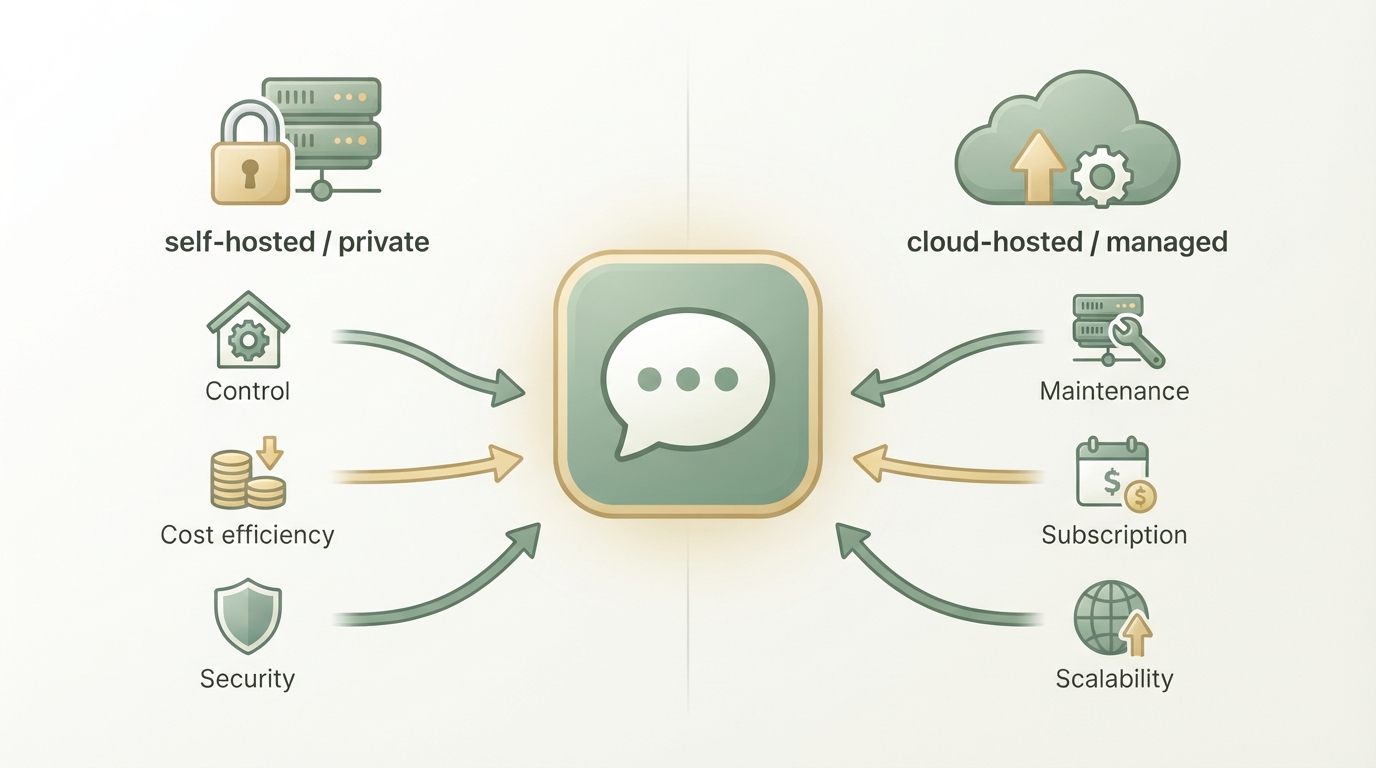
Looking at a lot of successful micro-SaaS tools, I keep seeing the same pattern: they don't solve one problem, they solve two opposing needs with the same codebase. That costs more effort up front, but it pays off, because you're addressing two customer groups at once whose requirements actually contradict each other.
Why open source isn't a contradiction to the business model here
A lot of founders think open source and revenue are mutually exclusive. That's not true, if you keep the roles cleanly separated. The code is free because it's distribution, every star on GitHub, every mention in a Reddit thread, every fork of the repo is essentially free advertising. What you pay for is whatever saves time: hosting, support, easier management of multiple users.
This lines up with a concept Rob Walling often describes in the context of bootstrapping: you don't need a huge ad budget if your product becomes the distribution itself. With AnythingLLM, GitHub takes over part of the job a marketing team would otherwise have to do.
The business model in detail
AnythingLLM runs a classic freemium model with one twist: the free version isn't stripped down, it's fully functional, as long as you host it yourself. You pay for convenience, not for features.
| Tier | What you get | Who it's for |
|---|---|---|
| Self-hosted (free) | Full functionality, your own infrastructure, connect your own LLM | Developers, companies with privacy requirements |
| Cloud-hosted (paid) | No server management, onboarding, probably team features | Non-technical users, small teams |
The cloud features and pricing structure are based on observed SaaS practice at comparable tools, not on official information from AnythingLLM.
The exact pricing structure of the cloud version wasn't publicly available at the time of our research. I've personally seen this pattern often with micro-SaaS providers: they deliberately hide the price behind a "contact us" or an onboarding flow, so they can keep it flexible depending on usage size. That can work, but it makes self-service harder, which potentially leaves revenue on the table.
The numbers (estimates from public sources)
Important disclaimer up front: all the following numbers are estimates from publicly available traffic and market tools like Similarweb. As far as we know, AnythingLLM doesn't publish official revenue figures. Take these numbers as a rough orientation, not verified facts.
According to Similarweb's estimate, AnythingLLM's traffic sits between 600,000 and 750,000 monthly website visits. The estimated MRR falls somewhere in the range of roughly $350,000 to $400,000. Measured as traffic-to-revenue, that's a pretty solid conversion rate for a tool with a free self-hosted option, where most users presumably never pay.
What this ratio shows: you don't need millions of visitors to run a solid micro-SaaS. You need the right visitors, people with a real, urgent problem, for which a paid solution saves time. For AnythingLLM, that's likely companies and teams who tried the free version, then realized: managing your own server also costs time, and time is more expensive than the monthly fee.
If you're curious how other micro-SaaS tools perform at a similar scale, you'll find more benchmarks in our article 10 Micro-SaaS Examples with Estimated Revenue 2026.
What AnythingLLM actually does technically (and why that matters to you)
The feature set is kept lean at its core, but exactly right for the target audience. Five building blocks make up the product:
- No-code workflow builder for AI processes
- Connection to multiple LLM providers (not just OpenAI)
- Document and knowledge base ingestion
- Chatbot deployment, embeddable on websites
- Self-hosted AND cloud options in parallel
The multi-LLM support is particularly notable. Instead of locking you into one provider, you can switch between OpenAI, Anthropic, local models, and others. That's strategically smart, because it future-proofs the tool. If an LLM provider raises prices or a better model comes out, you as a user can simply switch, without leaving AnythingLLM. The product locks you into itself, not into any single underlying model.
The transferable lesson for solo founders
What can you actually steal from AnythingLLM's playbook, without needing the infrastructure of a full-time team? Three things, concretely.
First: solve two opposing needs with one codebase. Instead of choosing between "simple for beginners" and "powerful for pros," you can offer both, if you design the architecture with that in mind from the start. It's more work to build, but it potentially doubles your addressable audience.
Second: use open source or a generous free tier as a distribution channel, not a cost center. You don't have to go fully open source like AnythingLLM. But a genuinely usable free tier that people voluntarily share replaces part of your marketing budget. People recommend things that actually helped them, not things they only got to try after entering a credit card.
Third: build on an existing but inconvenient trend. RAG as a technique existed before AnythingLLM. The real contribution was turning a complicated pipeline into a usable product. If you're mulling over your own idea right now, don't look for something completely new, look for something that already works technically but is still far too complicated for regular users.

If you don't want to get technically deep yourself, that doesn't mean a tool like this is out of reach for you. There are plenty of AI-powered builder kits by now that let you put together an MVP even without a developer background. More on that in our guide Starting a SaaS Without Coding.
How hard would it be to build something like this yourself?
Realistically: moderately hard, but doable in a manageable timeframe. The core components (document chunking, embeddings, vector search, LLM connection) are all available today as ready-made libraries or APIs, you don't have to build them from scratch.
If you have a clear feature scope and the right building blocks, an MVP for a similar but more narrowly focused tool can often be up in 4 to 8 weeks. That's not a guarantee, just a rough benchmark, it depends heavily on how much you code yourself and how tightly you scope the feature set. The biggest mistake would be trying to rebuild the whole of AnythingLLM right away. A tight niche is usually far more promising: for example, RAG just for tax advisors, just for law firms, or just for one specific type of document.
That lines up with what we describe in Micro-SaaS Ideas 2026: 4 Patterns That Already Work: tailoring an existing pattern to a narrower, more concrete target audience almost always beats trying to build for "everyone" right away.
Building an AnythingLLM alternative: where would you start?
If you want to build an AnythingLLM alternative, you don't need to replicate the entire feature set. Ask yourself instead: which industry has an acute problem with "search my documents and get answers," for which no specialized solution exists yet? The generic version already exists, and it's good, even. The specialized version for a specific niche is almost always still missing.
The competitive analysis method for this is simple: look at public reviews of existing RAG tools, especially the 1- and 2-star ones. What are people missing? Usually it's setup complexity, lack of industry-specific integration, or privacy concerns for certain professions. That's exactly where your potential wedge lies.
Frequently asked
What is AnythingLLM?
AnythingLLM is an all-in-one tool that lets you build AI chatbots and workflows without coding. You upload documents, connect a language model of your choice, and get a chatbot that answers based on your own data. The tool handles the vector database, embeddings, and server setup for you.
Is AnythingLLM free?
Yes, the self-hosted version of AnythingLLM is completely free and fully functional, you just need to provide your own infrastructure. You only pay for the cloud-hosted version, where you don't have to worry about servers. The exact pricing for that wasn't publicly available at the time of our research.
How much revenue does AnythingLLM make?
According to estimated figures from public traffic and market tools, AnythingLLM's MRR is around $377,000, with roughly 680,000 monthly website visits. AnythingLLM doesn't publish official numbers, so these are rough estimates, not verified facts.
Which AI models does AnythingLLM support?
AnythingLLM connects to multiple LLM providers at once, including OpenAI, Anthropic, and also local models. This means you're not locked into a single provider and can switch if prices or model quality change. This multi-LLM support future-proofs the tool, because it locks you into itself, not into any single underlying model.
Written by
Bohdan BernatekFounder, Starte.ai
Founder of Starte.ai. Built a business to 125,000+ organic leads and seven-figure revenue — and now works with founders personally, deriving a strategy for their own brand from data across thousands of real projects and producing the creatives for it.