Building a Sales Funnel: What a Sales Funnel Actually Is
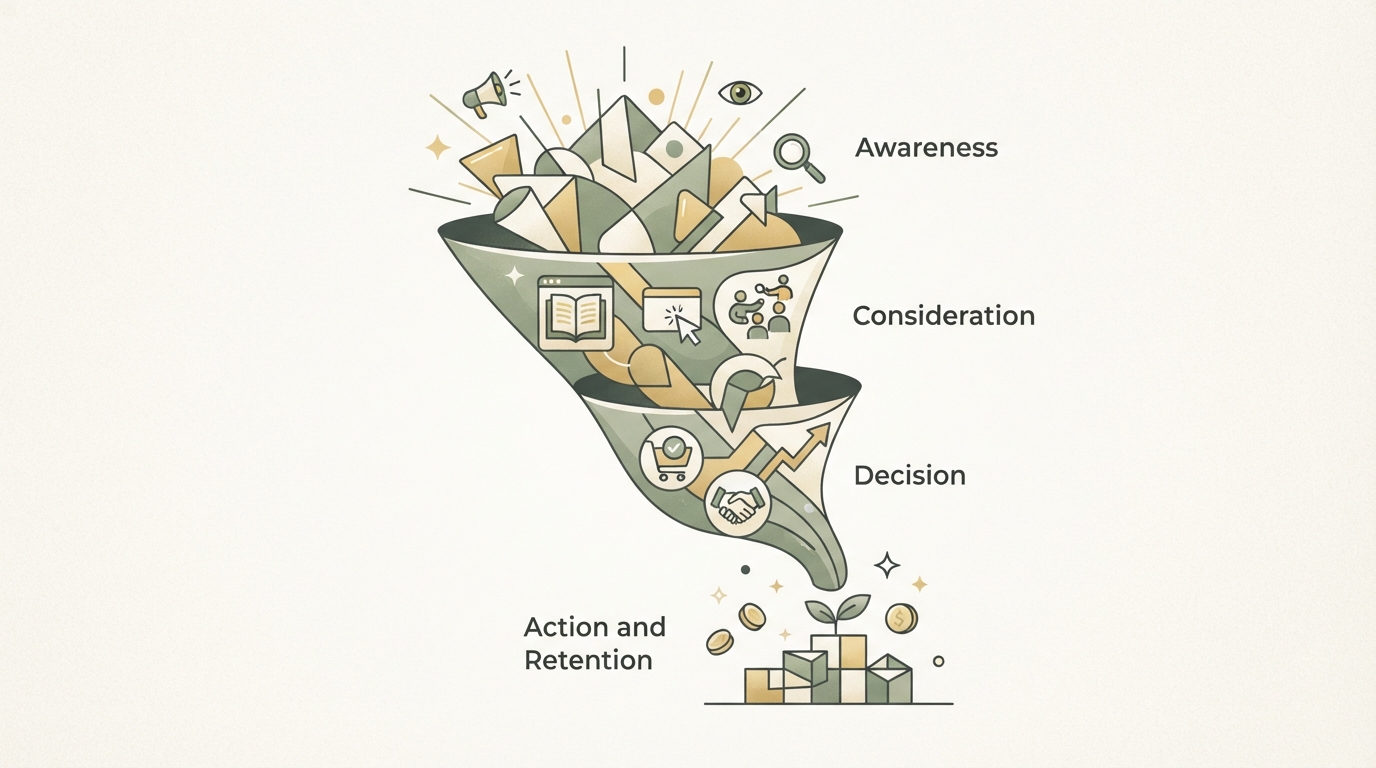
A sales funnel is the ordered sequence of steps that turns a stranger into a paying customer. Nothing magical about it. Each step has exactly one job: get the person ready for the next step — not for the purchase itself.
Sounds simple. It isn't, in practice. Most founders end up building a kind of general store instead: a homepage, three product pages, a blog, a contact form, a pop-up — and hope something in there converts.
Spoiler: almost nothing does.
A real funnel is narrow, focused, and built for exactly one target person. If you want to build a sales funnel, this is where you start — not with the tech. More on that in a moment.
The Rule of 1: One Person, One Offer, One Action
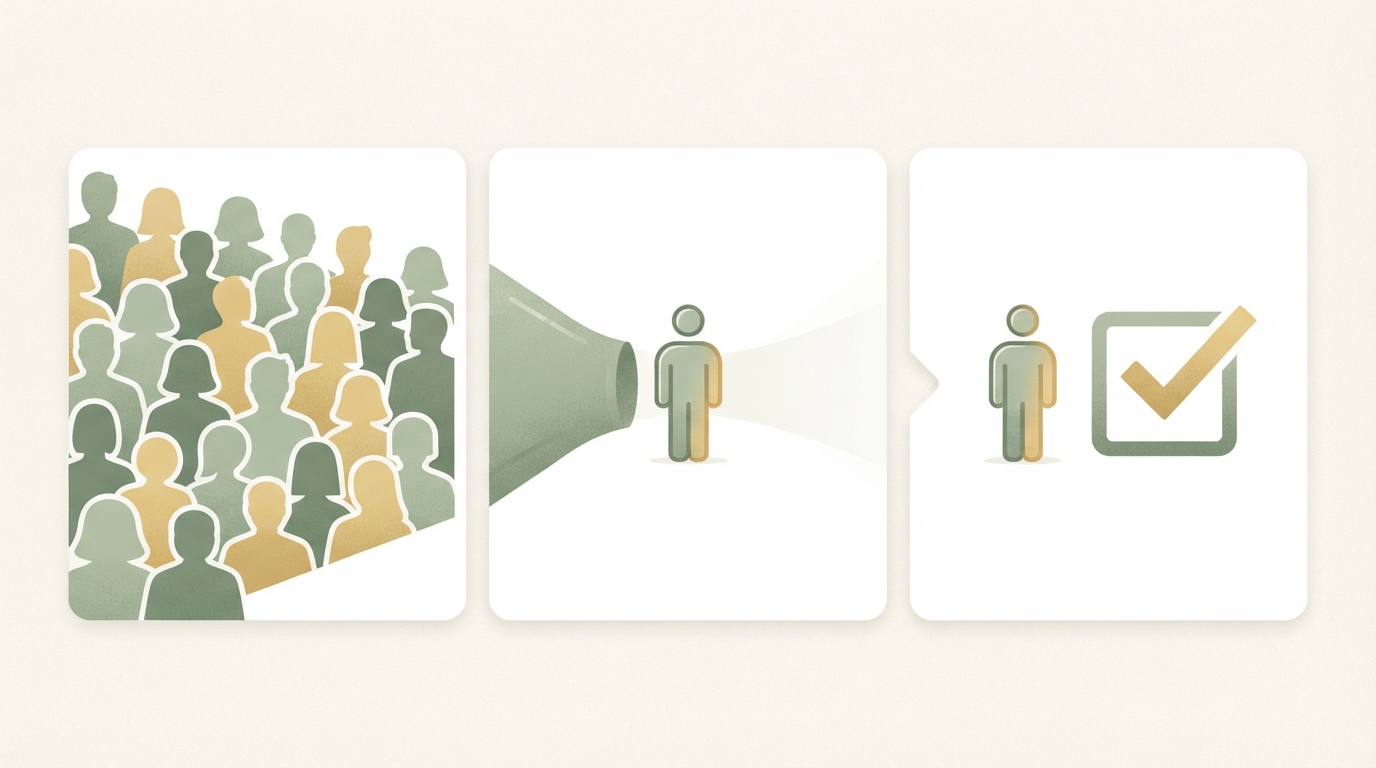
The Rule of 1 says: every page in your funnel speaks to exactly one person, contains exactly one offer, and asks for exactly one action. Not two, not "or." One.
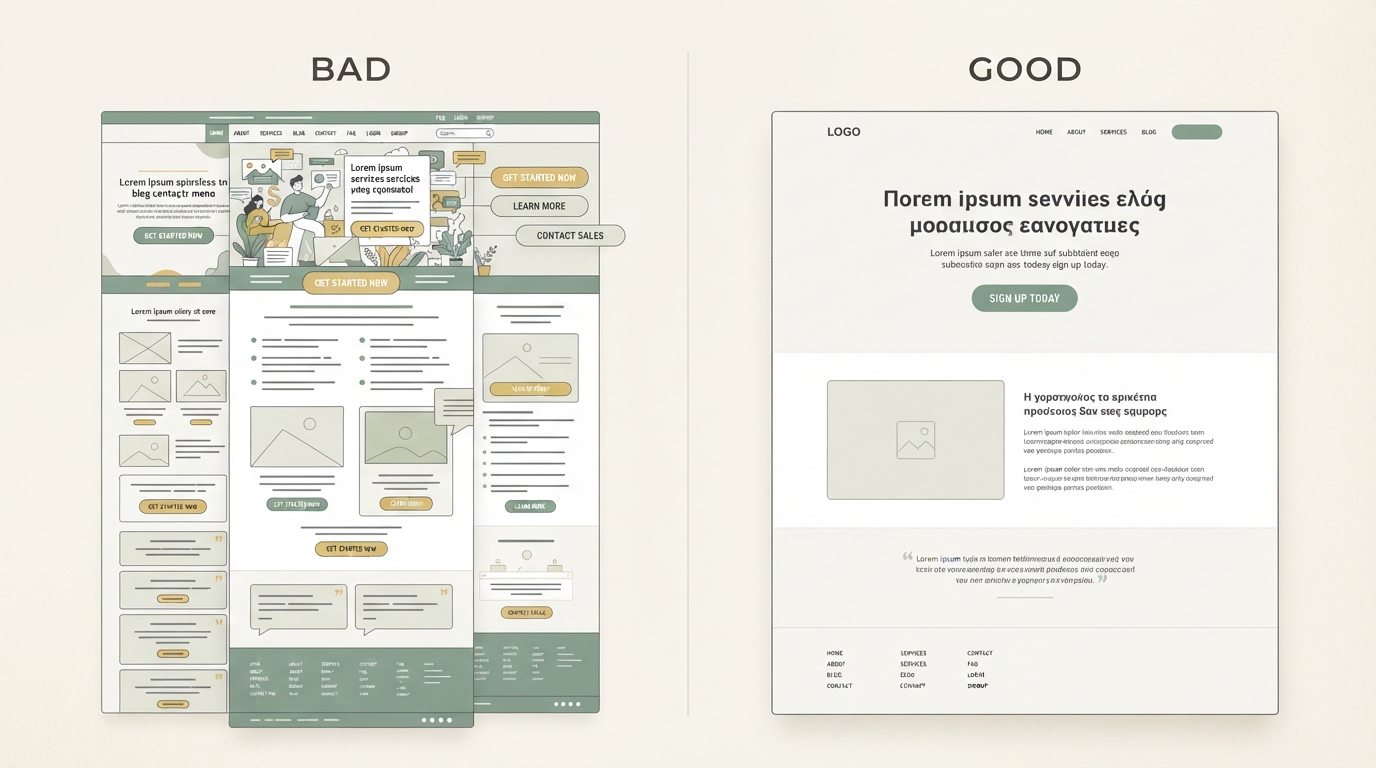
That's the opposite of what most people do. I got this wrong myself early on: a landing page with three packages, two CTAs, a newsletter opt-in, and a live chat box. Conversion rate: under one percent.
Why is the Rule of 1 so powerful? Because decision paralysis is real. The more options someone has, the more likely they pick none at all. That's classic sales psychology — if you want to go deeper, Sales Psychology for Founders is a good place to start.
Who Are You Even Talking To?
Before you build a single page, answer this one question: who is the one person I'm speaking to?
Not "freelancers aged 25 to 45." Instead: a freelance copywriter in Germany who just lost their biggest client and is wondering whether they should automate their client-acquisition process.
The more specific you get about this person, the sharper every word in your funnel becomes. And the better it converts.
Step 1: Define the Offer Clearly
Building the funnel doesn't start with the tech. It starts with the offer.
What does the person actually get? Not "better results" or "more time." Instead: a 14-day trial, no credit card required, that solves problem X in Y minutes.
Three questions to answer before you build anything:
- What's the specific problem you solve?
- Why is your approach the obvious choice?
- What happens immediately after the click?
If you can't answer question three in one sentence, your offer isn't ready yet.
Step 2: Choosing Your Channel — Where Do I Find This One Person?
A funnel needs traffic. Where it comes from depends on where your target person actually spends time — not where you'd rather post.
For most early-stage SaaS projects, there are two honest options: organic content (TikTok, LinkedIn, Reddit, SEO) or paid ads (Meta, Google). Both work. Both take time. Neither works if you spread yourself across five platforms at once.
Pick a maximum of two channels and stick with them for 60 days before judging results. That's not an opinion — that's experience talking.
Organic traffic has one interesting quirk: carousel posts and genuine free-value content — not coaching-guru posturing, but actually useful information — often convert better than ads, because there's no sales pressure in the air. For more on what organic growth can actually look like, check out the post on scaling ad campaigns.
Step 3: The Landing Page — The Heart of the Funnel
The landing page is where your traffic lands and either converts or bounces. Usually, it bounces.
The most common reason: lack of message match.
Message Match — The Term You Should Never Forget
Message match means: what the person sees in the ad has to exactly mirror what they find on the landing page. Same message, same tone, same visual language, same promise.
Sounds obvious. Isn't. Typical scenario: the ad promises "automate your invoicing in 10 minutes," and the landing page talks about "smart accounting solutions for modern teams." The person can't immediately tell if they're in the right place — and clicks away.
Every break between ad and landing page costs you conversions. Not sometimes. Always.
The fix is simple: write your landing page's first headline as a direct continuation of the ad. Not as a new thought.
What a Good Landing Page Needs
A lean landing page for an early funnel needs:
| Element | Job |
|---|---|
| Headline | Name the one concrete transformation |
| Subheadline | "Who" and "how" in one sentence |
| Problem statement | 2–3 sentences: I know your pain |
| Solution / benefit list | What happens after purchase / opt-in |
| Social proof | One real quote from a real user |
| Single CTA | One button, one action |
No menu. No distractions. No link to an About page.
Step 4: The Opt-In or the Direct Conversion
Now the question: should the funnel sell directly, or collect an email address first?
Both have their place. Simple rule: the higher the price, the more warm-up the funnel needs.
For a SaaS under €50/month, a well-made landing page can lead straight to a trial signup. For an offer over €500, you usually need an intermediate step: a lead magnet, a video sales letter (VSL), or a demo booking.
The VSL approach is especially underrated: a 5–10 minute video on the landing page that names the problem, shows the solution, and then leads to the CTA can do a huge chunk of the qualifying for you — without you having to call every single lead yourself.
Step 5: The Thank-You Page and the First Follow-Up
Many founders treat the thank-you page as a formality. That's wasted potential.
The person who just entered their email or completed a purchase is more attentive right now than at almost any other point. Use it.
On the thank-you page, you can:
- show the next logical step (start onboarding, watch a tutorial)
- offer an upsell or cross-sell — softly, not aggressively
- set expectations for what happens next
And then: a simple welcome email within 15 minutes. Not an hour later. Not tomorrow. Responding right away makes you look professional and reduces refund/cancellation rates.
Step 6: Measure What Actually Matters
A funnel without numbers is guesswork. But you don't need 40 metrics — three are enough to start.
Landing page conversion rate (target: above 10% on cold traffic, above 20% on warm), cost per lead (what does a genuine lead actually cost?), and lead-to-paying-customer conversion rate (how many opt-ins actually buy?).
If you know these three numbers and change one variable each week, you'll improve your funnel faster than someone who rebuilds everything at once. The article on SaaS metrics does a great job explaining the numbers that really matter.
One common measurement mistake I see in ad analysis: founders watch clicks, but not what happens after the click. If you want to build a funnel that actually scales, you have to keep an eye on both sides.
Where Many Founders Get Stuck
I've seen this play out in a lot of projects: the funnel is built, traffic is coming in, but conversions don't follow. Then the guessing game begins.
Usually it comes down to one of three things:
- The offer is unclear — too abstract, too broad, trying to serve too many people at once
- Message match is missing — the ad and the landing page talk past each other
- Trust is missing — the person doesn't believe the promise because they see no proof
Point three is solved with social proof: real quotes, screenshots, concrete results from other users. Not stock-photo testimonials. If you're just starting out and don't have customers yet, be honest about it — "Early access, help us improve the product" is more honest and often converts better than inflated promises.
By the way, a common early mistake is also covered in 5 mistakes at SaaS launch — it's not just about the funnel, but the context helps.
Comparing Funnel Types
Not every funnel looks the same. Here's an overview of which type fits which goal:
| Funnel type | Best for | Typical conversion rate |
|---|---|---|
| Lead magnet funnel | Building an email list, low-ticket entry | 15–35% (opt-in, estimate) |
| Demo booking funnel | B2B SaaS, higher price points | 3–8% (booking, estimate) |
| Direct trial funnel | SaaS under €50/month, clear value | 5–15% (trial, estimate) |
| VSL funnel | Products that need explaining | 8–20% (lead, estimate) |
All figures are rough benchmarks — actual numbers depend heavily on the channel, audience, and offer.
What Starte.ai Can Actually Do Here
This is exactly the point where things often stall — the funnel is conceptually solid, but execution gets stuck — and it's where we get hands-on at Starte.ai. We work through the strategy together, create the creatives (images, hooks, scripts), and run them across organic channels. We draw on data from more than 350 projects we've built, not theory. If you want to build your first sales funnel and test it, you can start for free and then decide how much support makes sense.
For early-stage SaaS projects, a three-step funnel is often enough: ad or content → landing page → thank-you page with a next step. More steps only make sense if the price or the complexity of the product requires them.
That depends heavily on execution. Technically, you can build a simple funnel with standard tools for under €50/month. The real cost comes from traffic — whether that's organic (time) or paid (budget).
A rough guideline: at least 200–500 visitors to the landing page before you can draw reliable conclusions about conversion rate. With less data, the swings are too big to make real decisions from.
No. With no-code tools, you can set up a solid funnel without writing a single line of code. What you need: a clear offer, a defined target person, and the discipline not to build everything at once. The article on the best no-code tool for SaaS in 2026 covers which tools are a good fit.
A funnel that converts usually isn't the most complex one — it's the clearest one. One person, one offer, one action. Start there, measure the three most important numbers, and only then build more.
Frequently asked
What is the Rule of 1 for building a sales funnel?
The Rule of 1 means every page in your funnel speaks to exactly one person, contains exactly one offer, and asks for exactly one action. More options lead to decision paralysis — and the person ends up choosing nothing at all. Packing multiple CTAs, packages, or opt-ins onto one page almost always lowers your conversion rate.
Why isn't my landing page converting?
The most common reason is a lack of message match between the ad and the landing page: what the person sees in the ad doesn't line up with what they find on the page. Any break in message, tone, or promise costs you conversions — not sometimes, always. That's why your landing page's first headline should be a direct continuation of the ad, not a new idea.
Should I collect emails first or sell directly in my funnel?
This mainly depends on price: for a SaaS under €50/month, a good landing page can lead straight to a trial signup. For offers over €500, you usually need an intermediate step like a lead magnet, a short video (VSL), or a demo booking. The higher the price, the more trust the funnel needs to build beforehand.
What three metrics do I need to improve my funnel?
To start, three metrics are enough: the landing page's conversion rate (aim for above 10% on cold traffic), the cost per lead, and the lead-to-paying-customer conversion rate. If you track these three numbers and change one variable each week, you'll improve your funnel much faster than someone who overhauls everything at once.
Written by
Bohdan BernatekFounder, Starte.ai
Founder of Starte.ai. Built a business to 125,000+ organic leads and seven-figure revenue — and now works with founders personally, deriving a strategy for their own brand from data across thousands of real projects and producing the creatives for it.