Building an affiliate program: the short version
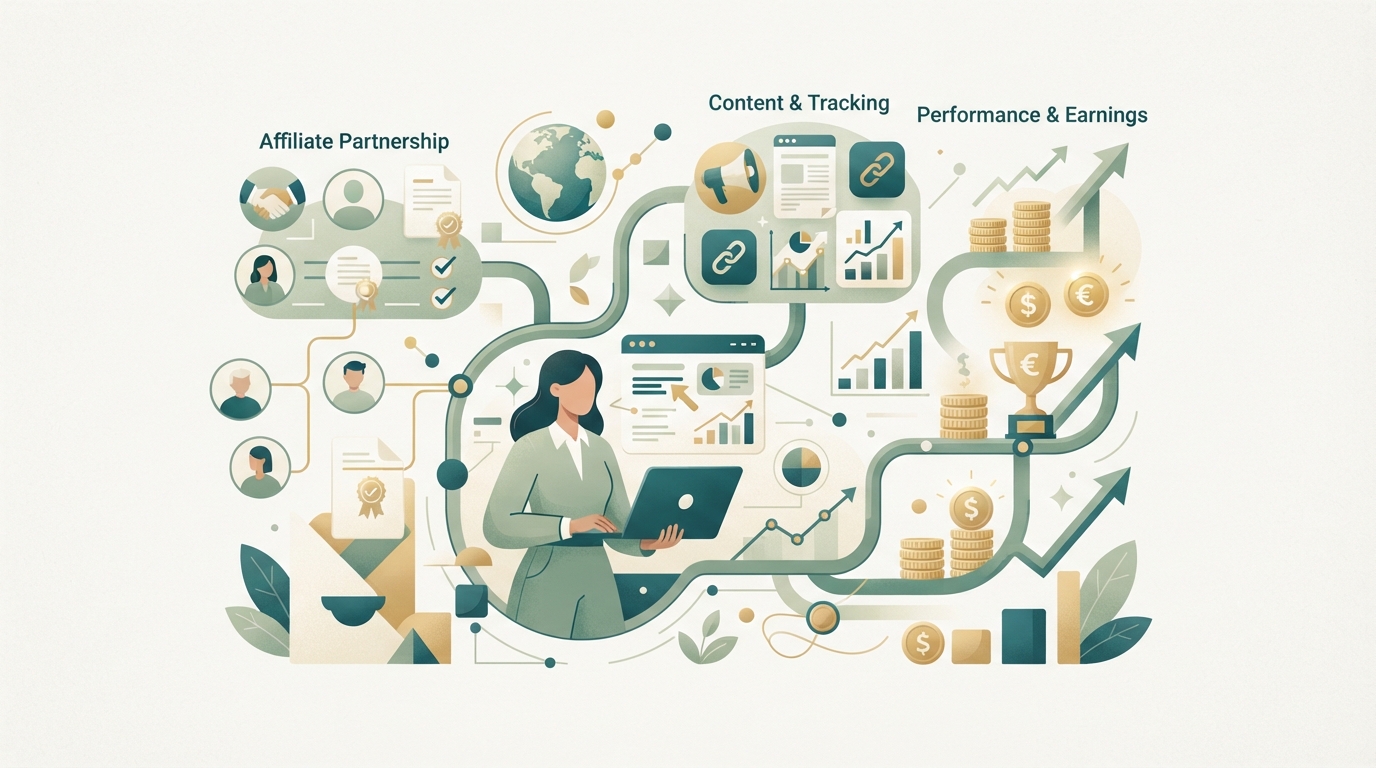
Building an affiliate program means setting a fair commission, adding a holding period against refunds and fake sales, and actively activating your partners instead of just letting them sign up and hoping for the best. Most programs don't fail because of the software. They fail because nobody looks after the partners once they've joined.
I've seen this happen on multiple projects: a tool gets set up, 50 people sign up, and then nothing happens for months. Not a single sale. It's almost never about the niche. It's that "building a program" and "getting partners to register" are two completely different things.
What an affiliate program actually is
An affiliate program is an arrangement where outside partners promote your SaaS in exchange for a commission, tracked through a unique link. Sounds simple, and at its core, it is. A partner brings in a paying customer, you pay them a share of the revenue, either as a one-time payment or recurring over several months.
The difference from traditional advertising: you only pay for results, not for reach. That's what makes affiliate marketing so appealing for small SaaS teams — no budget gets burned if nothing converts. But it also means partners who don't deliver results cost you nothing except time. And that time is exactly what gets underestimated most.
Related, but not quite the same thing: launching a partner program is often used interchangeably, but in practice it usually refers to a broader kind of collaboration — with agencies or reseller partners, for example, who do more than just share links. For most micro-SaaS, a classic affiliate setup is more than enough.
Step 1: Set your commission before you build anything
The commission determines whether the program is even worth it for partners, so figure this out before you pick a tool or build a landing page. For subscription-based SaaS, recurring commissions are common — usually somewhere between 15 and 30 percent of monthly revenue, for a limited period of 6 to 24 months. For one-time purchases, you'll often see 20 to 40 percent as a single payout.
More important than the exact number is this question: would a partner with 5,000 followers see this amount as worth the effort of writing a post? If the answer's no, nobody's going to bother, no matter how good your tracking is.
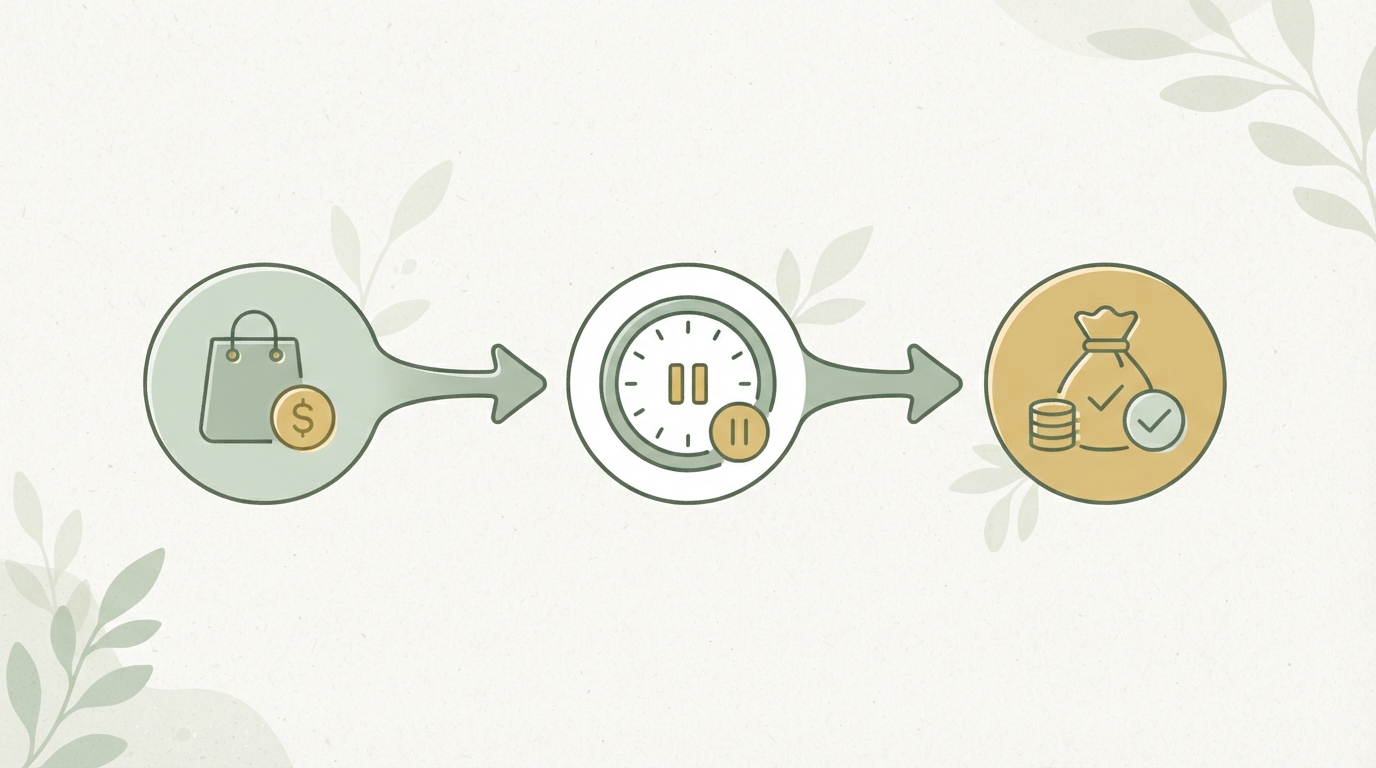
One thing a lot of people forget: the holding period. That's the time that has to pass before a commission actually gets paid out, typically 30 to 60 days. The reason is simple: customers cancel, payments fail, some people just try the product briefly and quit. Without a holding period, you end up paying commissions for customers who don't even exist anymore. For a young program, that can quietly turn into a real loss you don't notice until months later.
Step 2: Set up clean tracking
Clean tracking means every click and every conversion can be clearly attributed to a specific partner, even across multiple devices and browsers. The classic method is a cookie with an attribution window, often 30 to 90 days. The problem: cookies get blocked more and more, especially by privacy-conscious users, and when that happens, the attribution is lost.
More robust setups combine cookie tracking with a referral code that the customer enters at signup, or that gets picked up automatically from the URL and stored server-side. It takes a bit more effort to build, but it prevents partners from getting cheated out of commissions they've actually earned. And that's exactly the moment partners lose trust in your program — when they notice their sales aren't being counted.
For most micro-SaaS, an existing affiliate tool that connects to your payment system via API or plugin is enough for the technical setup. If you're still building your product and figuring out which stack to use to get this right, it's worth checking out Best No-Code Tool for SaaS 2026: 6 Tools Actually Tested before you commit to anything.
Step 3: Find partners who actually fit your product
The best affiliates for a micro-SaaS are usually not big influencers, but small creators, newsletter writers, or other founders who already have an audience with exactly your problem. A YouTuber with 3,000 subscribers, all in the same niche market, often brings in more than an account with 100,000 followers who have nothing to do with your topic.
Look at who's already talking about the problems your product solves. Is someone regularly commenting in forums or on Reddit about exactly your topic? Those are potential partners. Users who already buy your product and rave about it publicly are also obvious candidates — you just need to reach out.
Before you even start looking for partners, it helps to know where your product stands in the market and who's a good thematic fit. That's exactly why we built Trend-Finder: you can see which niches have traffic potential right now and which creators are already active there, instead of sending out blind outreach.
Step 4: Activate your partners, don't just sign them up
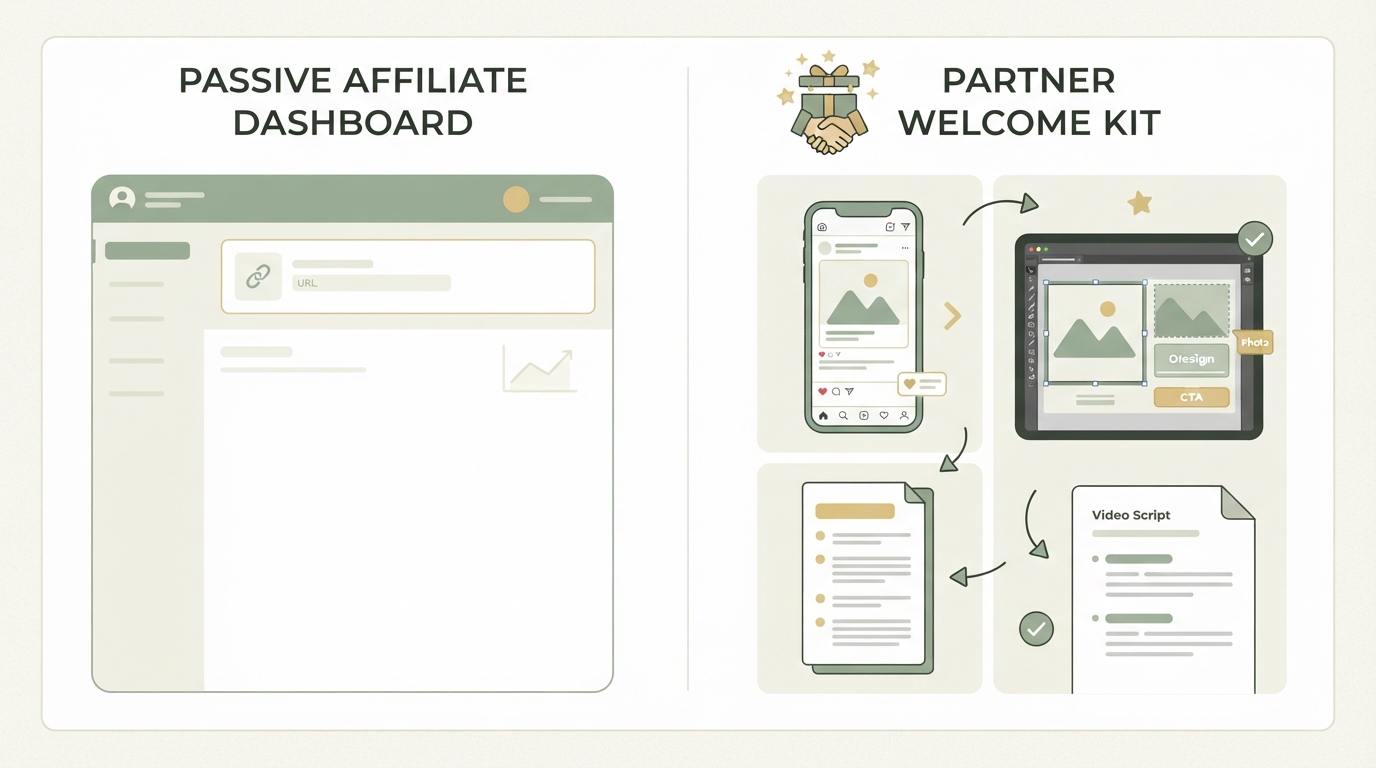
Winning affiliates is only half the job — the other half is actually getting them to post. Most programs have a signup page, a dashboard, and then silence. Partners sign up, get their link, and then forget about it because they don't know what to actually post.
What really works: give new partners ready-made materials in their first week. A short social media post, two or three image templates, a sample script for a short video. The less effort it takes a partner to get started, the more likely they actually will. It's basically the same principle as good onboarding for users, just for partners instead of customers — more on that in Improving SaaS Onboarding: The Mistake Almost Everyone Makes.
A second lever: personal contact. A short message after signup asking if they have any questions or if you can help with their first campaign often does more than any automated email sequence. Small programs can afford to do this, big ones can't — which is actually an advantage.
Comparing commission models
Not every model fits every SaaS. The right choice depends on how high your average customer lifetime value is and how much you trust your tracking.
| Model | How it works | Good fit for |
|---|---|---|
| One-time commission | Fixed amount or percentage on first purchase | One-time products, low-cost subscriptions |
| Recurring commission | Percentage of revenue over several months | SaaS with high retention |
| Tiered commission | Higher percentage after a certain sales volume | Programs with a few, strong partners |
| Hybrid (fixed + percentage) | Small fixed amount plus a percentage of revenue | Programs with a long sales cycle |
Recurring commissions tend to motivate partners the most, since they keep earning as long as a customer sticks around. But that also raises your risk when customers cancel, which is why a clear holding period and a defined end date for the commission — after 12 months, say — matters.
You should know your actual customer lifetime value before setting a commission, otherwise you're flying blind. Related read: Increasing Customer Lifetime Value: The Mistake Almost Everyone Makes.
What well-run affiliate programs have in common
A look through our database shows that affiliate programs tend to work best when the product itself already solves a clear, easily explainable problem, and partners can easily understand who to recommend it to. Snaptrade, for example — an API that connects fintech apps to brokerage accounts — reaches an estimated MRR of around $4.46 million with roughly 142,000 monthly visits, based on our estimates. B2B tools like this, with a technical audience, tend to work well with affiliate partners who are themselves active in the developer or fintech space, since the recommendation carries more credibility.
That doesn't mean affiliate marketing only works for B2B. It means the partner audience needs to match the product, not the other way around. An affiliate program for a niche tool shouldn't try to sign up as many partners as possible — it should focus on the few who actually have the right kind of reach.
Where most people get stuck on their own
This is exactly where most founders hit a wall: they know, in theory, that partners need to be activated, but they don't have the time or visibility into which creators are actually active in their market and what's worked for similar products. That's exactly where Starte.ai comes in. Our software continuously analyzes data from thousands of real projects — channels, commission models, revenue estimates included — evaluated by people who've built exactly this themselves. What you get isn't a generic checklist, but an assessment of what can realistically work in your specific market. Bohdan, our founder, will also personally guide you through new projects if you'd like. The first strategy call is free, and you can check out the setup at no cost.
Common mistakes when building an affiliate program
The most common mistake is launching the program before you even have product-market fit. If your product isn't converting reliably yet, it won't convert any better just because a partner is sending traffic. Foundation first, then scale — related read: How Do I Find Product-Market Fit: 6 Steps Instead of Gut Feeling.
Second mistake: commissions set too low out of fear of costs. Sounds paradoxical, but a program with a 10 percent commission that nobody promotes brings in less revenue than one at 25 percent that's actively used. Compare it honestly against what it actually costs you to acquire a customer through other channels, like ads.
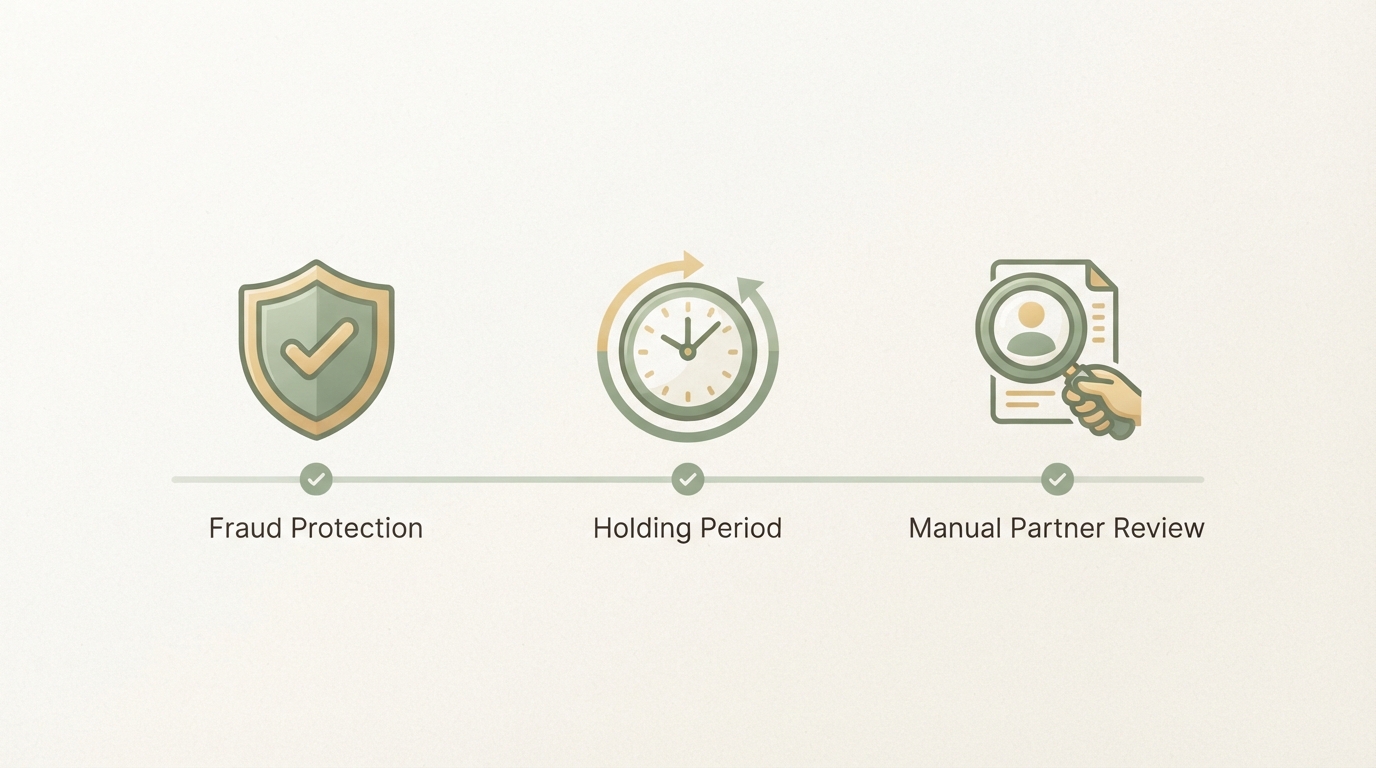
Third mistake: no fraud protection. Without a holding period and without any control over how traffic is generated, you'll eventually end up with partners running fake clicks or cookie stuffing. A simple manual review of new partners before they're approved prevents most of the worst cases.
Affiliate copy that actually converts
A good affiliate link doesn't do much if the copy around it is weak. Partners don't need a pure sales pitch — they need an honest recommendation that speaks to a real problem. It's essentially the same skill as writing your own marketing copy: concrete, direct, no exaggeration. If you want to help partners write better copy, or improve your own landing page while you're at it, check out How to Write Good Ad Copy: The Mistake Almost Everyone Makes.
A small trick that often gets overlooked: ask partners not to make your product the main topic, but to mention it as one of several tips in genuinely useful content. A post titled "5 tools that helped me with X" often converts better than straight product promotion, because readers click out of curiosity, not because they feel like they're being sold to.
Next step
Set your commission and holding period first, then set up clean tracking, and then actively reach out to two or three well-matched partners instead of putting up a signup page and waiting. Give them ready-made materials for their first week. That decides success or stagnation far more often than whichever tool you're running in the background.
This exact combination — commission, tracking, and active outreach — is where a lot of founders get stuck on their own, not because they don't understand it, but because actually doing it keeps getting pushed aside by day-to-day business. Founders who work with proven structures from the start, instead of testing every detail themselves, tend to end up with a partner program that actually generates revenue instead of just existing on paper.
How to move forward from here
If you're not sure whether your commission, your holding period, or your first partner outreach fits your market, an outside perspective often helps. Starte.ai works with you to build a strategy based on data from thousands of real projects, and also helps with the materials you hand your partners. Bohdan Bernatek, founder of Starte.ai, personally guides projects through this process — the first strategy call is free, and you can try it out with no obligation.
As a next step, it's enough to write down your commission and holding period on a single page, note two or three well-matched partners, and then start reaching out. The rest — tracking, copy, analysis — can be refined over time as the first conversations get going.
Frequently asked
How high should the commission be for an affiliate program?
It depends a lot on your product's price and margin. For recurring SaaS subscriptions, 15 to 30 percent over a limited period is common; for one-time products, it's often 20 to 40 percent as a single payment. More important than any fixed rule is whether the amount is worth the effort for a partner.
How long should the holding period be?
30 to 60 days is standard, so refunds, failed payments, and trial periods have time to resolve before a commission gets paid out. Shorter periods increase your risk; longer periods can frustrate partners who want to see money quickly.
How do I find my first affiliate partners?
Start with people who already use and like your product, plus creators or newsletter writers who already have an audience with exactly your problem. Reach matters less than how closely their audience matches your market.
Do I need special software for tracking?
For most micro-SaaS, an existing affiliate tool that connects to your payment system is enough — you don't need to build your own. It's important to combine cookie tracking with a second method, like server-side stored referral codes, so fewer sales slip through the cracks.
Written by
Bohdan BernatekFounder, Starte.ai
Founder of Starte.ai. Built a business to 125,000+ organic leads and seven-figure revenue — and now works with founders personally, deriving a strategy for their own brand from data across thousands of real projects and producing the creatives for it.