Building Organic Traffic: The Practical Path to Real Visitors
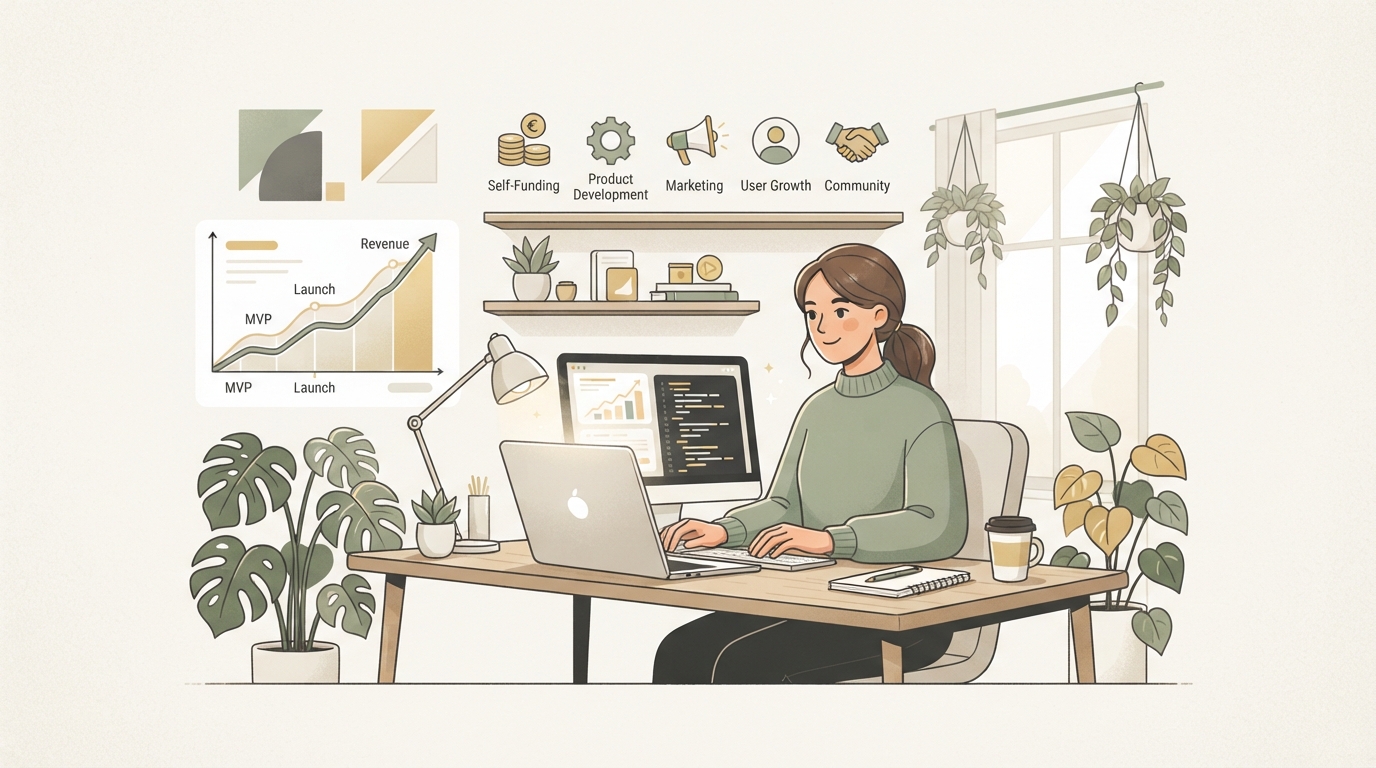
Building organic traffic doesn't mean being everywhere at once. It means understanding one channel so well that it reliably sends you people who are looking for exactly what you offer. The mistake I keep seeing: people spread themselves across five platforms and never hit critical mass on any of them.
I got this wrong myself at the start. A bit of Instagram here, some TikTok there, a blog post whenever I had time. The result: never enough repetition to become visible anywhere. It wasn't until I focused on a single channel that things started happening.
What does organic traffic actually mean?
Organic traffic is visitors who find you without you paying for the click — through search engines, social media, or referrals. The difference from paid traffic is simple: with ads you pay for every visit, with organic traffic you pay with time and content instead.
That doesn't make it free in the true sense. You're investing hours instead of dollars. But the big upside: organic traffic often keeps working even if you take a week off. A well-ranking blog post will typically still be bringing in visitors months later. An ad dies the moment you stop the budget.
So free traffic isn't a trick — it's a different deal: slower to build, but often more durable.
Why most people fail here
Most people give up after two or three weeks because nothing seems to be happening. That's normal. Search engines need time to figure out where you fit, and social algorithms test you on small groups before showing you to more people. If you quit in week three, you never reach the point where it starts working.
Step 1: Commit to ONE channel
Before you post anything, make a decision: which single channel, for the next 60 days. That's the foundation everything else builds on. Sounds harsh, but it's the most important fork in the road.
Don't ask which channel promises the most reach — ask where your target audience is already searching or scrolling. B2B software? Then LinkedIn or Google searches with clear purchase intent. A visual consumer product? Then TikTok or Instagram. A niche problem with a community around it? Then Reddit or a forum where people are already helping each other.
Running two platforms in parallel rarely pays off if neither one is really working yet. This isn't a gut-feeling rule, it's an observed pattern: consistency on one channel beats presence on five. Someone who sticks with two platforms for 60 straight days instead of scattering across five ends up with more substance than someone splitting themselves between Instagram, TikTok, LinkedIn, X, and YouTube.
Step 2: Understand search intent before you write
Search intent means: what does someone actually want to achieve when they type a specific term or ask a question. This is the part most people skip because it sounds like theory. It's the opposite.
Type your target term into a search engine yourself and look at the top results. Are they listicles? How-to guides? Videos? Forum threads? That tells you which format is expected. If the first three results are videos, a plain text article will have a hard time, no matter how well written.
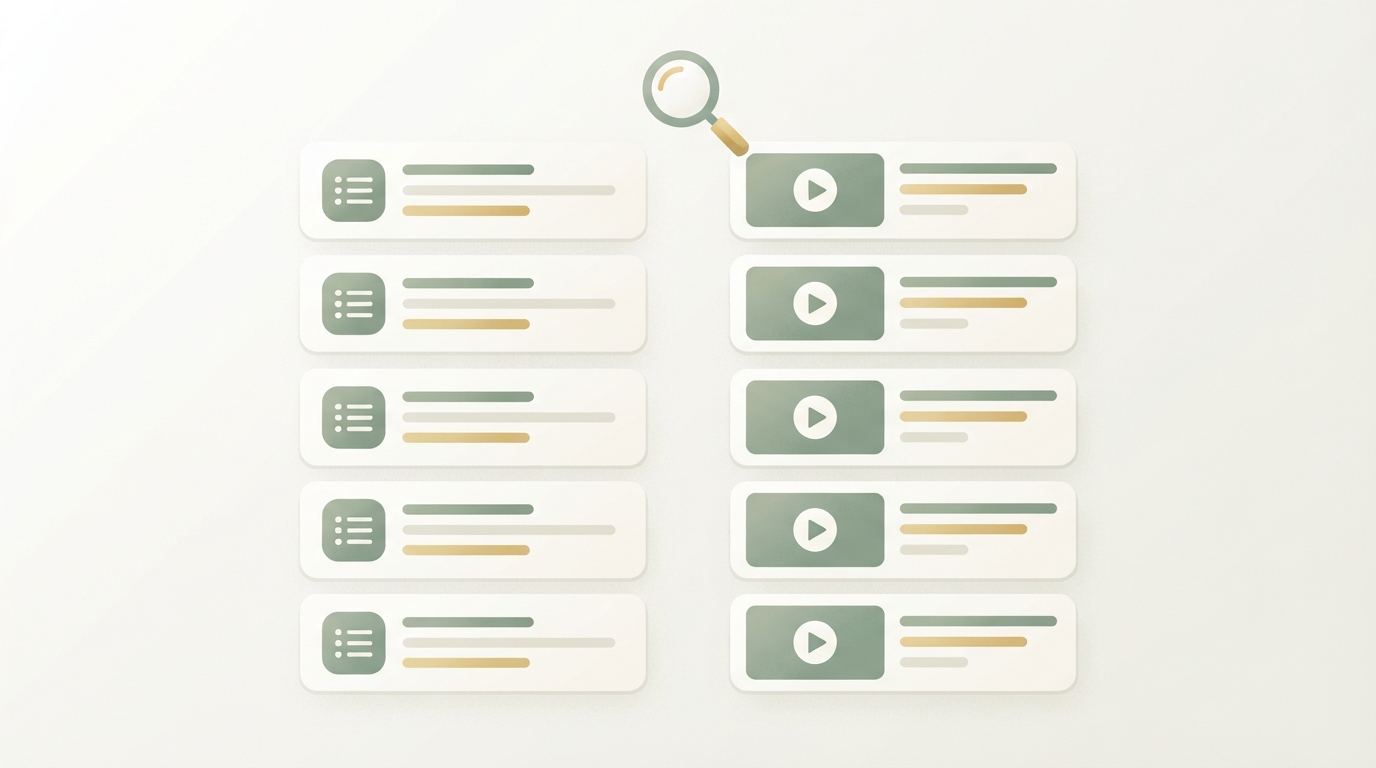
Just as important: read the comments and reviews on existing solutions. One- and two-star reviews of established providers are basically a ready-made list of questions. People spell out exactly what frustrates them, in their own words. Those are the exact phrases you should pick up in your content, not your competitors' marketing language.
Step 3: Build content that gets cited in AI answers
Content that gets cited always has a clear, standalone answer right at the top, not buried after three paragraphs of setup. That applies to Google just as much as to ChatGPT or Perplexity when they're looking for sources to cite. If the answer is in sentence one, it can be quoted. If it's buried somewhere in paragraph seven, it won't be.
Concretely, that means: every heading gets a sentence right underneath it that answers the implicit question, before you go into detail. No preamble, just the substance up front.
What also helps: your own numbers and observations, not just reworded generalities. If you ran a test, say what you tested. If you cite a number, say where it came from. Vague articles with no concrete evidence aren't interesting to AI systems, because ten other pages are already saying the same vague thing.
Paul Graham described in his essay "Do Things That Don't Scale" how early users are often won through manual effort, not systems. Applied to content, that means: your first articles are allowed to cost more work per reader than feels scalable. That's exactly what makes them better than competitors who optimize everything for volume.
Step 4: Find the topic before you write
Before you plan a single article or video, you need a topic with real search volume and real purchase intent, not just a hunch. This is exactly the step many people skip, because it takes research instead of creativity.
This is where it's worth looking at Trend Finder: the tool shows you topics along with a traffic and revenue estimate, so you're working from data instead of guessing before you invest your time.
Step 5: Build substance, not frequency
Substance beats frequency when you're building organic traffic. One thorough, in-depth article or video often outperforms ten shallow posts on the same topic.
An approach that works: take a single long-form piece — a 30-to-60-minute video or an in-depth podcast episode — and break it down into 30 to 50 smaller pieces of content. One day of recording turns into weeks of distribution, instead of starting from zero every week.
This is also where a lot of SaaS founders give up, because they treat content and product work as competing for the same time. It doesn't have to be that way. The rule of thumb that tends to hold up: roughly half your time building, half on visibility. Build only, and you have a product nobody finds. Post only, and you have reach with nothing behind it.
Example: organic growth without an ad budget
One SaaS that, according to our research database, grew organically is Diode.
According to our estimates, Diode has an MRR of around $5 million with roughly 142,000 monthly visits. That's not proof every niche product grows this way, but it shows that a technical, unsexy-seeming topic (PCB design) can attract enough organic reach to support a viable business. Rob Walling often makes this point in his work on bootstrapping: niches nobody thinks are cool are often the most profitable, because there's less competition for attention there.
Step 6: Use programmatic SEO for niche questions
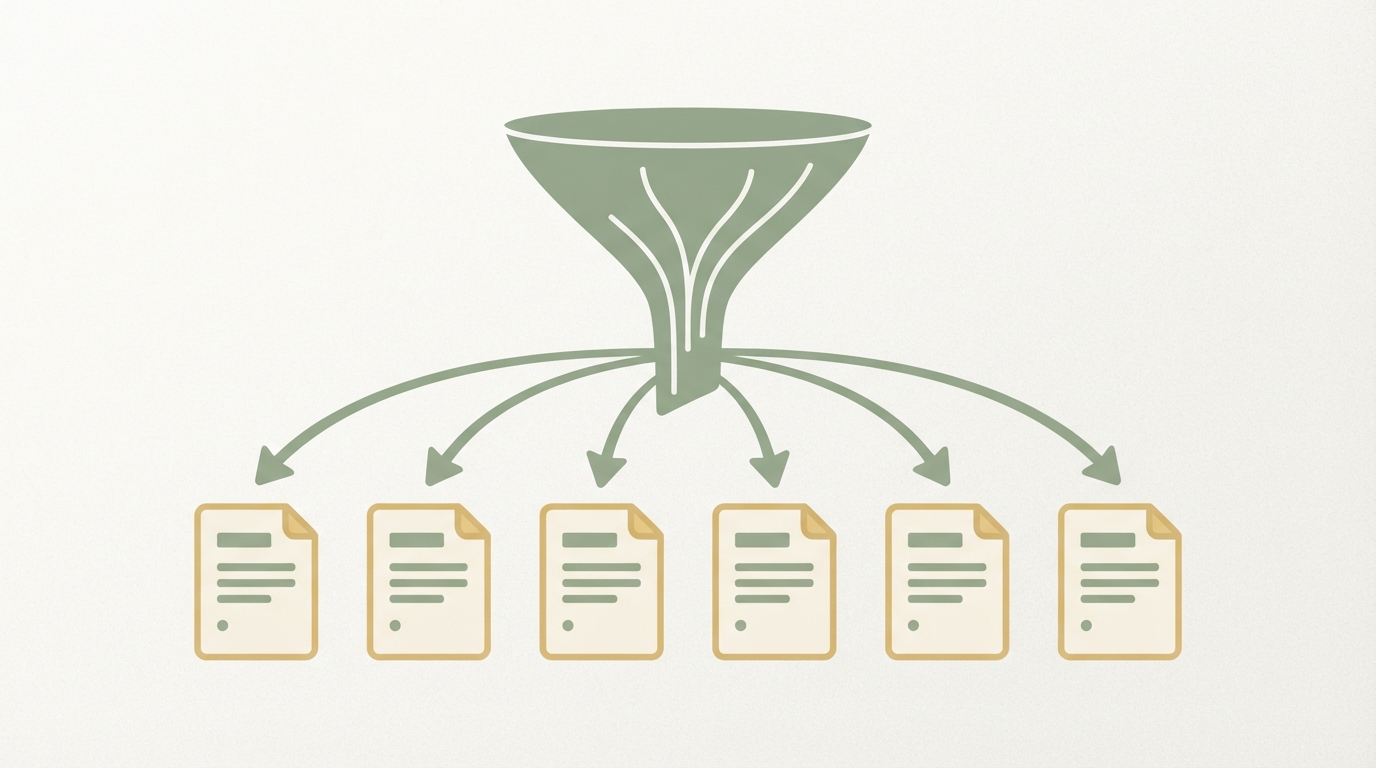
Programmatic SEO means creating many similar pages for closely related search queries instead of one single generic page. This pays off especially when your product or topic has a lot of variants — by country, industry, or use case, for example.
A real-world example: a B2B tool generated multiple enterprise leads, with zero ad budget, using template-based pages targeting very specific questions (like patent requirements by country). The trick lies in the niche within the niche: not "patent application," but "patent drawing requirements Germany."
One technical detail that matters: every page needs a self-referencing canonical tag, or Google will mark the pages as duplicate content. And the sitemap needs to be consistent with or without "www" — otherwise Google can end up ignoring the whole structure. Small technical details, big impact.
Step 7: Build reach through community answers
Direct self-promotion in forums and communities almost never works — genuine help does. Reddit, niche forums, and community Discords are full of people with real problems. If you show up with a specific, useful answer and mention your own product, at most, as one possible option at the end, you build trust that advertising can't buy.
These answers are also relevant to the search intent from Step 2. People often google "[problem] Reddit" or "[tool] alternative," and if your helpful comment shows up there, you get traffic without having written a single article of your own.
Traffic channels compared
Not every channel fits every product. Here's a rough breakdown of how the most common channels differ when it comes to building organic traffic:
| Channel | Time to traction | Durability | Good fit for |
|---|---|---|---|
| SEO / Blog | often several months | high, article keeps working | products that need explaining, B2B |
| Reddit / Forums | fast, if the answer is helpful | medium, thread fades | niche problems with an active community |
| TikTok / Instagram | can be fast, but unpredictable | low, short visibility spike | visual consumer products |
| YouTube | medium, several weeks | high, video ranks for a long time | tutorials, comparisons, reviews |
| Programmatic SEO | several weeks to months | high, many pages at once | products with many variants/use cases |
This table is a rough guide, not a guarantee. How fast and how strongly a channel works for you depends heavily on your niche, consistency, and a bit of luck.
Step 8: Measure what actually matters
Clicks alone tell you very little — what matters is whether visitors turn into real users or customers. A lot of SaaS founders only look at traffic numbers and miss that 10,000 visitors with no conversion are worth less than 500 visitors with clear purchase intent.
Check regularly: where do the visitors who actually sign up come from? Which channel, which article, which video? Whatever you learn from that, double down on it instead of spreading your effort evenly across everything.
If you notice at this point that you have traffic but nobody's buying, the problem is usually not the channel — it's the offer itself, or how you're describing it. That's where our article How to Find Product-Market Fit comes in, if that's where you're stuck. And if the landing page itself isn't convincing, it's worth checking out How to Write Good Ad Copy.
Organic traffic vs. paid traffic: what makes sense when
The honest answer: both have their place, just at different times. Organic growth is slower, but often more sustainable. Ads bring visitors immediately, but only as long as the budget keeps running.
Many successful bootstrappers start organically because there's no budget for ads, and only move to paid campaigns later, once the organic side already has a foundation of trust and rankings. If you eventually get to the point of wanting to test campaigns, it's worth reading Scaling Ad Campaigns first, so you don't make the same mistakes as most people who burn through too much budget too soon. And to see what your competitors are even trying in their ads, Analyzing Competitor Ads can help.
You can hand this whole process off
What I keep hearing in conversations: people know, in theory, that they should go deep on one channel, but they don't have the time to constantly research new topics, build creatives, and test what actually resonates in their market. That's exactly the part we take off your hands at Starte.ai: we continuously analyze data from thousands of real projects, use it to build a strategy for your specific market, and help build the matching creatives. Along the way, we've generated over 125,000 leads, with a focus on organic traffic and no ad budget. Bohdan, our founder, personally supports projects through this process — the first strategy call is free.
What you can build yourself after that
Once you know which channel and which topic work for you, the next logical step is often building or improving the actual product or feature behind it.
That's exactly what Blueprint is for: you enter your idea and get an MVP feature set, a matching tech stack, and ready-to-use prompts you can drop straight into a tool like Claude or Cursor. If you're still at the very beginning and wondering whether your niche can even sustain a business, it's worth checking out How to Find a Profitable Niche first.
It varies. With SEO content, it often takes several weeks to months before a page ranks at all. With community answers on Reddit or in forums, visibility can happen faster if the answer genuinely helps. There's no honest way to promise a timeline, because too many factors are at play.
You don't need an ad budget, but you do need time. Free traffic means you're paying with hours instead of dollars — for research, writing, testing, and analyzing results.
In practice, one channel worked consistently usually beats several worked half-heartedly. Once one channel is clearly gaining traction, it's often worth adding a second.
Giving up too early, and testing too many channels at once instead of giving one channel a real 60-day shot.
Building organic traffic isn't a trick or a matter of luck — it's the sum of one channel, real search intent, and content that says something concrete. Pick a channel, stick with it for 60 days, and measure what actually leads to customers, not just what drives clicks.
Frequently asked
What exactly is organic traffic?
Organic traffic is visitors who find you through search engines, social media, or referrals, without you paying for the click. You pay with time and content instead of ad budget. The advantage: a well-ranking article often keeps bringing in visitors months later, while an ad dies the moment the budget stops.
How long does it take for organic traffic to start working?
Most people give up after two or three weeks because nothing seems to be happening, but that's normal. Search engines need time to figure out where you fit, and social algorithms test you on small groups first. If you quit too early, you never reach the point where it starts working.
Should you run multiple channels at once to build reach?
No, the post clearly advises against spreading yourself thin across several platforms at once. Consistency on a single channel over 60 days typically outperforms a presence on five platforms without critical mass. Your choice should come down to where your target audience is already searching or scrolling.
How do you find content topics with real potential?
You should look for a topic with real search volume and real purchase intent, rather than writing based on a hunch. It's worth looking at one- and two-star reviews of existing providers, since they show, in users' own words, exactly what frustrates them. Tools like Trend Finder can also provide a traffic and revenue estimate before you invest your time.
Written by
Bohdan BernatekFounder, Starte.ai
Founder of Starte.ai. Built a business to 125,000+ organic leads and seven-figure revenue — and now works with founders personally, deriving a strategy for their own brand from data across thousands of real projects and producing the creatives for it.