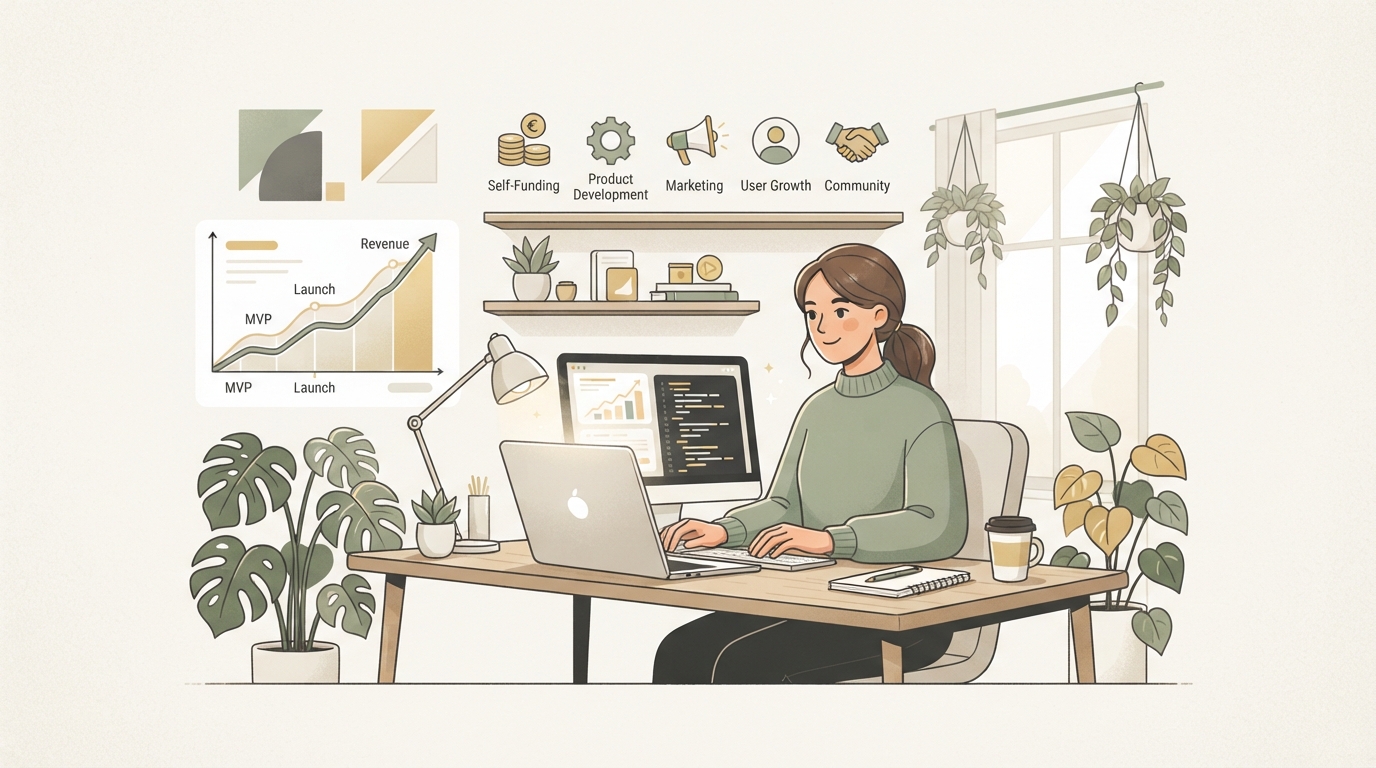
Why building website trust decides your revenue
Building website trust comes down to one thing above all: a clear thesis, not luck. Website trust isn't a design question — it's a transparency question. Not with a pretty logo or a trust badge nobody reads anyway. It's about clear signals that show a stranger, in three seconds, that nothing shady is going on here.
I've gotten this wrong myself a few times. In the beginning, I thought a clean design was enough. It isn't. Design makes you likeable, but trust happens when three questions get answered instantly: who's behind this, what happens to my data, and has this actually worked for other people?
Here are the seven levers that provably work.
No trust means no sale. It really is that simple at the core. A visitor seeing your site for the first time has no reason to believe you. They don't know you, they haven't touched your product, and they've probably lost money to a fake site before — or know someone who has.
Trust rarely comes from one big signal. It's usually the sum of small details. Website credibility isn't a nice-to-have — it's the baseline requirement for anything else to work at all. Your prices can be fair, your product genuinely great, your copy razor-sharp. If the visitor is already mentally hitting the back button, none of that matters much.
For micro-SaaS, this is especially tricky. You're usually a one-person team with no recognizable brand. No investor logo, no press coverage, no "since 1998." So you have to build trust through other means — transparency, proof, clarity. Ignore this, and you lose visitors at the very first hurdle, often before they even reach the pricing page.
Step 1: Show a real face, not stock photos
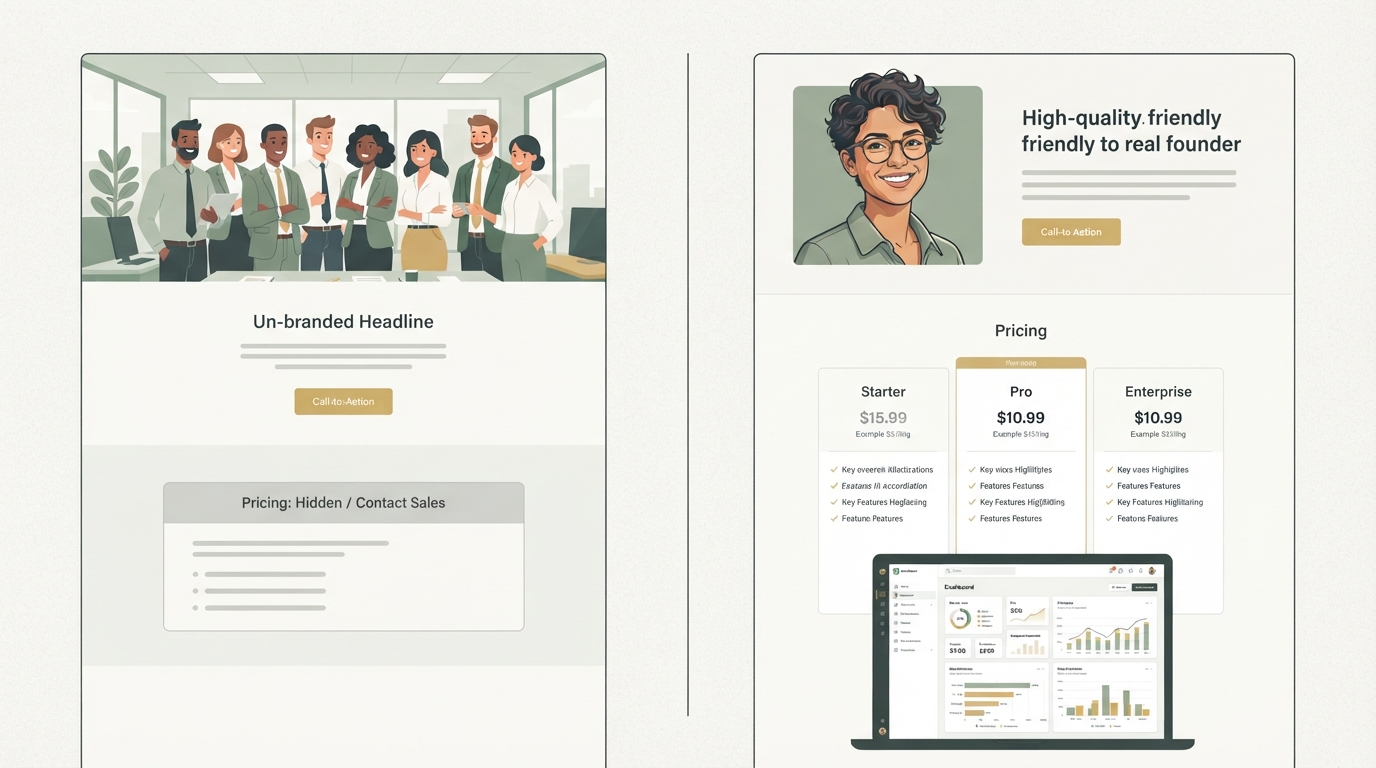
People trust people, not anonymous companies. An "about me" page with your real name, a real photo, and a few sentences on why you're building this tool beats any generic "our team" page filled with stock photos of people who've never worked for you.
It's a simple step that still gets skipped constantly. Founders hide behind the product name, afraid of looking too small. It's actually the opposite: small, transparent providers often come across as more credible than anonymous companies, because there's a name and a face standing behind the product.
Even a single sentence about your "why" is enough. Not in marketing-speak — just the way you'd explain it to a friend. If you want, link a short email address with your real name instead of just a contact form. It costs you five minutes and makes a difference most people underestimate.
Step 2: Make social proof specific, not interchangeable
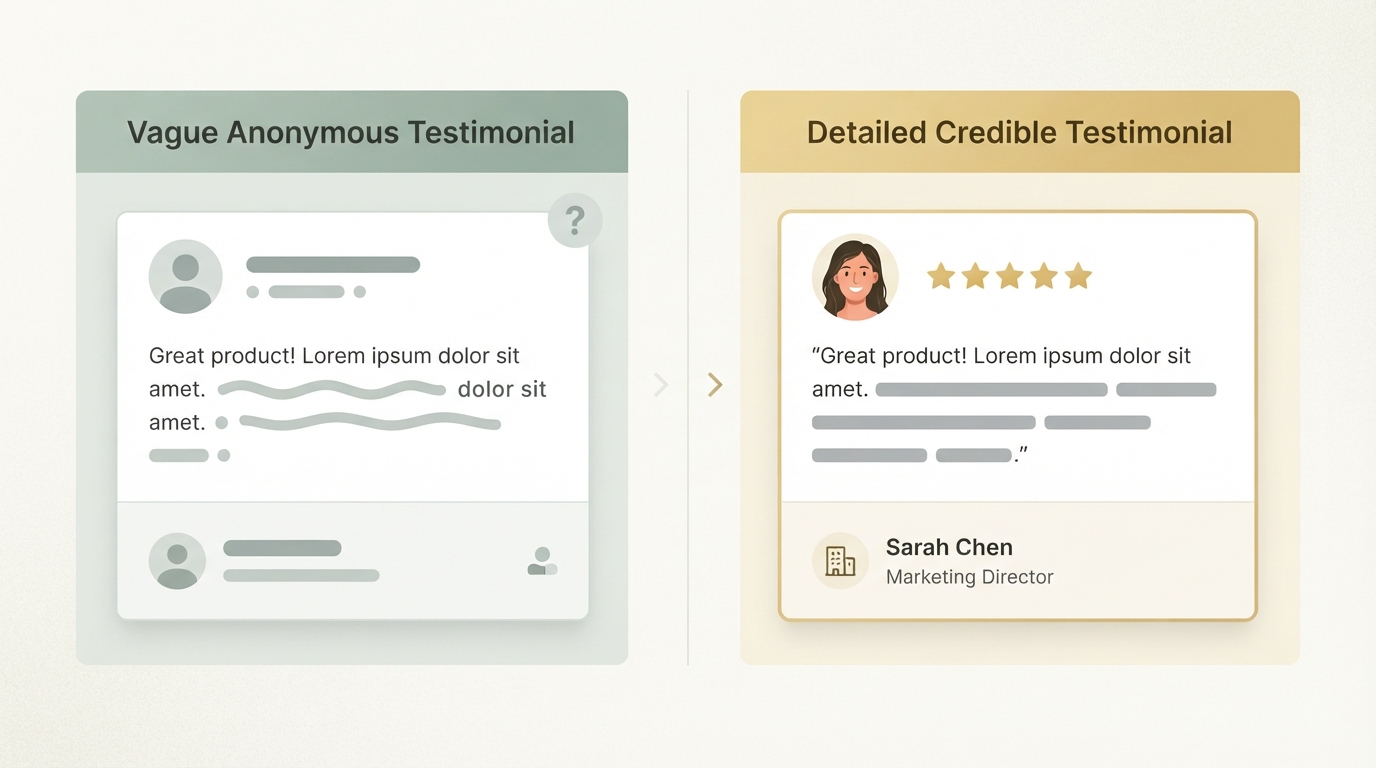
A testimonial without a name, photo, or context convinces no one — most visitors see through it instantly. "Great tool! – M.K." is worthless. Better: full name, company or role, ideally a link to LinkedIn or the person's website so anyone can verify these are real people.
If you don't have paying customers yet, use early beta users, real quotes from interviews, or show concrete results instead of generic praise. "Saved me 3 hours a week" is more convincing than "Great tool, would recommend."
Specificity beats enthusiasm. Every time.
Not sure who your target audience even is for testimonials like this? Check out our guide on creating a buyer persona — without a clear picture of your customer, you won't know what kind of proof actually resonates with them.
Step 3: Be transparent about pricing and data
Hidden pricing is one of the fastest ways to destroy trust. If a visitor has to fill out a form or book a sales call just to find out the price, a large share of them will immediately think: "They're hiding something." Show your prices openly, even if you're worried it'll scare some people off.
The same goes for data. If you have a privacy policy, link to it visibly — not just tucked away in tiny footer text. Say in a sentence or two on your homepage what happens to user data, especially if you're working with sensitive information, like Vector (vector.co), which identifies anonymous website visitors.
If you process company data or visitor behavior, you need to communicate especially clearly what exactly is happening. Otherwise the product quickly feels creepy instead of useful.
Step 4: Prove your product works, not just that it exists
Screenshots of the real product beat any illustration — this is one of the most underrated points on micro-SaaS pages. Many landing pages show colorful icons and abstract graphics but never the actual interface. That makes it look like the product has something to hide.
Sometimes a short demo video does more than any marketing copy ever could.
Show real screenshots. Show how the tool actually gets used. If you have numbers — MRR, user counts, visitor numbers — and you're willing to share them publicly, that can help enormously. Diode (diode.computer), for example, a tool for AI-assisted PCB design, publicly shows estimated metrics like MRR and monthly visitors — an approach that lands especially well with technical audiences, since they like numbers and eye marketing fluff with suspicion.
One important note: unless you're pulling these numbers straight from your own analytics tool, they're always just estimates. Say so, whether you're citing someone else's numbers or touting your own. Honesty about numbers is itself a trust signal.
Step 5: Reduce perceived risk
Every purchase feels like a risk to the visitor. Your job is to make that risk as small as possible. A free trial with no credit card required, a clear two-click cancellation process, a money-back window — all of this lowers the barrier to just getting started.
Out of fear of freeloaders, founders often demand a credit card right at trial signup. Understandable, but it frequently costs more trust than it saves in bad leads. If you're unsure which approach fits your product, test both and see which one brings more real signups, not just more form submissions.
Cancellation is the other big piece. If a user has to write an email or make a phone call just to cancel, they'll remember it — and tell others. Bad experiences spread faster than good ones.
Make cancelling as easy as signing up. Uncomfortable in the short term, but it pays off in the long run.
Step 6: Build trust before the first website visit even happens
Trust often doesn't start on the landing page — it starts earlier, wherever your visitor first hears about you. A Reddit post where you genuinely help instead of pitching, a useful comment in a Facebook group, a LinkedIn post with a real lesson instead of self-promotion. Someone who's already experienced you as helpful there arrives on your site with a head start of trust.
That's why pure ad campaigns often convert worse for small, unknown brands than for established ones. The first touchpoint already carries skepticism built in. Content that genuinely helps sidesteps that. Paul Graham described this well in his essay "Do Things That Don't Scale": early on, it pays to work unscalably, directly with individual people, because that's exactly what builds the trust that later scales.
Still looking for the right niche where you can actually show up credibly, because you genuinely understand the problem? Check out our guide to defining your target audience. Trust is always easier when you truly know who you're talking to.
Step 7: Keep delivering on your promises, visibly
Trust isn't something you build once — it's something you have to reaffirm at every touchpoint. Support requests that actually get answered fast. A changelog that shows the product is being actively worked on. A status page for when your tool goes down, with honest communication instead of silence.
Many founders pour a lot of energy into the first impression, then neglect what happens after signup. But that's exactly where it gets decided whether a trial user becomes a paying customer.
Disappointed expectations after signup are one of the biggest — and least discussed — reasons for poor conversion numbers in micro-SaaS.
Building website trust compared: what actually moves the needle
Not every trust signal carries the same weight — some work instantly, others take time. This overview shows where to focus first if you're short on time.
| Signal | Effort | Impact on new visitors | Impact on returning visitors |
|---|---|---|---|
| Real founder photo + bio | low | high | medium |
| Specific testimonials with names | medium | high | medium |
| Public pricing | low | high | low |
| Real product screenshots | low | medium | low |
| Free trial, no credit card | medium | high | low |
| Visible support/changelog | medium | low | high |
What stands out: the things with the biggest effect on new visitors are almost all low-effort to implement.
That's the good news. You don't need to spend months polishing a brand before you come across as credible.
Turning visitors into customers: the step many skip
Turning visitors into customers only works when trust and a clear next step come together. You can have the most trustworthy site in the world, but if the call-to-action is unclear or there are five different buttons competing for attention, all that work goes to waste.
Is trust alone enough if the visitor doesn't know what to do next?
No. They leave anyway.
One clear, single main CTA per page — something like "Try for free" or "Watch demo" — often leads to more signups than a page with lots of competing options. If you want to dig deeper into the patterns that have driven real micro-SaaS companies to more paying customers, check out our post Micro-SaaS customer acquisition: what 4,000+ SaaS companies show for more.
In some industries, trust decides almost the entire purchase. A fintech example: Snaptrade (snaptrade.com), an API provider connecting fintech apps to brokerage accounts, operates in a space where trust makes up nearly the whole buying decision — after all, it's about access to real financial data. Without crystal-clear security and data communication, you lose customers there, no matter how good the API is technically.
est part of this: even a solo founder with no marketing budget can build a more credible site than a funded startup that hides behind stock photos and vague pricing. The main investment is a few hours of honest work — writing a real bio, replacing placeholder screenshots with your actual UI, and publishing your pricing publicly. None of that costs a cent. It just requires a decision to be transparent.
What to do next (in order of impact)
Start with the changes that take under an hour and move the needle most for new visitors:
- Swap any stock photo for a real photo of yourself and add two or three sentences about why you built this.
- Make your pricing public — even a simple "starts at $X/month" removes a major barrier.
- Replace hero or feature screenshots with real product UI, not polished mockups that don't match the actual experience.
- Add one specific testimonial with a real name and context (what the person does, what result they got).
- Check your main CTA — there should be exactly one primary action per page, and it should be obvious without scrolling.
- Set up a visible changelog or "last updated" note to show the product is alive and maintained.
Run through this list and most of the low-hanging fruit is gone in a single afternoon. The remaining items — more testimonials, a case study, a public roadmap — can follow over the next few weeks as you collect them naturally.
This is the step where many solo founders stall, not because the work is hard, but because knowing which trust signals matter most in their specific market, and how to sequence them, isn't obvious without data from comparable projects. That's exactly what Starte.ai is built around: a system that draws on data from 350+ real stores and projects to help you identify the strategy most likely to work in your market — not a generic template, but something derived from what has actually driven results for similar products. Bohdan, the founder, joins the first strategy call personally, and getting started is free to try. If you want a clearer picture of where your site is losing trust before visitors ever reach your CTA, that's a practical place to start.
The honest summary: trust is not a branding project you schedule for later. It is a conversion lever you can start pulling today, with the information and assets you already have.
Frequently asked
How do I build trust as a small provider if I don't have a well-known brand?
You lean on transparency instead of brand signals: a real face with a name and photo, open pricing, and concrete proof that your product works. Small, transparent providers often come across as more credible than anonymous companies, because there's someone with a name standing behind their product.
Why should I show my prices openly on my website?
Hidden pricing immediately raises suspicion — many visitors assume you have something to hide. Show your prices openly, even if you're worried it'll scare some people off; it builds more credibility than turning a sales call into a required middle step.
What makes a testimonial credible?
A credible testimonial has a full name, ideally a photo and role, and a link to LinkedIn or a website so it can be verified. Concrete results, like time saved, come across as more convincing than generic praise without context.
How do I lower the perceived risk for new website visitors?
A free trial with no credit card required, plus a cancellation process that's just as easy as signing up, significantly lower the barrier to entry. Bad cancellation experiences spread quickly, so it's worth avoiding friction here for the long run.
Written by
Bohdan BernatekFounder, Starte.ai
Founder of Starte.ai. Built a business to 125,000+ organic leads and seven-figure revenue — and now works with founders personally, deriving a strategy for their own brand from data across thousands of real projects and producing the creatives for it.