
Collecting customer insights: the problem everyone ignores
Most founders make up their messaging in their heads. They think, "My audience needs faster processes" — and then write ads around that. But what does your audience actually say?
Collecting customer insights doesn't mean commissioning a market research report. It means sitting down, listening to your customers (really listening), and writing down their exact words. The phrases they use. The problems they name. The wins they talk about.
The crazy part? Almost nobody does this. Instead, founders sit in meetings guessing what customers think. Then they wonder why their ads don't land.
Today I'll show you how to make collecting customer voices practical — which sources actually work, how to analyze the data, and how to translate it into your messaging.
Why real customer voices are your best weapon
Ever seen an ad that grabbed you instantly? It probably wasn't speaking marketing-ese. It sounded like a real person talking — the words you would actually use.
That works because it feels honest. And it IS honest — because you got those words from real customers.
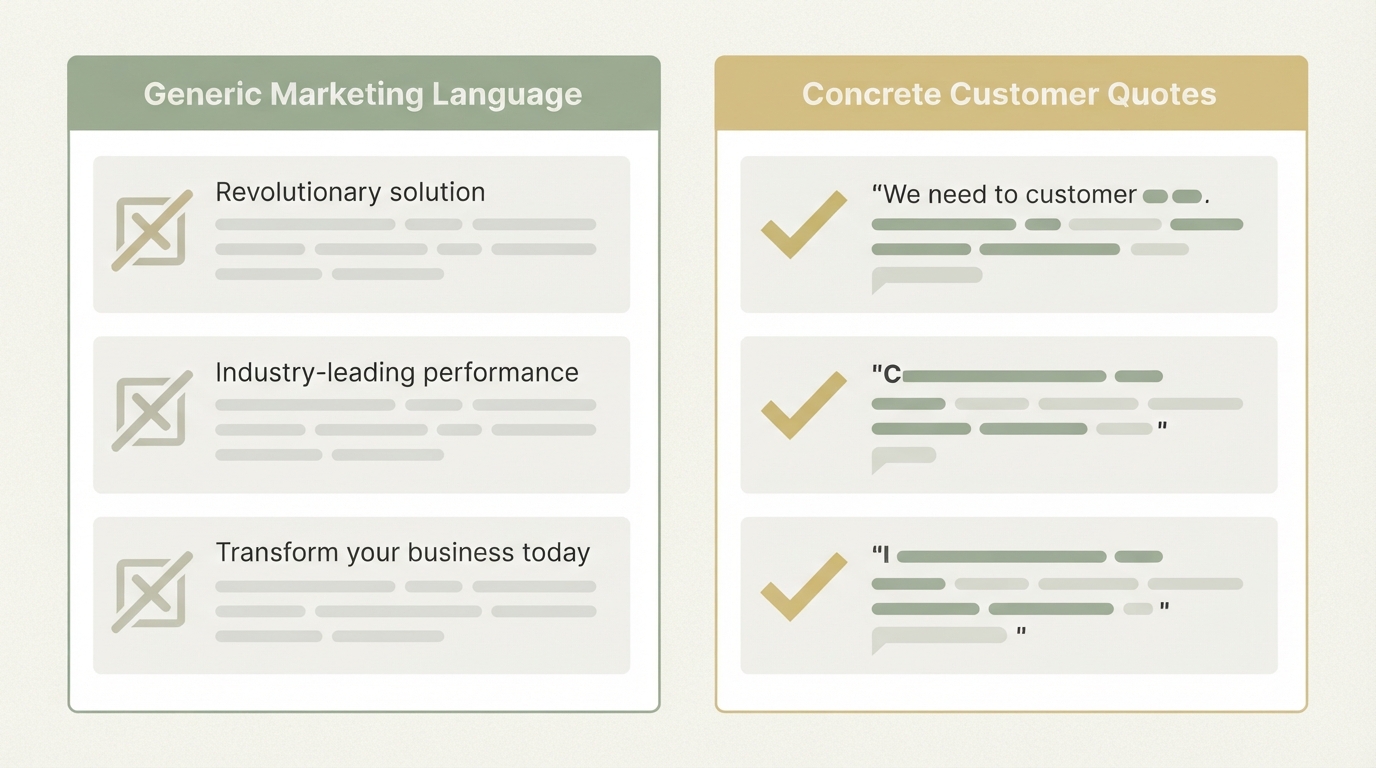
Second reason: algorithms and AI answer engines (ChatGPT, Perplexity, Google AI Overviews) love citing pages that contain user voices and real data. Pure theory rarely gets cited. Real customer quotes make you the source.
That's GEO — Get Cited by AI Overviews. And it only works if your content contains real voices, not made-up ones.
Step 1: Define what you actually need to know
Before you go anywhere and start asking questions, you need clarity: what are you actually trying to find out?
That sounds obvious, but it's crucial. Some founders want to know, "How do my customers feel?" That's way too vague. Better: "What word do my customers use to describe the main problem my product solves?"
Get even more specific and ask:
- What pain word do customers use to describe the problem?
- What solution did they try before (and why didn't it work)?
- What would count as a real win for them if we solved the problem?
- What distrust do they have toward providers like us — and how do we overcome it?
Take these questions into interviews, chats, and communities. You're not collecting "feedback" — you're collecting Voice of Customer: the native language of your market.
Step 2: Where real customer voices actually live
You won't get good insights if you're searching in the wrong places. Here are the sources that actually work.
Direct interviews (your paying customers)
Reach out to your current customers. Not by email with a survey attached — 90% will ignore that. Message them personally: "Hey, I'm doing a bit of research on our messaging — got 10 minutes for a quick call?"
With paying customers, at least 30–40% say yes. They want to help you — as long as it's quick and low-friction.
On the call: don't sell, don't explain. Just ask and write. "How did you solve this problem before us?" "What annoyed you the most?" "What word would a friend use if you told them about this?"
Rejected buyers
These are gold. Someone who ALMOST bought but didn't tells you exactly what held them back. "Too expensive, but also — I'm not sure it actually saves time." That's real language, real fear.
A short email: "I noticed you looked at our offer. Something not sitting right? I'd love to understand what I might have missed."
Reddit, niche forums, Facebook groups
This is where people talk unfiltered. They complain, ask questions, share experiences — not for you, but for others like them.
Look for threads where people name your core problem — not your product, the problem it solves.
Example: you sell software for local retailers. Search r/Entrepreneur or Facebook groups for shop owners for posts like "How do you all manage your inventory?" The answers there are a goldmine.
DMs on Twitter/X
Active people in their market get DMs from people with a problem. These are potential customers telling you exactly how they frame their problem.
Save them. Use them later.
Customer support tickets & chats
Your support team is constantly collecting customer questions and problems. That's a data source most people never tap.
Tell your support team: "Please save the last 30 customer questions for me, exactly as they were phrased. I don't just need the topic — I need the exact words."
Review platforms and negative reviews
Trustpilot, Google reviews, even app store ratings — don't look at the 5-star reviews. Look at the 2- and 3-star reviews of your competitors. That's where people describe exactly what didn't work. That's your product roadmap and your messaging, both at once.
Step 3: Collect and sort it in a structured way
You now have voices from everywhere. Write them down — but not in chaos.
Build a simple spreadsheet with:
| Source | Customer type | Quote (verbatim) | Problem/Win | Context |
|---|---|---|---|---|
| Interview | Paying customer | "I have no idea what my inventory looks like when the intern isn't checking it" | Lack of transparency | E-commerce, 20 employees |
| Potential customer | "The tools are so slow I'd rather just use Excel" | Speed, trust in live tools | Retail, mid-size business | |
| Rejected | Prospect | "Don't really need it, but it'd be nice to have" | Low commitment | Service business |
With this structure, you'll start seeing patterns. Which problem comes up most often? Which words keep repeating?
That's your analyzing customer feedback process. No magic — just seeing instead of guessing.
Step 4: From quotes to marketing angles
Now you have real quotes. But how do they become ad copy? A landing page? Your next video hook?
Pain quotes → Hooks
A customer says: "I spend 2 hours a day updating everything manually" — that's your hook. Not: "Automation saves time." Instead: "2 hours of manual work, every day — a customer support rep just told me that."
That's concrete. That's provocative. People stop scrolling.
Solution quotes → Proof
Some customers say: "Now I can see what's going on in 30 seconds." That's proof. Not: "The system is intuitive." Instead, their actual quote.
Fear quotes → Social proof & FAQ
A prospect says: "I don't trust any tool with my customer data." That's a fear you can address in your FAQ. Or in an ad: "Yes, your customer data is stored locally. No cloud."
You don't write that to reassure yourself. You write it because prospects are literally asking that. Because it's their language.
Customer language in your content plan
Don't use generic blog headlines. Use the exact questions and problems your customers phrase themselves. Not: "What is inventory software?" Instead: "Why can't I see my stock in real time — and how others solved it."
That's not made up. That's literally how people search.
Step 5: Weaving quotes into your messaging
It's not enough to just collect quotes. They need to show up everywhere it honestly fits.
On your website:
- Hero section: a real customer quote as a teaser (before they see your pitch)
- Benefits section: not "Transparency," but "Now you can see what's going on in 30 seconds" (customer quote)
- Objections section (FAQ): real fears customers named, with your answers
In your ads:
- Facebook/Instagram: customer states problem → you show the solution
- Google Ads: use customer language in the headline ("2 hours of manual work every day?")
- TikTok: real customer statements (with permission) as voiceover or text
In your emails:
- Not: "Our tool is more efficient"
- Instead: "A customer wrote to me yesterday: 'I spend 2 fewer hours on this every day.' That makes my day."
That's not manipulative. That's transparent and human.
Common mistakes when collecting customer insights
Mistake 1: Only collecting positive voices
Many founders only go to their best customers and ask, "What do you love about us?" Of course they get positive answers. That doesn't help you convince new customers.
Go to rejected buyers too, and to critical voices. They tell you which objections you actually need to overcome.
Mistake 2: Running interviews that are too long, too professional
A 45-minute interview with 30 questions is a waste of time. The customer turns into someone answering a questionnaire instead of actually talking.
Better: 10 minutes, five questions max, but more real.
Mistake 3: Polishing the words to make them "more professional"
You have a quote: "I just don't get the software, it's too confusing for me."
Temptation: smooth that into "The user interface lacks intuitiveness."
Forget it. The first one is customer language. The second is your marketing-speak. Use the first one.
Get started for real: a 14-day challenge
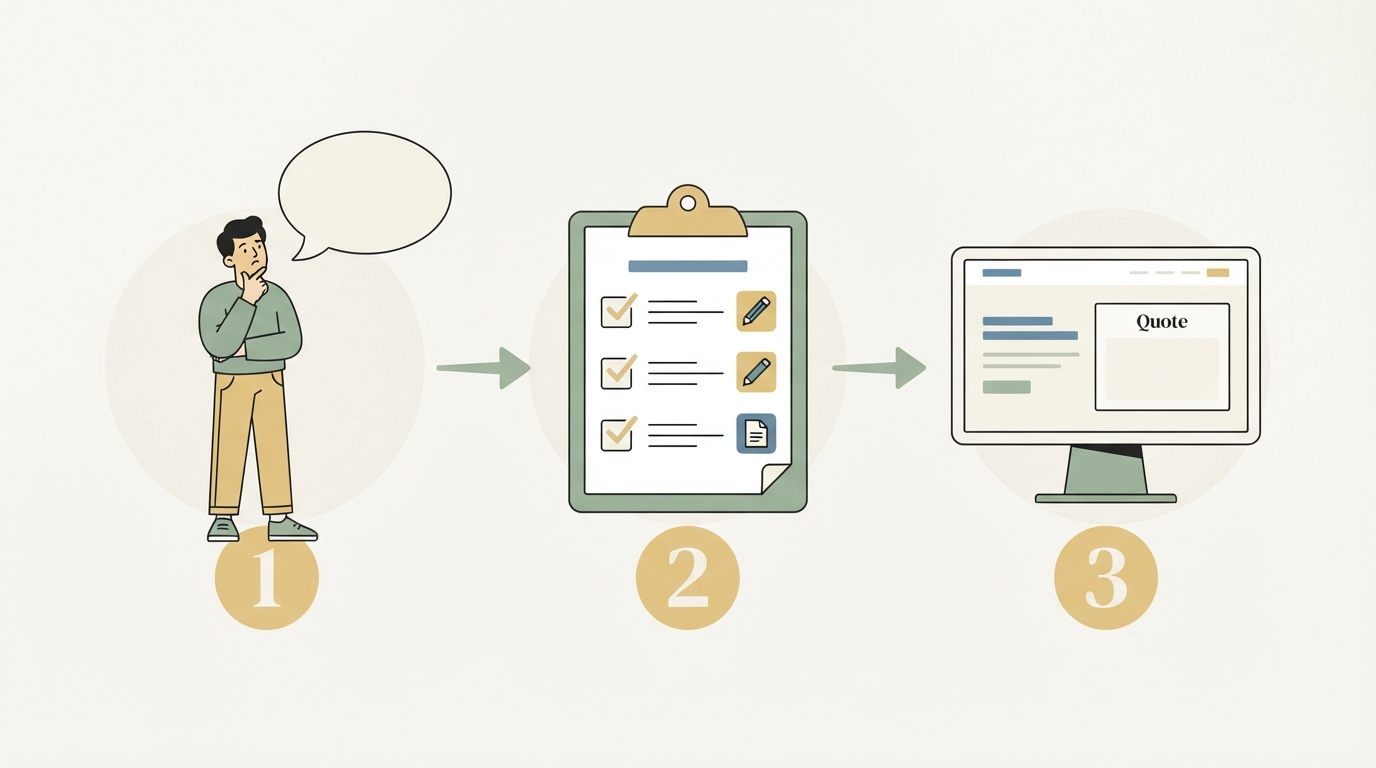
Here's a two-week plan if you want to start tomorrow.
Week 1:
Monday: Message 10 of your paying customers, a short, polite note asking for 10 minutes. Tuesday through Thursday: run 5–6 interviews, write down quotes. Friday: go to Reddit / Facebook groups in your niche, scroll through 50 posts about the core problem, copy quotes.
Week 2:
Monday: Build the spreadsheet structure (source, customer type, quote, problem/win). Tuesday: sort your 30–50 quotes into it. Wednesday through Friday: identify the top 3 patterns (which problem comes up most? Which words keep repeating?).
After two weeks, you'll have enough real customer voices to build your next ad, your next landing page, or your next video on actual words instead of gut feeling.
That's the point: collecting customer insights isn't optional. It's your direct line to what actually works.
Real data changes your whole understanding
This exact step — collecting and analyzing real customer voices — is the one most founders skip. They think they know how customers talk. They don't. Then they wonder why their first campaign flops.
Do it right, and you don't just change your messaging — you change your whole understanding of your product. You start seeing which features customers actually need (not which ones you think are cool), and which fears you really need to address.
At Starte.ai, we see this exact pattern every day: founders who start with real customer voices land their first campaign 3–4x more often than those who skip this step. We're constantly gathering data from hundreds of real projects — not just what works, but how real founders and customers actually talk in their market. That becomes part of your strategy: your messaging, your ads, your content.
If you want to know how your market really talks and how to translate that into messaging, we can dig into it together in a first strategy call. Free.
Usually 20–30 real quotes are enough. After about 15, you start seeing repetition. Trust quality over quantity.
Ask for permission. That's also the right thing to do, ethically and legally. An anonymous quote always works: "A customer told me…" If you want to name someone, ask first.
The bottom line: Collecting Voice of Customer isn't a project. It's a muscle you train. The more you train it, the faster you'll spot which words land and which don't. The more your messaging runs on real customer voices instead of your own assumptions, the higher your chances that people stick around.
Start this week. Message three customers. Look at one Reddit thread. Write down one customer quote. That's enough to begin.
To find out which ads are actually working for others, check out Analyzing Competitor Ads.
Frequently asked
How do I collect customer insights the right way?
You ask your customers directly — through interviews, not anonymous surveys. Message them personally, listen, and write down their exact words. This works with paying customers about 30–40% of the time, because they want to help you when it's quick and low-friction.
Which sources give you the best customer voices?
Your paying customers, rejected buyers, Reddit threads about the problem, support tickets, and 2–3-star reviews of competitors. Each source shows you how people actually talk about the problem — unfiltered and honest.
What do I do with the customer quotes I've collected?
Sort them into a spreadsheet by problem, win, and exact quote. Then use them directly as ad copy, hooks, and FAQ answers instead of generic marketing language. A customer quote beats any made-up slogan, because it feels real and AI answer engines cite it.
Why are real customer voices better than my own messaging?
Because people buy from people, not from marketing slogans. When you mirror your customers' exact words, it feels honest and trustworthy. Plus, ChatGPT and Perplexity love citing pages with real voices — meaning you show up more often in AI answers.
Written by
Bohdan BernatekFounder, Starte.ai
Founder of Starte.ai. Built a business to 125,000+ organic leads and seven-figure revenue — and now works with founders personally, deriving a strategy for their own brand from data across thousands of real projects and producing the creatives for it.