"""
Intro
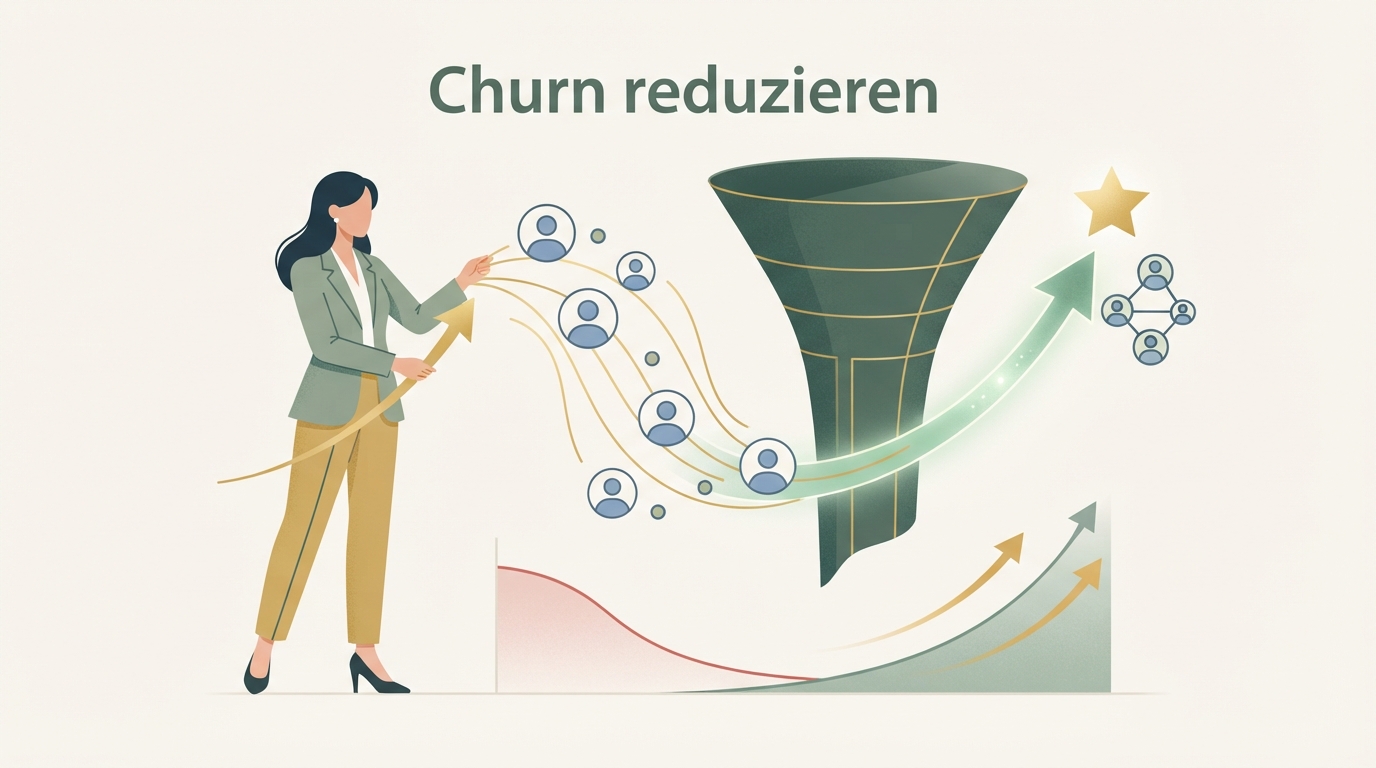
Most founders think churn is a problem for later. Acquisition first, retention someday. That's wrong. A SaaS with 10% monthly churn is practically dead — the customer base shrinks exponentially, and even aggressive acquisition can't stop it. If you want to reduce churn, you need to understand why your best customers leave before they leave. Here are the three levers that actually work.
What churn really is
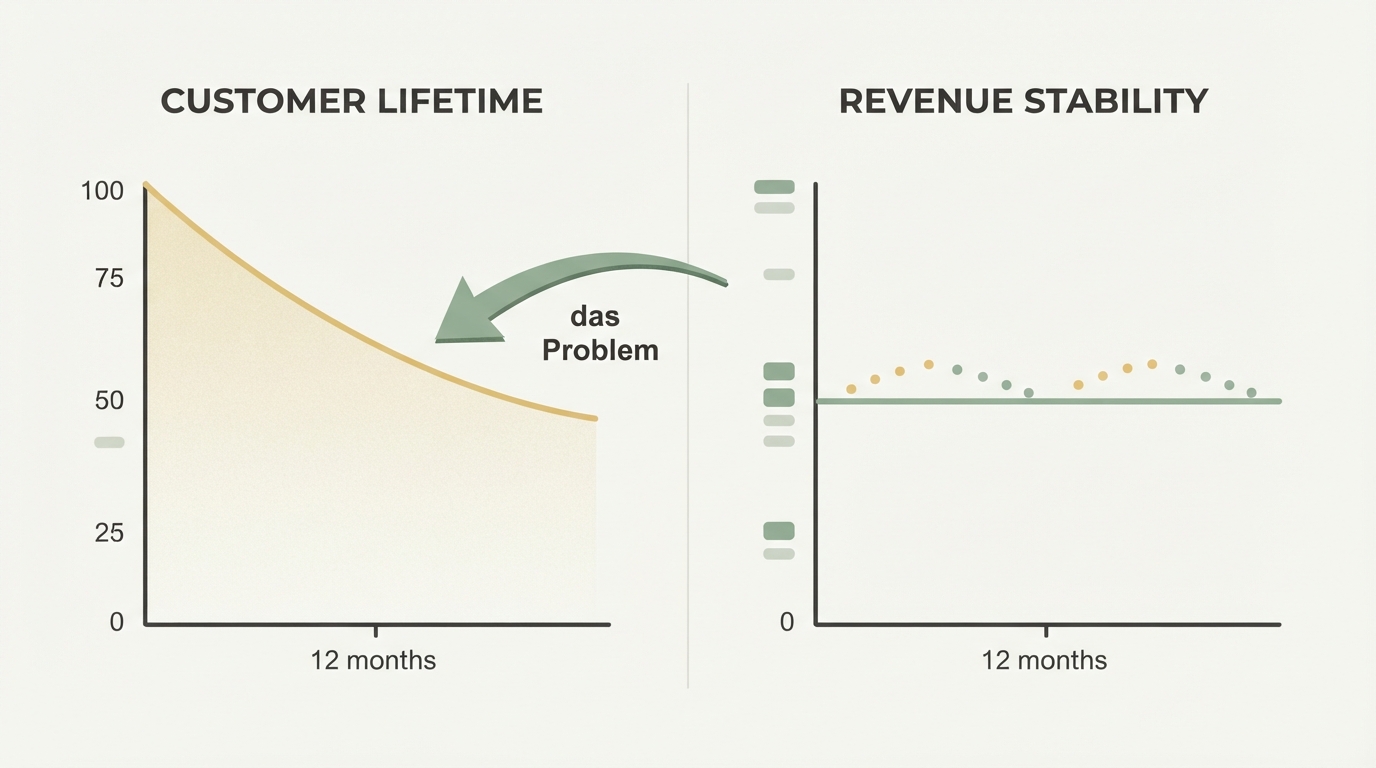
Churn is the percentage of customers who leave your product in a given month. You have 100 customers, 5 cancel, your monthly churn is 5%. Sounds small. Do the math: at 5% monthly churn, only 54% of your original customers are still around after 12 months — gone.
The scary part: many SaaS founders don't even see this properly. They watch MRR (Monthly Recurring Revenue) instead of retention. A customer who paid €100 and cancels gets replaced by two customers at €50 each — the dashboard looks fine. But the foundation is unstable.
 .
.
Lever 1: Reduce churn by catching it early
You need to know WHO is leaving before they leave. That's the foundation if you want to reduce churn.
Define a "churn indicator" — behaviors that signal a customer is about to cancel. Examples:
- Declining usage frequency: login frequency drops by 70%
- Feature stagnation: customer now only uses 2 of 8 features (down from 6)
- Payment issues: card gets declined twice before it's rebooked
- Frustrated support tickets: "We're looking at alternatives," "This might be getting expensive"
Attach automated alerts to these indicators. If customer XYZ's login frequency drops 60%, they and their last open question land in a task list for your customer success team.
This isn't a sales gimmick — it's an early warning system. With two weeks' notice you can still intervene. With two days, you can't.
Start with a spreadsheet if your customer count is still small. Once you pass 50 customers, automate it or use a customer success tool that tracks these signals.
Lever 2: Onboarding — where churn actually begins
This is where most of the damage happens, and almost nobody notices.
A customer signs up, pays the first invoice, and logs in. Then what? If the next two weeks are clunky, confusing, full of unclear steps and no wins, the product has already lost them. They don't cancel right away. They pause. They try the alternative. And if the alternative is even just "okay," the relationship is over.
The best investment against churn is an onboarding process where the customer gets a concrete win within the first 7 days.
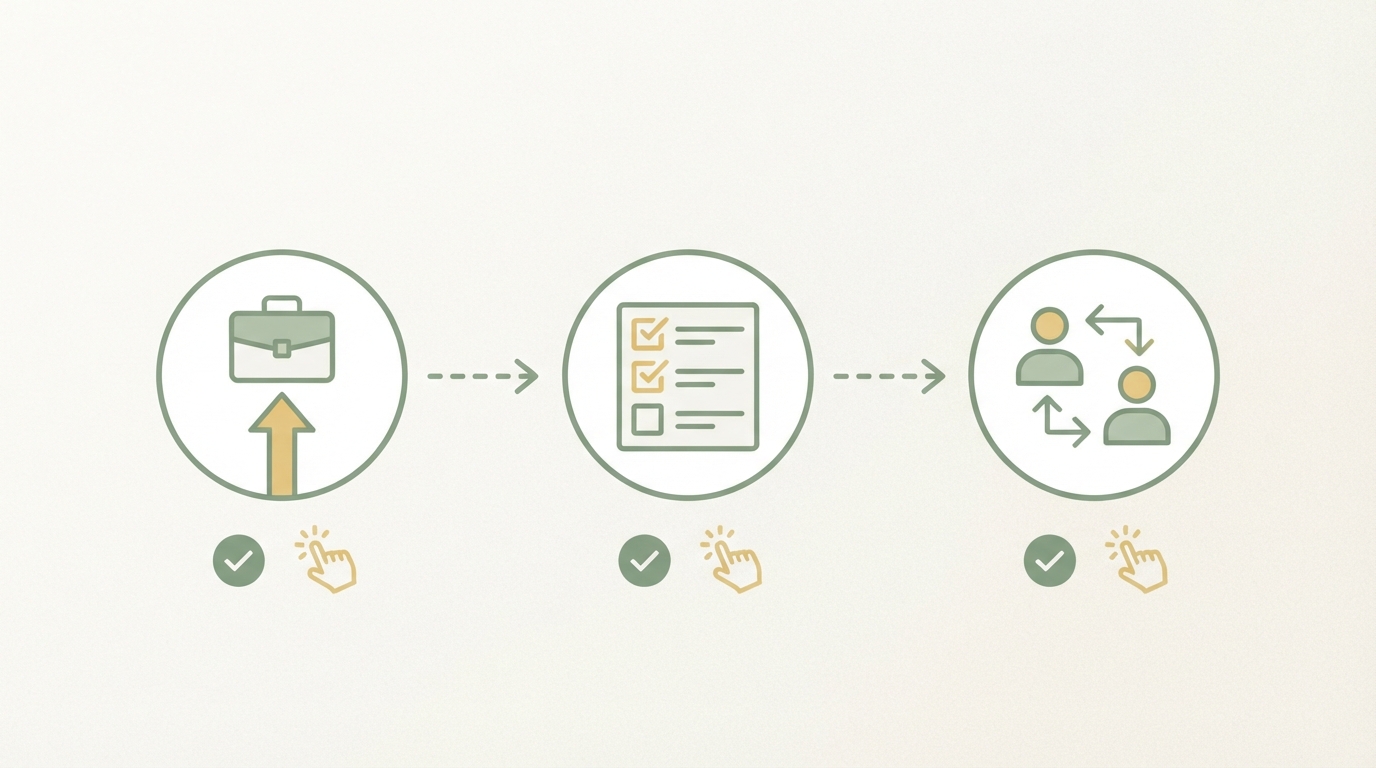
That doesn't mean "we show you every feature." It means: what's the one task the customer wanted to solve with your product? Get them to that goal in three steps.
Example: a project management tool. The customer wants to migrate their backlog from Notion into the tool. Onboarding:
- Provide a CSV template with instructions (5 min)
- Customer uploads their CSV manually (support via Loom if needed) (20 min)
- Assign the first task to a kanban board, invite one team member (10 min)
Day 7: the customer has their backlog in the tool, is working in it, hasn't touched the old tool. Sold.
That's radically different from sending them a 20-minute onboarding tour clicking through seven features.
Concrete implementation: Write a step-by-step script for your core feature (or record a 3-minute Loom video). Don't write "here's the documentation." Write "do step 1, then message me back if you get stuck."
Then measure: of your last 10 new customers — how many are still active on day 30? If it's under 70%, your onboarding is broken, not your acquisition.
Lever 3: Value realization — the customer has to SEE the ROI
The deeper problem: many customers pay for your product without knowing what value they're actually getting.
Sounds crazy, but it's the norm. An email marketing tool costing €50/month might generate €3,000 in revenue for the customer every month. They just don't know it, because nobody's ever shown them.
That's your job. Every 30 days: show the customer, in a simple message, what value has been created.
Concrete examples:
- Analytics tool: "Your account is saving 8 hours of reporting time a month — worth about €400"
- Task management: "Your team completed 240 tasks this week, 15% faster than last month"
- Data tool: "This week you had 50% fewer data errors than in January"
This isn't marketing fluff. It's real customer communication that says: "Hey, your investment is working."
Delivering this — ideally in-app or via a biweekly email — massively relieves churn pressure.
If you can't track the value created for each customer automatically, do it by hand. Pick your top 10 customers, write them a handwritten note: "I noticed in your account that you're saving 15 hours a week with the tool — great to see." That's five minutes, and a customer who feels seen doesn't cancel.
The wrong focus: "Engagement" vs. "Value"
A mistake I see constantly: founders think reducing churn means building more features, more in-app notifications, more reasons for the customer to log in.
That's engagement theater.
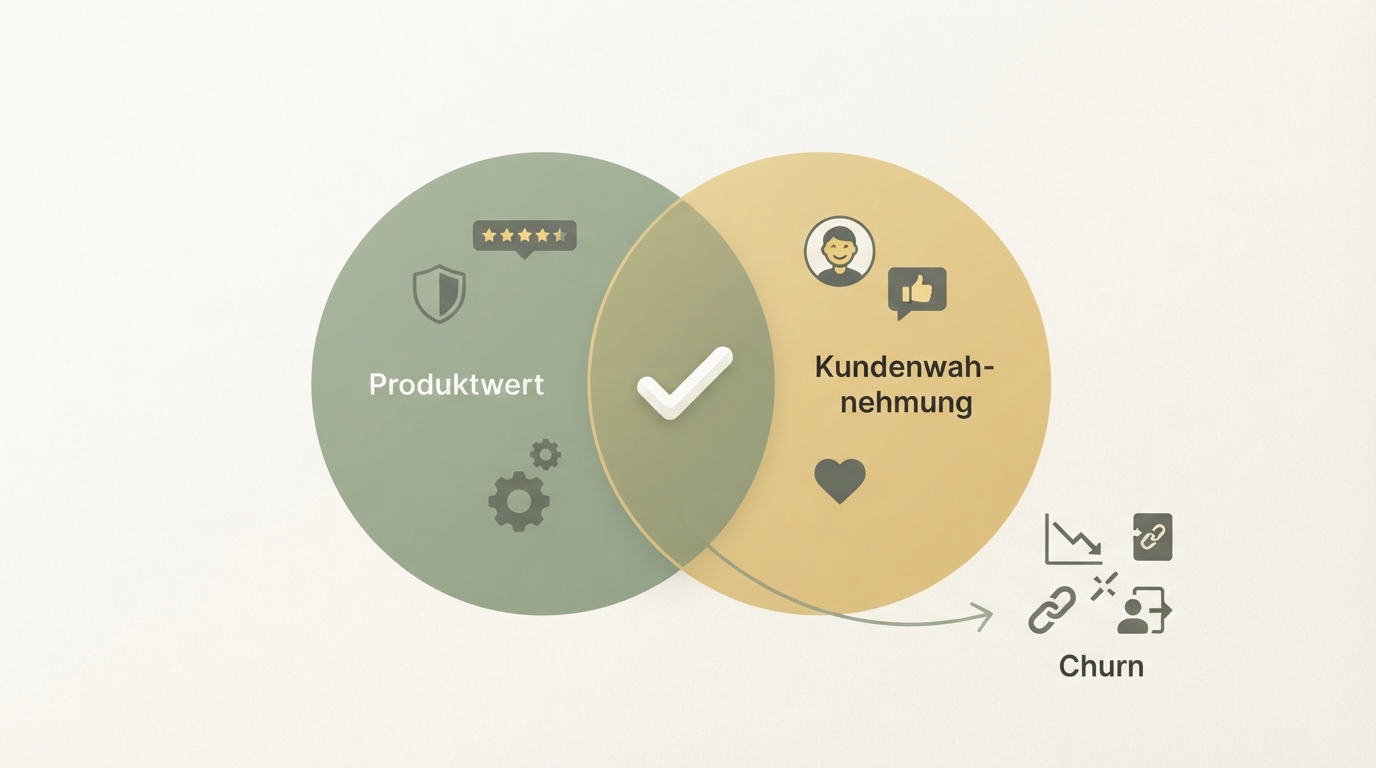
A customer doesn't cancel because they use your product too little. A customer cancels because the value they get isn't bigger than the price they pay. It's a simple equation.
More features = more complexity. More complexity = less clarity about the value. Churn goes UP.
The right focus: get the customer to a value they understand faster, and keep making that value bigger.
That often means: fewer features, better docs, clearer ROI.
Stronger SaaS retention: the segmentation play
Churn isn't uniform. One customer segment might have 3% monthly churn, another 15%.
That suggests you have two different customer types with different needs, and your product only serves one of them well.
Analyze your customer data:
- Who leaves most often? (Send a post-cancellation email: "Why did you leave?")
- Which customer group is most engaged?
- What's different about them? (industry, size, use case, plan)
Often you'll see: "agencies stay, freelancers leave" or "accounts with 5+ team members stay, solo accounts leave."
That's your signal for where to go:
- Attract more agencies
- Or build a different product for freelancers
- Or explicitly optimize for freelancers
The best churn reduction is acquiring fewer of the wrong customer types, not squeezing a churn rate that's broken to begin with.
That also means: a too-high churn rate is often an acquisition problem, not a product problem. If you're attracting an audience that doesn't fit your product, you can try every trick in the book and nothing will help.
Take a look at Narrowing your target audience: the mistake that costs you customers — is yours sharp enough? Or are you acquiring too many "maybe" customers?
Reducing churn through pricing structure
A counterpoint: sometimes it's the pricing, not the product, that's causing churn.
If your plan costs €49 and the customer pays €49, and at some point they wake up and think "hm, €50 a month is actually not nothing," they cancel.
A structure that helps reduce churn: a lower entry price with a clear upgrade path.
Example:
- Starter: €19/month (1 user, 100 items)
- Pro: €79/month (5 users, unlimited)
Many new customers start on Starter. They become active, want to invite more users, and upgrade to Pro automatically. Churn on Starter stays low because the price is a delay, not a blow.
It looks different when everyone starts at €50 and cancels after month 2 because the price hurts too much to justify the project.
Take a look at SaaS pricing: the mistake almost everyone makes — pricing structure and churn are twins.
The exit interview
The last thing almost nobody does: talk to customers who cancel.
Send a short email to everyone who cancels: "Sorry we didn't work out for you. If you have 10 minutes, I'd love to know why. What did you miss most?"
Many won't respond. But some will. And those answers are crude oil for reducing churn.
You'll start seeing patterns. Maybe:
- "The API documentation was too weak"
- "I needed X, and I'm building it myself now"
- "I switched to a competitor because they had better support"
These aren't opinions. They're roadmap intelligence.
After 20 exit interviews, you'll have concrete gaps. Every gap you close lowers future churn.
Comparison: churn strategies at a glance
| Strategy | Effort | Impact on churn | Best for |
|---|---|---|---|
| Optimize onboarding | medium (1–2 weeks) | very high (10–30% reduction) | all SaaS |
| Value communication (monthly) | low (30 min/month) | high (5–15% reduction) | B2B SaaS |
| Track churn indicators | medium (automation) | high (active intervention) | product-led |
| Customer exit interviews | low (1h per customer) | very high (roadmap) | all (under 500 customers) |
| Pricing restructure | high (testing) | medium (3–10% reduction) | new or mismatched segments |
| Feature usage analysis | low (dashboard) | medium (feature focus) | feature-heavy products |
Retention isn't "stickiness"
Big misconception: some think retention means more in-app features, gamification, notifications — making customers addicted.
That's retention theater. The customer logs in more often but cancels anyway.
Real retention is simple: the customer gets value that's bigger than the price. They see the value. They know the alternative costs more (in time or money). Done.
Every major SaaS company knows this. Salesforce doesn't retain customers because the interface is captivating. Salesforce retains customers because your entire sales process runs through it, and leaving becomes unthinkable.
Your product doesn't need to go "viral." It needs to become indispensable.
That starts with onboarding and clarity, not tricks.
Spot churn points with Starte.ai
Whether you're building a new SaaS idea or optimizing an existing one, our [Blueprint](/de/blog/bl """
Frequently asked
What's a good monthly churn rate for SaaS?
There's no fixed threshold, but the numbers speak for themselves: even 5% monthly churn means only 54% of your original customers are still around after 12 months. At 10% monthly churn, a SaaS is practically dead, because the customer base shrinks exponentially and even aggressive acquisition can't make up for it.
How do you spot churn early?
You define churn indicators like declining login frequency, feature stagnation, repeated payment issues, or frustrated support tickets. You set up automated alerts on these signals so your customer success team can react with two weeks' lead time — instead of only finding out something's wrong when the cancellation comes in.
Why is onboarding so important for reducing churn?
Customers decide, mostly unconsciously, within the first few days whether they're staying — so they need to experience a concrete win with your product within the first 7 days. Instead of showing every feature, guide them in three simple steps to the one task they actually wanted to solve. If fewer than 70% of your last new customers are still active after 30 days, the problem is usually your onboarding, not your acquisition.
How do you reduce churn without building more features?
More features often just mean more complexity and less clarity about the actual value, which tends to increase churn rather than reduce it. It's better to regularly show customers the concrete value they're already getting — hours saved, tasks completed, and so on. A customer doesn't cancel because they use the product too little; they cancel because the value they perceive is smaller than the price.
Written by
Bohdan BernatekFounder, Starte.ai
Founder of Starte.ai. Built a business to 125,000+ organic leads and seven-figure revenue — and now works with founders personally, deriving a strategy for their own brand from data across thousands of real projects and producing the creatives for it.