Winning back customers: why the discount was almost never the real reason
Winning back customers rarely works through a coupon. Almost every cancellation hides a trust or value problem, not a pricing problem — and that's exactly where the mistake almost everyone makes comes in.
Plenty of teams have been getting this wrong for years: a customer cancels, a discount code goes out right after, and nothing ever comes back. No surprise there — nobody bothered to ask why the customer wanted to leave in the first place.
What reactivation actually means
Reactivation is the deliberate process of getting churned customers to buy again or renew their subscription — not by chance, but through a structure of outreach, diagnosis, and offer. The difference from acquiring new customers: you already know these people. You know what they bought, how long they stayed, and often exactly when things started falling apart.
That's a huge advantage almost nobody uses. A new prospect needs trust built from zero. A former customer already had that trust once — you just need to find out where it broke.
Why most companies still miss the real reason
Companies rarely ask directly, because an honest answer might be uncomfortable. It feels more productive to fire off an offer than to ask an awkward question. But without the answer, you're basically shooting in the dark.
A short, honest question beats any discount campaign: "What didn't work for you with us?" That one line separates customers who left over price from those who left out of frustration — two completely different problems to solve.
The 3 most common reasons customers churn — and what they mean
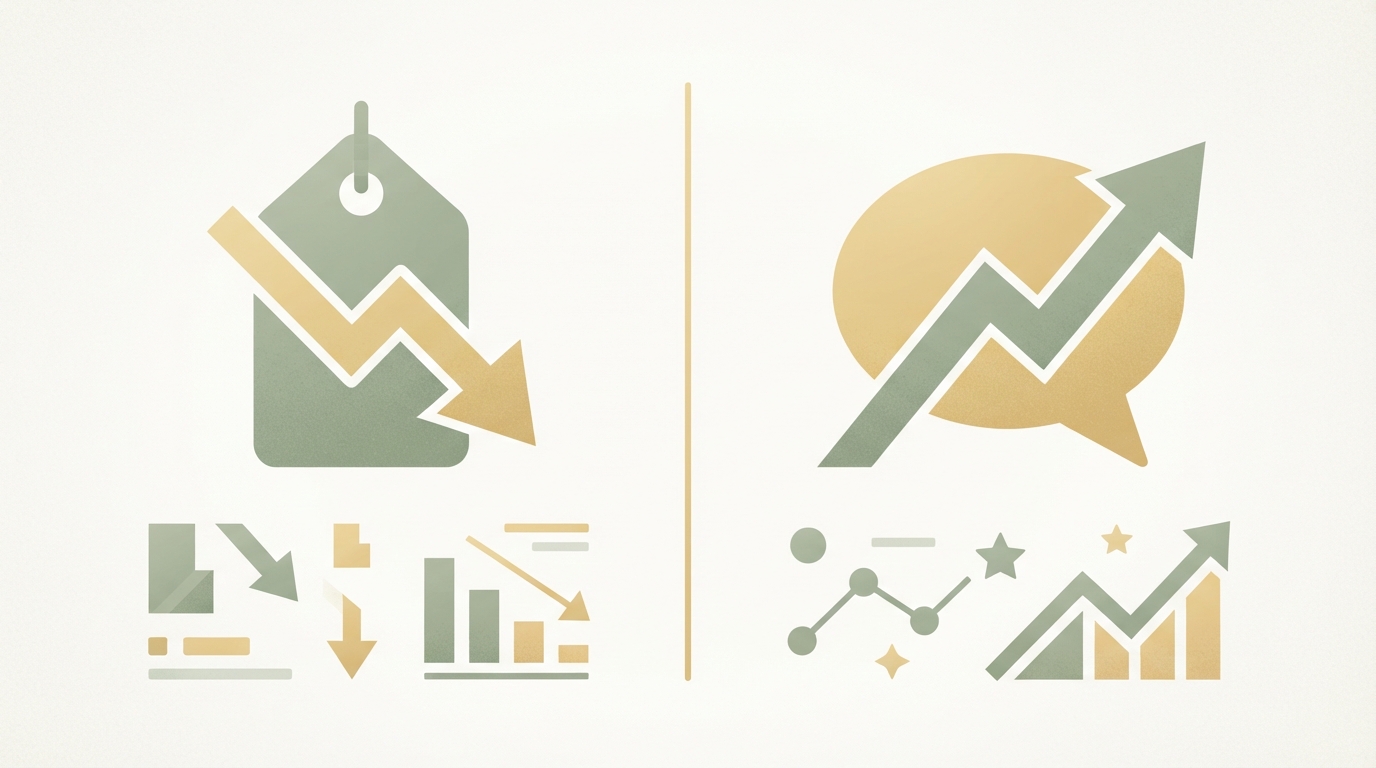
Recurring patterns in cancellation conversations usually boil down to three dominant reasons: price, an unresolved problem, or lack of attention. Each reason needs a different response, and mixing them up burns your last shot at winning the customer back.
| Reason | Typical signal | What actually helps |
|---|---|---|
| Price too high | "Too expensive for what I need" | A smaller plan, not an automatic discount |
| Unresolved problem | "Didn't solve my problem" | An honest conversation, maybe show a new feature |
| No perceived value anymore | Barely logs in, no complaints, just goes quiet | A concrete example of what they're missing out on |
The third case is the hardest. No frustration, no complaint — people just vanish quietly. These are often the ones a discount email helps least, because the problem was never about price to begin with.
How a real winback campaign is actually structured
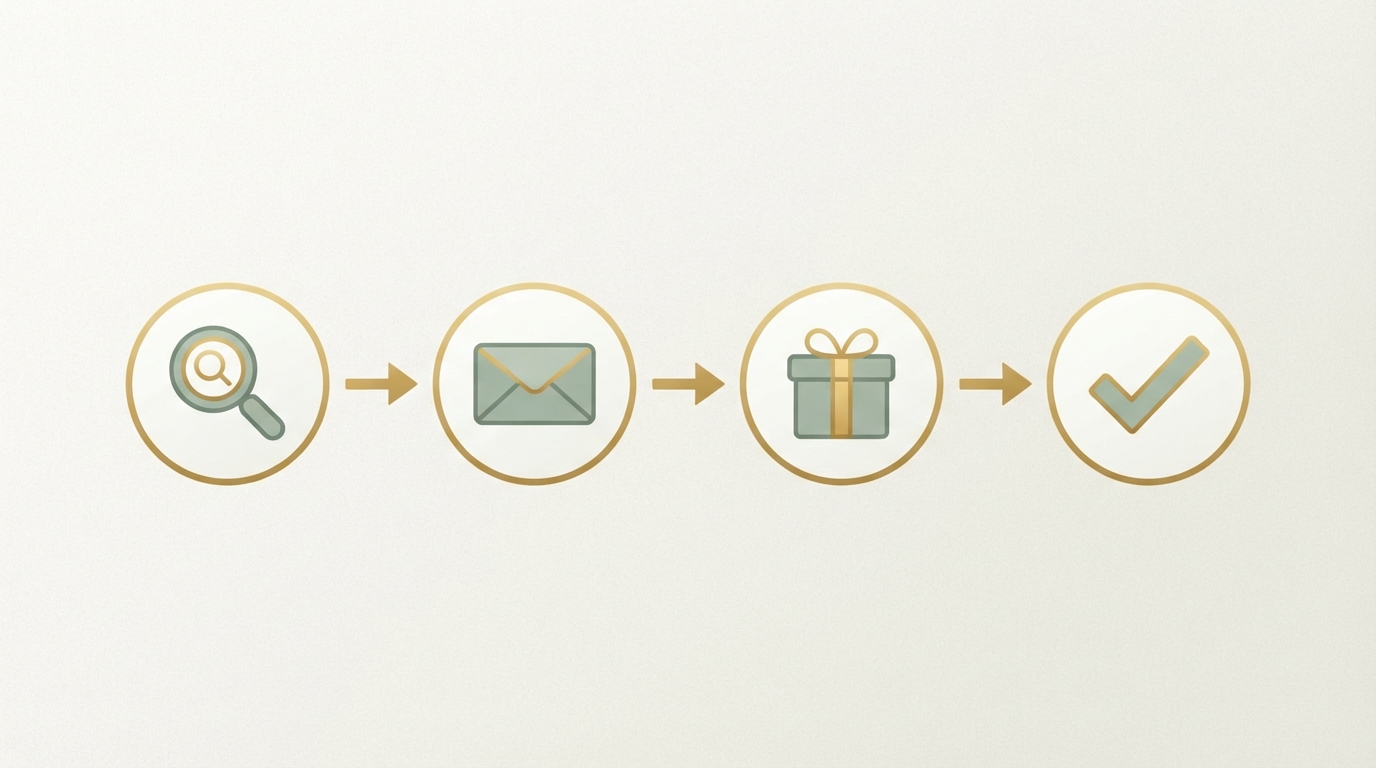
A working winback campaign is a sequence of at least three messages that put diagnosis before the offer — not a single discount email. The order makes the difference between "just another promo email" and "they actually thought of me."
Step 1: The reason message
Don't send a sales email first — send a real question. Short, personal, no offer attached. Something like: "Noticed you haven't logged in since [timeframe] — what went wrong on our end?"
Important: no buttons, no discount code in this first email. It should read like a genuine question, not a trigger fired from a marketing tool. Reply rates here are often surprisingly high, simply because hardly anyone else asks this way.
Step 2: Process the answer — and filter the right people
Not every reply deserves the same response.
Some customers just aren't the right audience anymore. Two typical cases:
- their needs have changed completely
- they never really matched the actual value you provide
Those you should let go, rather than pouring energy into a win-back that won't stick anyway. That sounds harsh, but it's simple economics: a customer you win back who cancels again after two months costs you more effort than they're worth. Focus on the ones whose reason was actually fixable — a missing feature, a misunderstanding, a bad support experience.
Step 3: The targeted offer
Only now, armed with the answer from Step 1, do you build an offer that matches the stated reason exactly. If price was the issue, show a smaller plan. If a feature was the issue, show that specific new feature — not a general list of updates.
Step 4: The final message with a clear end date
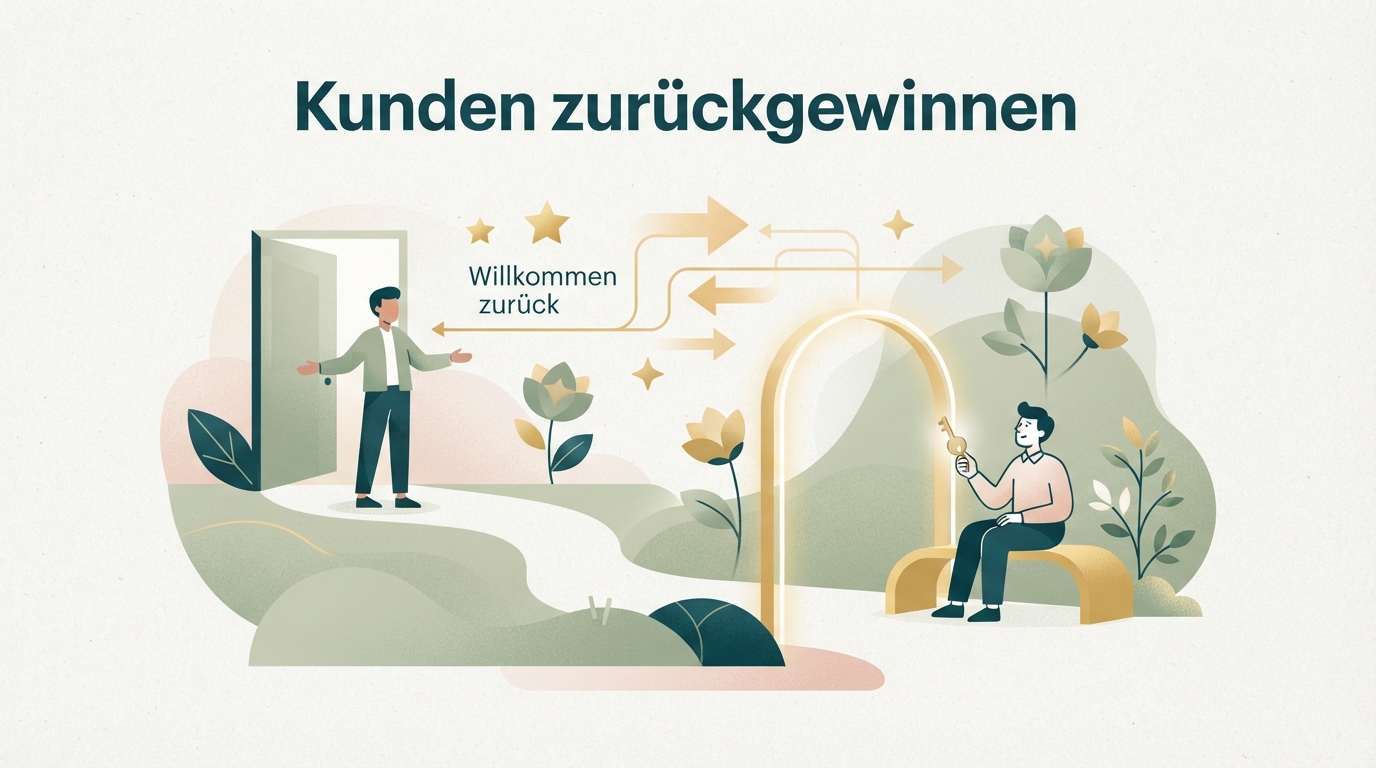
Set a clear point where you stop reaching out. Without an end date, you end up in an endless loop of reminder emails that eventually just annoy people and hurt the brand. A last message saying "This was our final attempt, but the door stays open" often lands as more respectful than endless follow-up.
Who you should really let go
Not every churned customer is worth winning back, and accepting that saves you time and energy. Some cancellations are simply the result of product-market-fit problems, not communication failures.
Three signals that someone never really fit in the first place:
- wrong use case from the start
- budget that structurally doesn't match the product
- expectations your product could never meet
For these cases, a winback campaign rarely helps. Better to put that effort into customers whose usage was going well and then stopped for a specific, nameable reason. If you're wondering how to spot such patterns earlier in general, How to Find Product-Market Fit: 6 Steps Instead of Gut Feeling covers the background on why some customers structurally never fit in the first place.
One concept that fits well here: Patrick McKenzie (patio11) has written for years about how not every customer is worth the same — some segments cost more in support than they bring in revenue. That holds just as true for win-back as it does for new customer acquisition.
Channels for outreach: email, in-app, or both
Email remains the most reliable channel for winback, because it's asynchronous and no platform algorithm gets in the way. In-app messages only work if the customer still logs in occasionally — for completely inactive users, they're useless because no one ever sees them.
For SaaS products with mandatory login, a combination pays off: email for the initial outreach, an in-app nudge as reinforcement once someone does check back in. For pure e-commerce customers with no login, the in-app piece falls away entirely, leaving email as almost the only option besides paid retargeting.
Timing: when to reach out after churn
The best window for the first winback message is usually between two and six weeks after cancellation or the last active login. Too early feels pushy; too late and the customer has often already forgotten the brand or settled firmly on an alternative.
For subscription-based products, you can anchor on the cancellation date. For products without a fixed cancellation moment — app usage that just tapers off, for example — an inactivity trigger helps: no login for X days fires the first message. The exact number depends heavily on the product. For daily-use tools, two weeks of inactivity is already a warning sign; for monthly-use tools, more like six to eight weeks.
Looking at trigger timing across various projects, we've often seen teams apply a single generic rule across their whole product, regardless of whether it's used daily or monthly — which means they either nag too early or miss the moment entirely. That's exactly why it pays to set your own inactivity trigger based on actual usage frequency, rather than copying a number from a blog post.
Copy that often works well in practice
A few phrasing approaches that tend to perform better in winback sequences than classic marketing language:
- Question instead of statement: "What didn't work for you with us?" instead of "We miss you!"
- Concrete detail instead of a generic line: "You never tried [feature]" instead of "There's a lot that's new"
- Clear end date instead of endless loop: "This is our last message about this" instead of following up forever
If you want to sharpen your copywriting in general, not just for winback, How to Write Good Ad Copy: The Mistake Almost Everyone Makes covers more on this. The principles behind good sales copy apply just as much to win-back emails as to new-customer ads — the tone should just be more personal and less salesy.
Measuring whether the campaign actually works
You can only judge a winback campaign if you have a baseline beforehand: how many of the customers you reached out to actually became active again, measured over at least 60 to 90 days, not just the first click. A click on the email doesn't mean much yet — only repeat usage or a second purchase counts as genuine reactivation.
Two numbers are especially worth tracking: the reply rate on that first reason-question, and the actual reactivation rate afterward. If a lot of people reply but hardly anyone comes back, the problem usually sits in the offer from Step 3, not in the outreach itself. For more on handling metrics like these in general, see SaaS Metrics: The 5 Numbers Almost Nobody Reads Correctly if you want to clean up how you track retention.
If you want to systematically figure out which trigger timings and channels actually fit your specific niche, that's exactly where Starte.ai comes in: we analyze data across many real projects and use it to draw conclusions that can fit your specific market. The first strategy call is free.
Winning back customers doesn't start with a discount code — it starts with an honest question. Structure your next winback sequence like this: ask first, then filter, then make a targeted offer, and set an end date for that last message right from the start.
Frequently asked
Why do discounts often fail to win back customers?
Because churn is almost never purely a pricing problem — it's usually rooted in trust or a lack of perceived value. A discount only treats the symptom, not the actual reason someone cancelled. Without knowing why the customer really left, you're essentially shooting in the dark.
What are the most common reasons customers churn?
The three typical reasons are a price that's too high, an unresolved problem, or simply a lack of attention where customers quietly disappear. Each reason calls for its own response — for example, a smaller plan for price issues, or a specific feature for unresolved problems. The silent case with no complaint is usually the hardest to win back, since a discount email helps least here.
How do you properly structure a winback campaign?
A good winback campaign consists of at least three to four messages in a fixed order: first an honest question about the reason for cancelling, then filtering the responses, then a targeted offer matched to the stated reason, and finally a last message with a clear end date. It's important that the first message contains no discount code or sales offer, and genuinely reads like a real question.
Should you really try to win back every churned customer?
No — some customers never really fit the target audience in the first place, whether due to the wrong budget or mismatched expectations from day one, and a winback campaign rarely does much for them. It's better to invest that energy in customers whose usage was going well and then stopped for a specific, nameable reason. A won-back customer who cancels again shortly after often costs more effort than they're worth.
Written by
Bohdan BernatekFounder, Starte.ai
Founder of Starte.ai. Built a business to 125,000+ organic leads and seven-figure revenue — and now works with founders personally, deriving a strategy for their own brand from data across thousands of real projects and producing the creatives for it.