
"""
What is Alphaxiv?
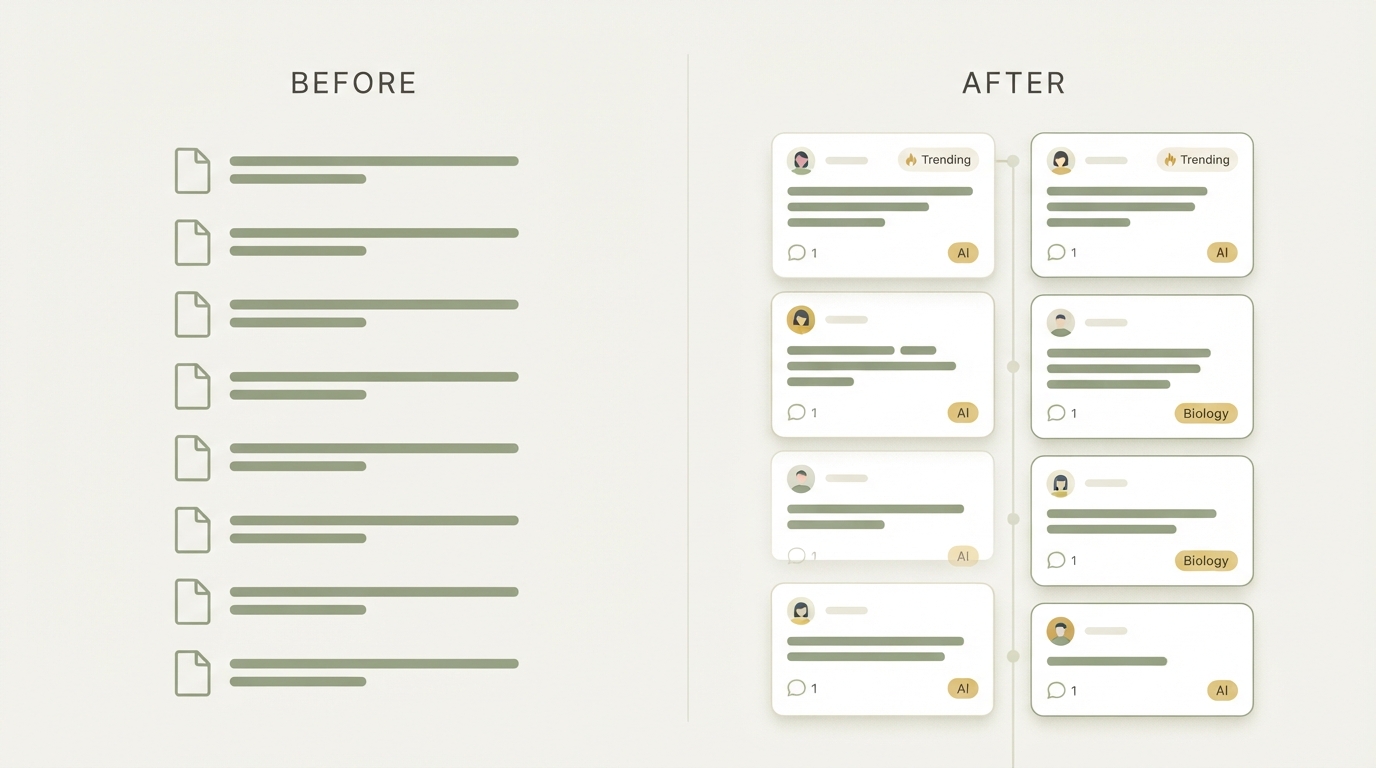
Alphaxiv is a personalized research feed for arXiv papers, complete with a trending function and community discussions. The problem: arXiv publishes hundreds of new ML papers every day, but there's no filtering, no author following, no community discussions. Alphaxiv solves exactly that — a personalized feed, a trending function for papers that are currently being discussed, and a discussion layer right on the paper itself.
Micro-SaaS products like this look tiny at first glance, but they pull in an estimated six figures a month. No hype product, no big launch — just a tool solving a very specific problem for a very specific group: people who need or want to read research papers every day.
Who uses Alphaxiv?
The target audience is researchers and ML practitioners who face hundreds of new papers every day. What bothers them most: the official arXiv site is functional, but has barely changed in decades. No feed, no recommendations, no community layer.
Students run into this too. As does anyone who works professionally with scientific literature.
Anyone trying to stay on top of things day to day either spends hours combing through RSS feeds or just leaves it to chance. That's exactly the gap Alphaxiv stepped into.
How Alphaxiv probably came to be
A product like this doesn't come out of a market analysis on a drawing board — it comes out of personal frustration. Based on what's publicly available, Alphaxiv is likely around 2–3 years old, putting its origin right around the time AI research exploded and the sheer volume of papers being published daily became overwhelming for a lot of people.
The features aren't generic "content discovery" building blocks. They're very precisely tailored to how researchers actually work. The founders were likely from an academic or ML background themselves — a trending feed for papers currently being discussed in the community only makes sense if you need that yourself every day. Author following, because in research certain names simply matter more than others. A discussion feature right on the paper, because otherwise researchers end up talking about the same ten papers scattered across Twitter threads or Slack groups.
There's a pattern I keep noticing: the best micro-SaaS ideas don't come from people who "identify" a market — they come from people who feel a problem themselves, every single day. In my article Finding a SaaS Idea in 2026: The Path from Problem to Product I go into more depth on how that works.
The wedge: what Alphaxiv does differently
Alphaxiv's wedge is simple: the gap between a huge but sterile piece of infrastructure (arXiv) and what users actually want — relevance and context. arXiv itself is an incredibly important, but deliberately minimalist, piece of infrastructure. It's a preprint server, not a consumer product. That's exactly what opens the door for layer products.
At its core, this is nothing more than the "copy with better UX" principle. You take a foundation that already exists and that the market already trusts, and build a ten-times-better experience on top of it. Not inventing new functionality — just making the existing function so simple that it feels like it should have always worked this way.
Why a "boring" niche works here
Scientific literature doesn't sound sexy — which is exactly why hardly anyone works on it and the niche gets overlooked. Taxes, compliance, scientific literature: it sounds dry, but that's exactly where you find people with real, everyday problems who are willing to pay for a solution.
Here's the interesting part too: if you're genuinely into a topic like machine learning papers, you automatically gain deep market knowledge. If you read ML papers yourself, you naturally pick up on which authors matter, which conferences matter, how the community ticks. You can't just google that.
The business model
The numbers look small. But they're not.
Alphaxiv runs on a freemium model: core features are free to use, while a Pro version with advanced features costs money. Exact pricing isn't publicly available — a normal pattern for B2C freemium products with wide reach. You optimize for user numbers and engagement first, and monetization comes later, or runs quietly in the background through a small paying core.
That makes strategic sense for this audience. Researchers and students are notoriously price-sensitive, but a small group — power users, institutions, maybe even companies in the ML space — are quite willing to pay for a better tool. With an estimated several hundred thousand monthly visits, even a very small conversion rate into paying users is enough to sustain a solid business.
The numbers in detail (estimates)
All figures below are rough estimates from publicly available sources. They are not confirmed company figures.
| Metric | Estimated value |
|---|---|
| Monthly traffic | estimated several hundred thousand visits |
| Estimated MRR | estimated low-to-mid six figures (USD) |
| Revenue tier | small |
| Product age | approx. 2–3 years |
| Target audience | B2C |
| Monetization | Freemium, Pro tier |
| Buildability | hard |
| Estimated time to MVP | 8–12 weeks |
Traffic is big, revenue is small. That's normal for freemium products aimed at students — hardly anyone pays, but plenty of people drop by. That's not failure, it's simply how freemium mechanics work with an academic audience.
The lesson for you
Take a powerful but unfriendly piece of infrastructure that a lot of people have to use every day, and build a layer of friendliness on top of it. arXiv, GitHub, government portals, old industry software — anywhere important-but-aging infrastructure exists, there's room for a layer product.
You don't have to reinvent arXiv. You don't even have to technically beat it. You just have to build the experience around it so it feels ten times better. That's a much smaller, much more achievable first step than "build a new research database."
Before you build anything, there's one thing you absolutely need to do: talk to real users about their problem, not about your solution idea. It's called the Mom Test — don't ask "wouldn't that be cool?", ask "how do you handle this right now, and what bugs you most about it?" Only once you hear a recurring, concrete pattern there do you have something worth building.
Where buildability gets hard
Buildability for Alphaxiv is rated "hard," with an estimated time to MVP of 8 to 12 weeks. That's mainly down to three things: you need a reliable connection to the arXiv API and have to cleanly process large volumes of data, you need a working recommendation system for the personalized feed, and you need a community layer (discussions, following) that takes a lot more effort — technically and in terms of moderation — than a plain CRUD tool.
As a solo founder you can still build something like this. Just plan realistically.
A much narrower tool is already enough: just trending papers for a single sub-niche of arXiv, no community feature, no recommendation algorithm. Smaller scope, faster MVP, real learning with real users.
Alphaxiv compared to similar layer products
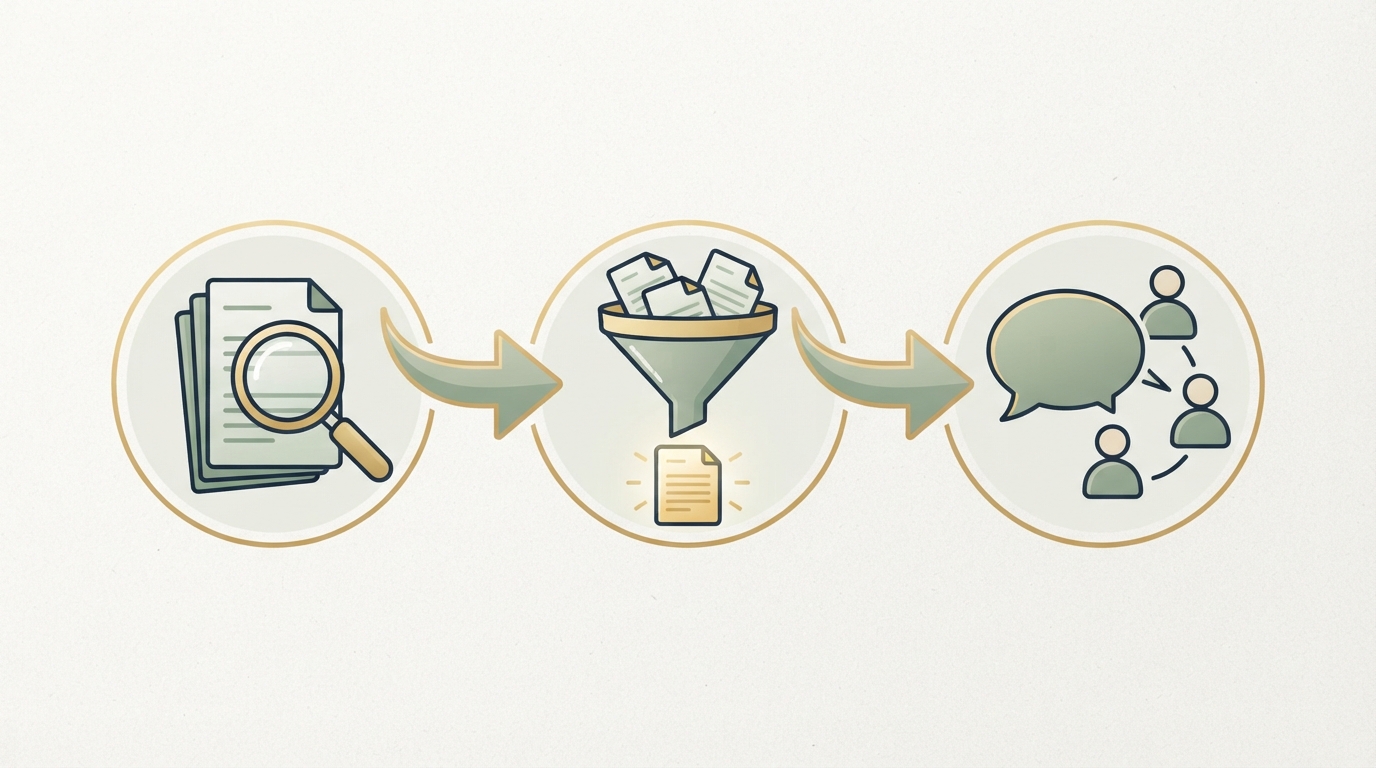
To get a better sense of the wedge, it's worth looking at similar products that follow the same core principle: making an existing, clunky piece of infrastructure more user-friendly.
| Product | Base infrastructure | Core feature | Monetization |
|---|---|---|---|
| Alphaxiv | arXiv | Personalized feed, trending, following | Freemium, Pro tier |
| Circleback | Meeting recordings | Automatic notes & summaries | Subscription |
| Loops | Email infrastructure | Simplified email marketing for SaaS | Subscription |
None of these three products are built on a brand-new idea — they're built on an existing, often technically complicated foundation that they radically simplify. If this pattern interests you, we took a closer look at Circleback in our own SaaS breakdown of Circleback, and you can see how Loops applies the same principle in email in our Loops breakdown.
What you can actually do next
If the pattern behind Alphaxiv appeals to you, the first step isn't "learn to code" — it's figuring out exactly where a similar gap exists in some other piece of infrastructure. That could be a government database, old industry software, a public registry. Anywhere people have to fight their way through something inconvenient every single day because there's no alternative.
Once you've found an idea like that, I'd get concrete right away: what features does an MVP actually need, what tech stack fits, and what does a realistic timeline look like? That's exactly what we built the blueprint for.
If you're still just starting out and want to understand the basics of what micro-SaaS even means and why small, focused products like this can work, What Is Micro-SaaS? Explained Simply, with Examples is a good place to start. """
Frequently asked
Was ist Alphaxiv genau?
Alphaxiv ist ein personalisierter Research-Feed für arXiv-Papers mit Trending-Funktion und Community-Diskussionen. Er löst das Problem, dass arXiv selbst kein Filtern, Autoren-Following oder Diskussionen bietet. Zielgruppe sind Forscher, ML-Praktiker und Studierende, die täglich neue Papers lesen wollen.
Ist Alphaxiv kostenlos?
Alphaxiv arbeitet mit einem Freemium-Modell: Die Grundfunktionen sind kostenlos, eine Pro-Version mit erweiterten Funktionen kostet extra. Genaue Preise sind öffentlich nicht einsehbar.
Wie viel Umsatz macht Alphaxiv?
Laut Schätzungen liegt der MRR im niedrigen sechsstelligen Bereich (USD) bei geschätzt mehreren hunderttausend monatlichen Besuchen. Diese Werte sind grobe Schätzungen aus öffentlichen Quellen, keine bestätigten Unternehmenszahlen. Trotz des kleinen Umsatzes gilt Alphaxiv als solides Freemium-Geschäft in einer preissensiblen Nische.
Wie schwer ist es, ein Tool wie Alphaxiv nachzubauen?
Die Buildability wird als „schwer" eingestuft, mit einer geschätzten Zeit bis zum MVP von 8 bis 12 Wochen. Der Aufwand liegt vor allem in einer zuverlässigen arXiv-API-Anbindung, der Verarbeitung großer Datenmengen und einem funktionierenden Empfehlungssystem.
Written by
Bohdan BernatekFounder, Starte.ai
Founder of Starte.ai. Built a business to 125,000+ organic leads and seven-figure revenue — and now works with founders personally, deriving a strategy for their own brand from data across thousands of real projects and producing the creatives for it.