What is an MVP, really?
Building an MVP means, concretely: testing with minimal effort whether anyone will pay for it. That's different from building a small version of your big vision, and this is exactly the distinction almost every first-time founder misses. The most common mistake: first-time founders build a mini-product instead of a test.
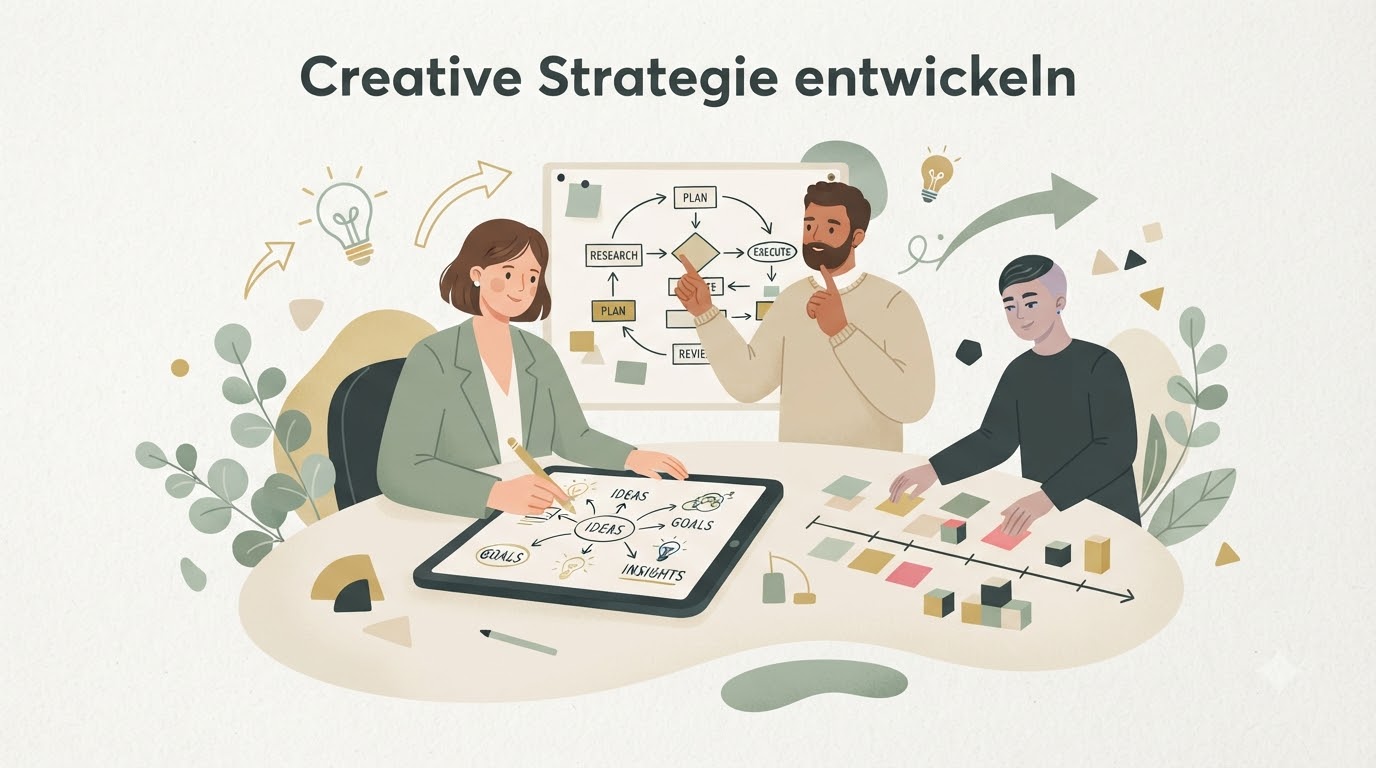
A Minimum Viable Product is the smallest version of a product that lets you test a real purchase decision — not the smallest version of your finished idea. The difference sounds pedantic, but it's crucial. Most people read "minimal" as "fewer features" and still spend weeks building actual software. But an MVP isn't a small product. It's an experiment with one clear goal: learning whether your problem is real and whether people will spend money to solve it.
Eric Ries made the term famous, but the idea behind it is older and simpler than its reputation suggests. It's about the shortest path between an assumption and proof. Not about code.
Why most people still build too much
Because building feels productive. You sit at your computer, commit code, see progress. Market validation, on the other hand, feels uncomfortable: you have to talk to strangers who might tell you your idea doesn't work. I did the exact same thing when I started. I'd rather spend three weeks polishing a dashboard than message ten potential customers and risk hearing "no."
Code feels like progress. But often it's just a distraction from the real question.
Can you really build an MVP without code?
Yes — in most cases it even works better, because you get to real feedback faster. A no-code MVP doesn't mean hacking something together; it means deliberately skipping anything that can be automated or coded before you know whether it's worth it.
A few examples that often work well in practice:
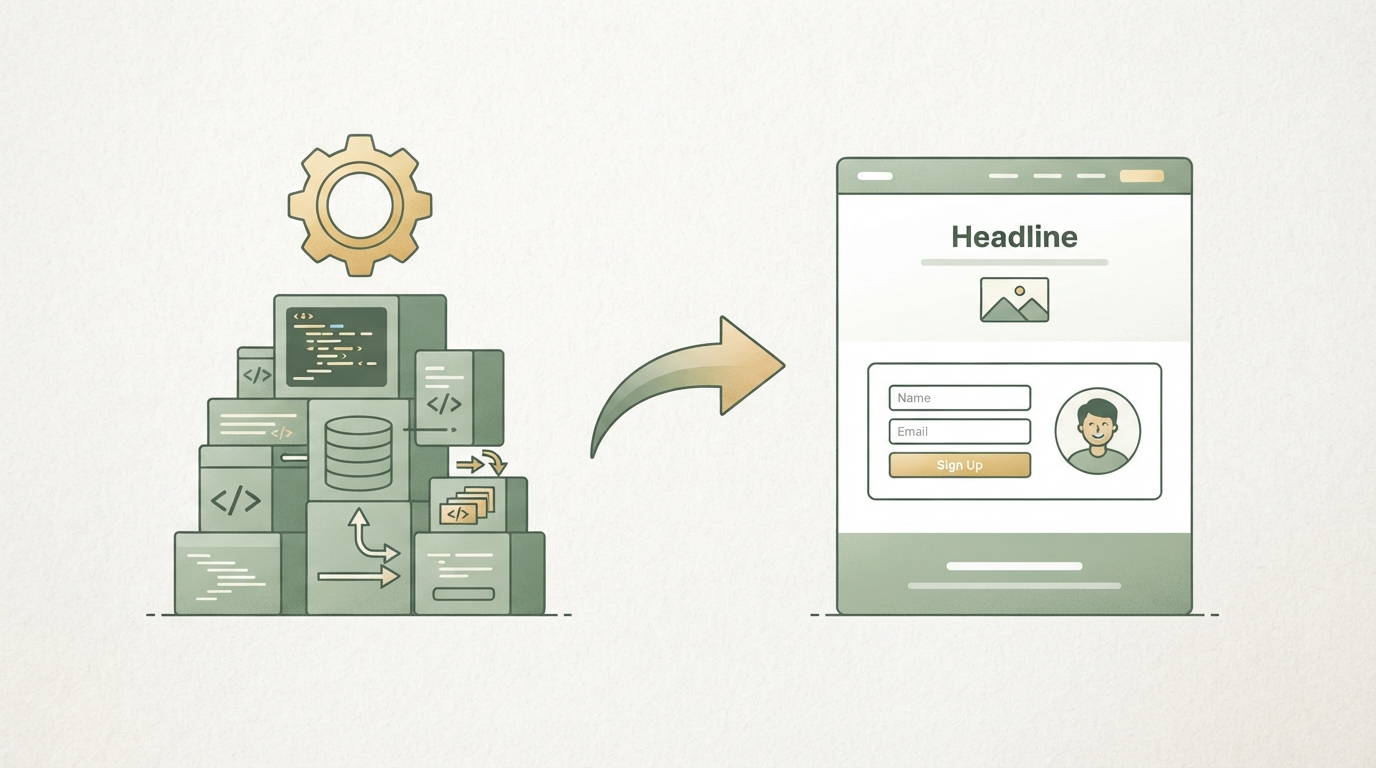
- A landing page describing your product as if it already existed
- A form or calendar link where people sign up for a beta list
- A manual service running behind the scenes, while the user sees a simple interface (a "concierge MVP")
- A Google Sheet plus emails, standing in for what should eventually be a database and automation
The trick with a no-code MVP: you're not deceiving the user, you're just faking the complexity behind the scenes. The user still gets real value — you just save yourself the time of building everything properly from day one.
Step 1: Define the problem more precisely than you think
Before you even think about an MVP, you need to state your problem in terms concrete enough to be disprovable. "Small businesses need better bookkeeping" isn't a hypothesis — it's an opinion. "Freelance tradespeople lose an estimated 3–5 hours a month on manual invoicing" is a hypothesis. You can test it, and it can be wrong.
Rob Walling has made a point in his book "Start Small, Stay Small" that has stuck with people for years: the most profitable small software companies often come from niches that sound boring. Taxes, compliance, immigration processes, insurance. Precisely where almost no one wants to work, there's often the least competition and the most willingness to pay.
Clarity about your target audience comes first.
If you don't yet have a clear picture of your target audience, it's worth sorting that out before the MVP stage. I've written a piece on how to narrow down your target audience without losing customers, and another on how target market, target audience, and persona actually differ. Without that clarity, you end up building your MVP for "everyone" — and building for everyone means, in the end, building for no one.
Step 2: Research whether someone is already solving the problem
If no one is tackling the problem, that's usually not a good sign. It more likely means: there's no market, or it's too expensive to reach. If you do look at existing solutions, don't look at the 5-star reviews. Look at the 1- and 2-star reviews. That's usually where your product roadmap is already written: what's missing, what's annoying, what people would be willing to pay extra for a better solution to fix.
This is exactly where a tool like our Trend Finder at Starte.ai can help, because it shows you what people are actually searching for and roughly how big the demand is, before you write a single line of code.
A real example from our database: Vector (vector.co) identifies anonymous website visitors by name and company for B2B marketing. Estimated MRR is in the seven figures, with around 99,000 monthly visits. That's not a consumer app with a hundred million users — it's a very specific B2B problem, solved cleanly. Niches like this show that an MVP doesn't need to be built "for the mass market" in order to work.
Step 3: The commitment metric, not gut feeling
The only validation that really counts is one that costs something — time, money, or reputation. Not agreement. Rob Fitzpatrick's Mom Test nails it: never ask friends or family whether your idea is good, they'll say yes anyway. Instead, talk to real potential customers about their problem, not about your solution.
What counts is real commitment. Ten people saying "cool, go for it" are worth nothing. Ten people who leave an email address, put down a credit card, or commit to a specific date to try your tool — those are signals.
Words cost nothing. Actions do.
A simple rule of thumb for the landing-page phase: if your visitor-to-email conversion rate is above 10%, that's a signal worth taking seriously. If it's well below that, either your positioning is unclear or the problem is too small.
A mini timeline that often works
| Week | Focus | Goal |
|---|---|---|
| 1–2 | Build the landing page, clearly state the problem | Collect 20+ email addresses |
| 2–3 | Run problem interviews (don't sell) | 10–20 conversations |
| 3–4 | Offer beta access at a discount | First paying commitments |
This isn't a law of nature. For B2B SaaS ideas with a clearly defined target audience, it's more of a framework that often works reasonably well, as long as you can reach enough people to actually run 10–20 interviews. Some people need longer, some move faster. What matters is the order: talk first, build second, never the other way around.
Validating your MVP: how to recognize real interest
Validating an MVP means measuring whether people would actually pay for a solution — not whether they think it's nice. Nice words are cheap. Payment, time, or a concrete commitment are costly, and that's exactly why they're meaningful.
A fake-door landing page is often the fastest way to do this. For very little money, you describe your solution as if it already exists, and measure how many visitors leave their email or click a "Buy now" button that currently leads to nothing but a waitlist. That's not deception, as long as you're transparent the moment someone actually wants to sign up.
It's simply the cheapest way to measure demand before you invest months of work.
Want to know why visitors show interest but don't end up buying? I cover that in more depth in the article on optimizing conversion. For your MVP, a simple metric is enough at first: does anyone click the button that's supposed to lead to a purchase?
Building an MVP without code: the tool question
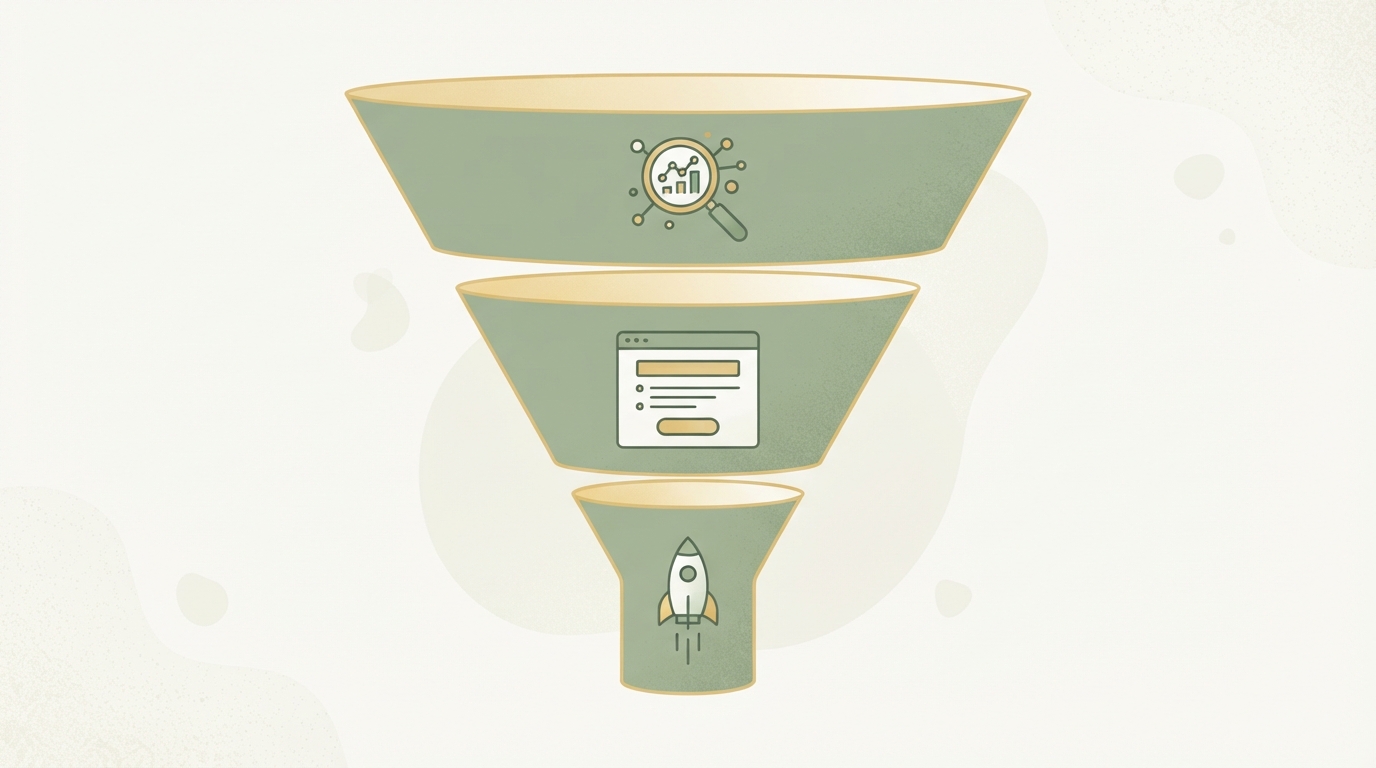
Choosing the tool is secondary — the problem is what matters — but a few categories are still worth knowing. For landing pages, a simple website builder is enough. For forms and waitlists, a basic sign-up form usually does the job. For "fake backend" MVPs, where you work manually behind the scenes, all you often need is a spreadsheet and email.
Once you know there's demand, the next question becomes relevant: what are you actually going to build, and with what stack? That's exactly what our Blueprint tool is for. You enter your validated idea and get a suggested MVP feature set, tech stack, and ready-made prompts you can paste directly into a tool like Claude or Cursor to get started.
MVP with code vs. MVP without code
| Criterion | MVP without code | MVP with (a little) code |
|---|---|---|
| Time to first test | often 1–3 days | often 1–3 weeks |
| Cost | usually under €50 | variable, often starting at a few hundred € |
| Data reliability | good for demand signals | good for usage behavior |
| Limitations | can't measure real product usage | more effort if the idea doesn't pan out after all |
| Typical use | problem validation | first paying users, testing retention |
In the end, this isn't a decision you make once and stick with. Many people start without code, get a strong signal, and then build the first real coded version within a week or two, often with very limited functionality.
Step 4: Turning the MVP into a paying product
An MVP no one tests is worth nothing. Once you have your first users, one thing matters most: building trust, so testers turn into paying customers. That includes things as basic as a credible website, clear communication, and testimonials once you have them. I've written more on that in Building website trust.
Content is worth investing in early.
In parallel, it's worth starting on content early, even before you have much reach. Anyone who starts thinking about SaaS SEO already during the MVP phase avoids a mistake almost every founder makes later: starting on visibility too late. More on that in SEO for SaaS.
A real example of how a very specific, almost boring idea can turn into a solid business: Diode (diode.computer), an AI platform that automatically translates code schematics into manufacturing-ready circuit board designs. Estimated MRR is around $5 million, with roughly 142,000 monthly visits, and trending upward according to our data. Electronics design doesn't sound like the sexy startup idea, but "boring" technical niches like this often have little competition and customers who actually pay.
Common mistakes when building an MVP
The most common mistake is treating the MVP as a small version of the finished product instead of a test. Right behind that: testing too many features at once instead of cleanly testing a single hypothesis. If your MVP is supposed to solve five different problems at the same time, you'll end up not knowing which one actually worked.
A second, underrated mistake: wanting to scale too early. Paul Graham described this well in his essay "Do Things That Don't Scale." At the start, you're allowed — and encouraged — to do things manually that you'll automate later. Onboard customers personally, send invoices by hand, answer every inquiry yourself.
It doesn't scale.
That's exactly what makes it so valuable in the early stage: when you show up personally, you learn things no analytics dashboard will ever surface. Customers tell you what they actually struggled with, what almost made them leave, and what finally convinced them to pay. That friction — the kind that doesn't scale — is precisely the data your product needs to become something people want enough to pay for without your personal nudge.
This is also the step almost nobody does well alone. Knowing which hypothesis to test, which channel to use for your first hundred users, and how to turn early organic traction into a repeatable growth loop — that's where most founders lose weeks or months to trial and error. Starte.ai was built specifically around this problem: the platform pools data from hundreds of real projects (350+ stores and products built, with results ranging up to seven-figure revenues) to surface the strategies most likely to work in your specific market — not generic playbooks. Bohdan, the founder, reviews projects personally, and the first strategy call is free to book.
Your next steps
If you're still at the idea stage, one thing matters above everything else: talk to five potential customers before you write a single line of code or build a single landing page. Not a survey — a real conversation.
If you already have an MVP, ask yourself honestly: Do I know which single hypothesis this version is testing? If the answer is unclear, simplify before you add anything new.
From there, the path forward is straightforward:
- Pick one validation format (landing page or prototype) and give yourself a hard deadline — two weeks maximum.
- Define your success metric upfront: a conversion rate, a number of sign-ups, or a first paying customer. Without it, you'll rationalize any result.
- Start your content and SEO groundwork now, even with no audience — the compounding effect starts from day one, not from launch day.
The founders who build something real aren't usually the ones with the best idea on paper. They're the ones who found out fastest what was true — and adjusted before the money ran out.
Frequently asked
What's the difference between an MVP and a regular product?
An MVP isn't a small product — it's an experiment designed to test a purchase decision. A regular product is meant to solve a problem permanently; an MVP is meant to quickly show whether the problem is real and whether people will pay to solve it. This is exactly what many first-time founders confuse when they spend weeks building features instead of running a test.
Can you build an MVP without coding?
Yes, and in many cases a no-code MVP even works better, because you get real feedback faster. Examples include a landing page, a sign-up form, or a concierge MVP, where everything runs manually behind the scenes while the user sees a simple interface. You're not deceiving the user — only the complexity behind the scenes.
How do I know if my MVP is really validated?
Real validation shows up as a commitment that costs something — an email address, a credit card, or a specific date — not as friendly encouragement. If your visitor-to-email conversion rate on the landing page is above 10%, that counts as a signal worth taking seriously. According to the Mom Test, approval from friends or acquaintances doesn't count as proof.
How long does it take to validate an MVP?
A rough framework that often works in practice is about four weeks: two weeks for the landing page and first email addresses, then problem interviews, then a beta offer at a discount. This isn't a fixed rule — some people need longer, some move faster — what matters is the order: talk first, then build.
Written by
Bohdan BernatekFounder, Starte.ai
Founder of Starte.ai. Built a business to 125,000+ organic leads and seven-figure revenue — and now works with founders personally, deriving a strategy for their own brand from data across thousands of real projects and producing the creatives for it.