Developing a creative strategy: what it actually is
A creative strategy defines which messages you show to which audience — and how you measure whether it's working.
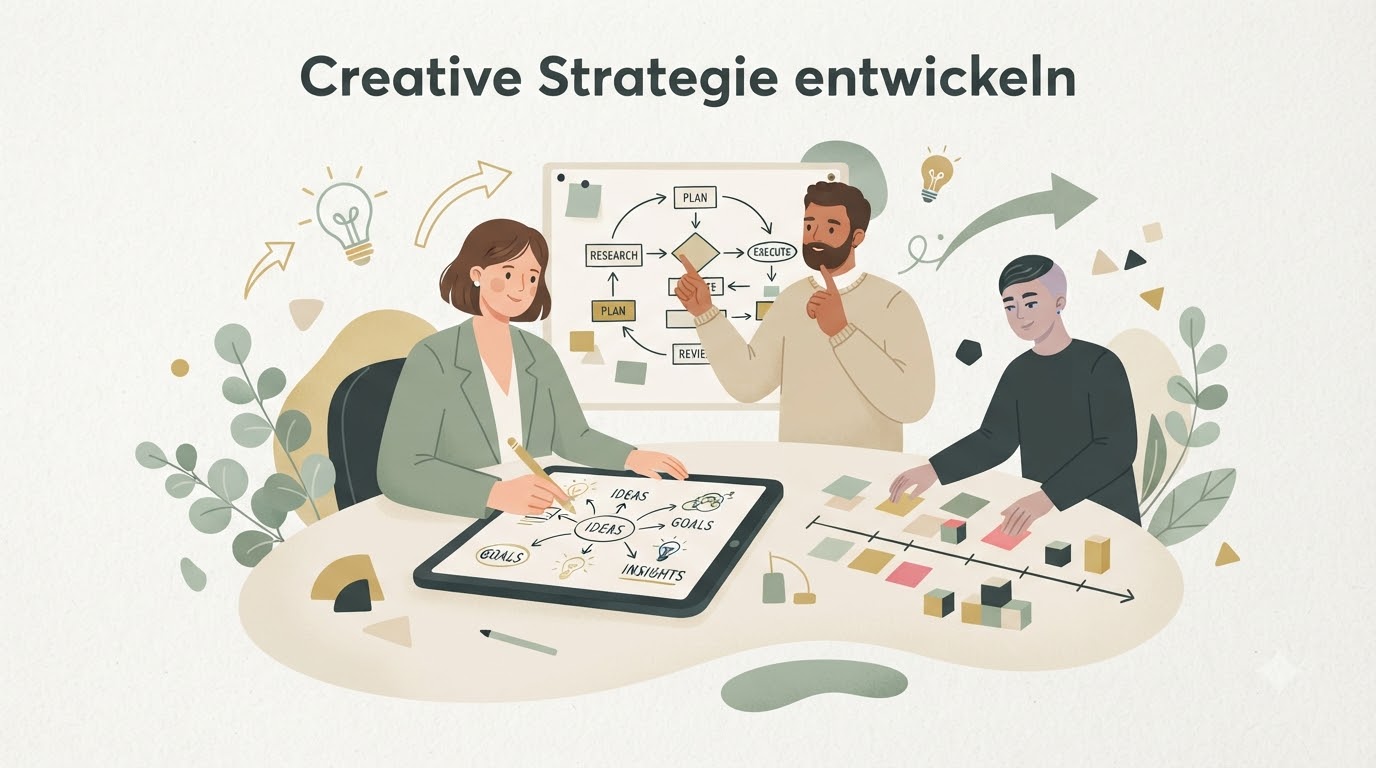
You can boil it down to a few core elements that come up in every creative strategy:
- Message — which problem are you addressing, and from what angle?
- Audience — which segment, with what mindset, and what fear?
- Channel — TikTok, Instagram, YouTube, Facebook?
- Format — video, carousel, static image, testimonial?
- Measurement — which metric tells you whether it's working (CTR, clicks, conversion)?
In practice, that means: instead of "let's make an ad," you decide specifically: "We're targeting beginners who are afraid of losing their data, with a video that shows a real problem, and we measure whether they click and then buy." That's exactly what it means to develop a creative strategy: it's the difference between "maybe this works" and "we know why this works."
How to find your real target audience
Before you write a single creative brief, you need to know who your audience actually is.
Most people say, "Sure, I know this — CEOs of small agencies." No. That's too thin.
Good research means looking at who your competitors are actually targeting. It means watching real customer interviews. It means reading one-star reviews of competing tools and asking: what actually annoys people? Only with those answers can you develop a creative strategy that actually holds up.
Specifically:
Look at your competitors' ads. If your competitors are running ads on Facebook, Instagram, or TikTok, you can see them. Write them down. What problems do they address? What emotions? Which visual patterns repeat?
That doesn't mean copy them. It means understanding which angles are already working in the market — and where there's still room.
Talk to 10–15 customers or prospects directly. Not "Do you think our product is cool?" Instead: "What did you struggle with before you found us? What word would have grabbed your attention immediately?" Their answers become your angles.
Read comments in groups and on Reddit. That's where people voice their real problems: "I don't know how to manage my budget" — those are exactly the sentences you need.
Defining audience segments
Next, you group what you've learned.
This isn't about creating ten demographic boxes ("men 25–35," "women 35–50"). That's marketing theory, and it rarely works in real life.
Instead: psychographic segments. That means: how does this person think? What do they fear? Where are they in the buying journey?
Say you sell an accounting tool for freelancers.
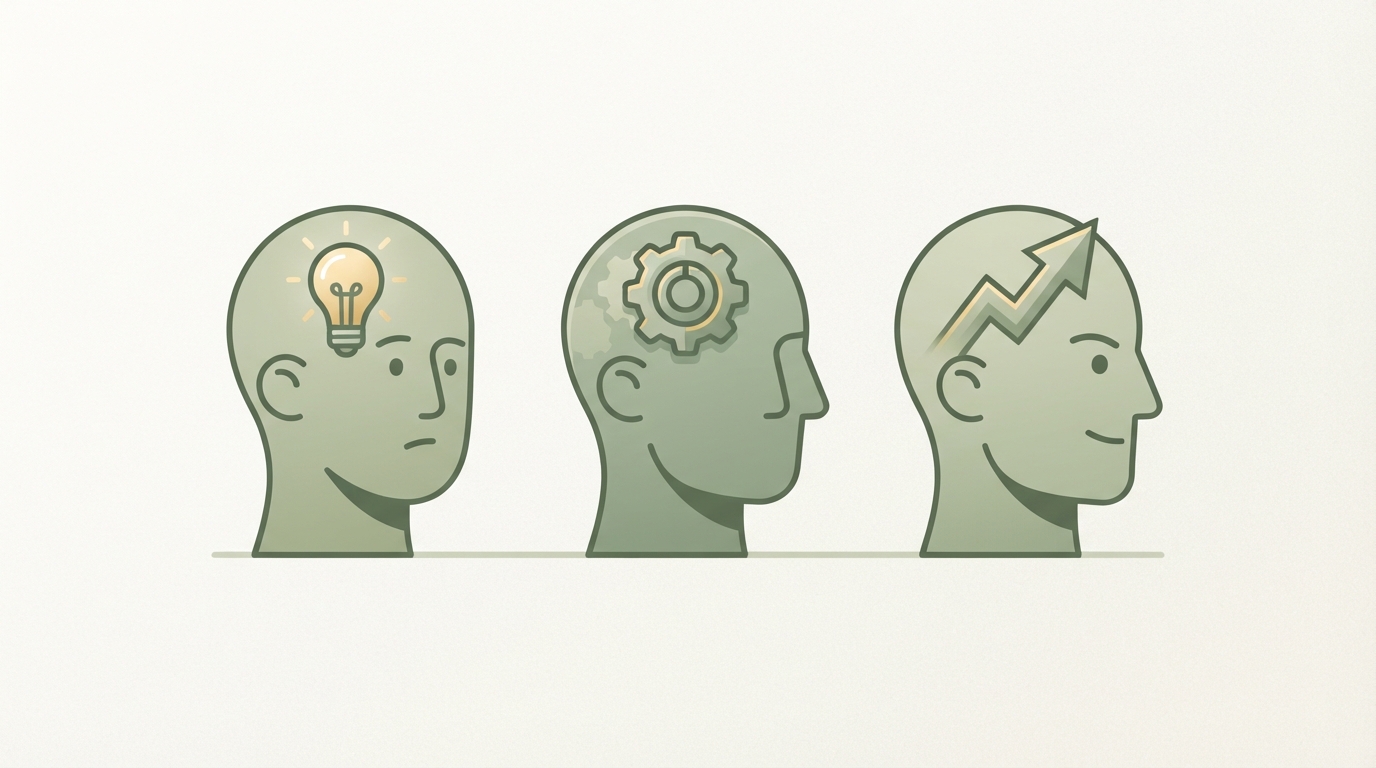
Segment 1: The Beginner — Just finished their first project. Doesn't know how taxes work. Fears mail from the tax office. Willing to pay if it's easy.
A different segment, a different mindset. Segment 2: The Optimizer — Has been working for 2–3 years. Uses an old, clunky solution. Wants to save time. Compares prices. Needs convincing.
And completely different again, Segment 3: The Scaler — Already earning well. Needs deep integrations (Stripe, Shopify, tax advisory). Doesn't want to optimize — wants to automate.
Each segment gets its own creative strategy. A video for beginners won't work for scalers. A sentence that resonates with optimizers will annoy beginners.
How many segments do you need? 3–5. More gets unmanageable; fewer and you lose important nuance.
Researching and testing angles
An angle is the perspective from which you tell a problem's story.
The same customer benefit can be told through five different angles, and one will land while another won't.
Say you sell an email marketing tool.
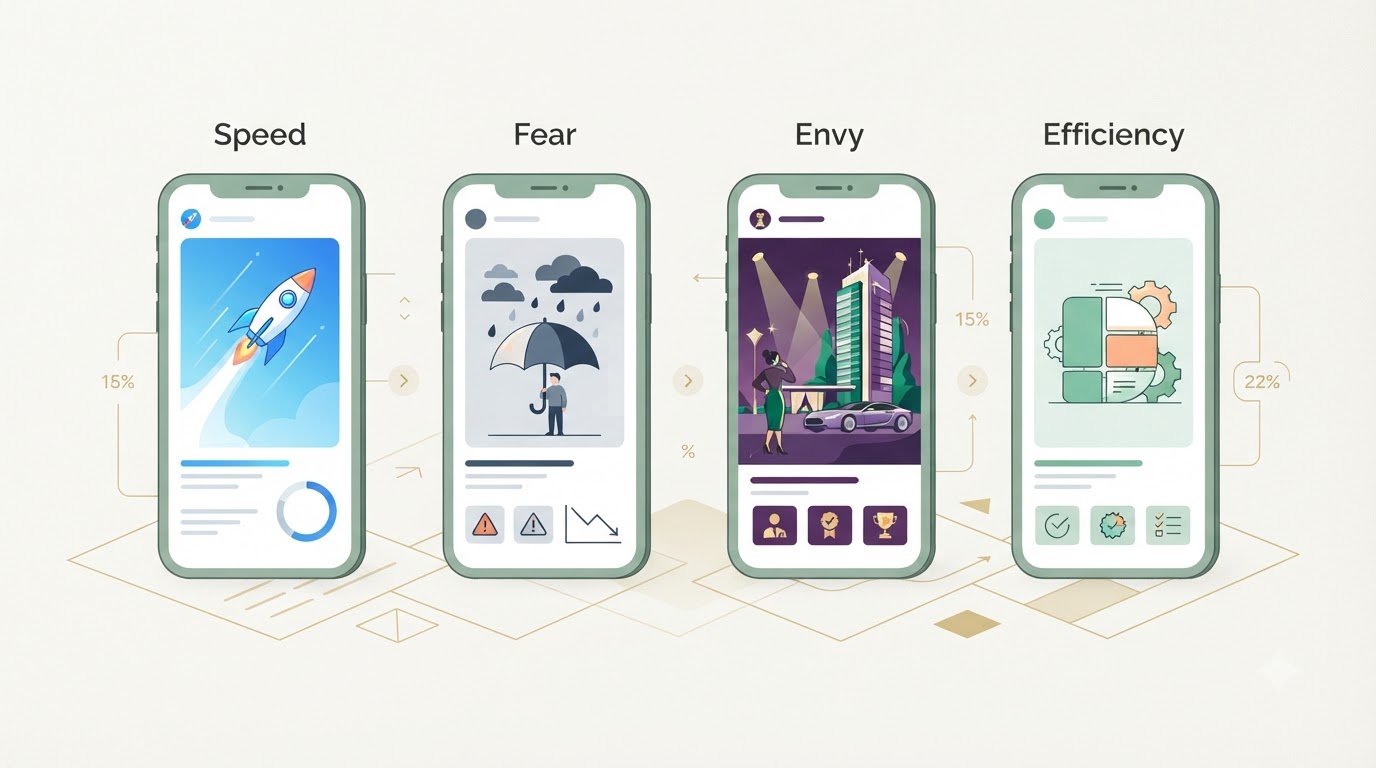
- Angle 1 (Speed): "Write an email that converts in 30 seconds."
- Angle 2 (Fear): "The reason your emails are landing in spam."
- Angle 3 (Envy): "This is what the top 1% of sellers use — and you can too."
- Angle 4 (Efficiency): "Automate what's costing you 2 hours every day."
- Angle 5 (Understanding): "Why every agency is ripping you off, and how to spot it."
All of them are true. But they hit different people at different moments.
How do you find the best angles for you?
-
Write down every reason your product exists. What was the problem you had yourself? What do customers say was the reason they chose you?
-
Look at your competitors' ads. Which angles have they not taken? Often that's where untapped traffic is sitting.
-
Test three angles at the same time. One week, same budget, same targeting. Which one gets the highest click-through rate? That's not the final winner, but it's a signal.
Choosing creative formats
By now you know: which audience? which angle? which format works?
Here's the trap almost everyone falls into: they think "nice-looking video" equals "nice-looking video." No.
A video that stops the scroll has a different structure than a video people watch from start to finish. An image needs a different hook than a carousel.
Formats that work:
- Short-form video (TikTok, Reels, YouTube Shorts): 6–15 seconds, hook in the first second, no long explanations. Good for attention and volume.
- Long-form video (YouTube, webinars): 10+ minutes, depth, proof through examples. Good for persuasion.
- Carousel ads: Multiple images or video clips in sequence, each a step. Good for storytelling and education.
- Static images + strong copy: 1–2 sentences, one big image. Good when the message is simple.
- Testimonials / case studies: A real customer explains what changed. Good for trust and persuasion.
Which format suits which segment?
Beginners often prefer simple, fast videos (they don't want long explanations). Optimizers often prefer case studies or comparison content. Scalers often prefer data and ROI numbers.
This isn't a rule, just a tendency — which is why you test.
Building the test plan
At this point, you combine everything: segment + angle + format = creative variation.
The trick is testing systematically, not randomly.
Week 1: Baseline test
You run 3–5 creatives, each testing one variable. In practice, that looks like this: in Facebook Ads Manager, you set up three campaign variants, each with the same audience but a different angle, and track click-through rate directly in the Ads Manager dashboard for 3–5 days.
| Variable | Creative 1 | Creative 2 | Creative 3 |
|---|---|---|---|
| Segment | Beginner | Beginner | Beginner |
| Angle | Speed | Fear | Efficiency |
| Format | 15s video | 15s video | 15s video |
| Budget | $100 | $100 | $100 |
Run all three. After 3–5 days: which gets the most clicks per dollar?
Week 2: Winner variation
The winner from Week 1 now gets a budget bump. But: you change one more variable.
Say the Speed video won. Now you test:
| Variable | Speed (confirmed) | Speed + Carousel | Speed + Testimonial |
|---|---|---|---|
| Segment | Beginner | Beginner | Beginner |
| Angle | Speed | Speed | Speed |
| Format | 15s video | Carousel | Testimonial |
| Budget | $200 | $100 | $100 |
Weeks 3–4: Scale + next segment
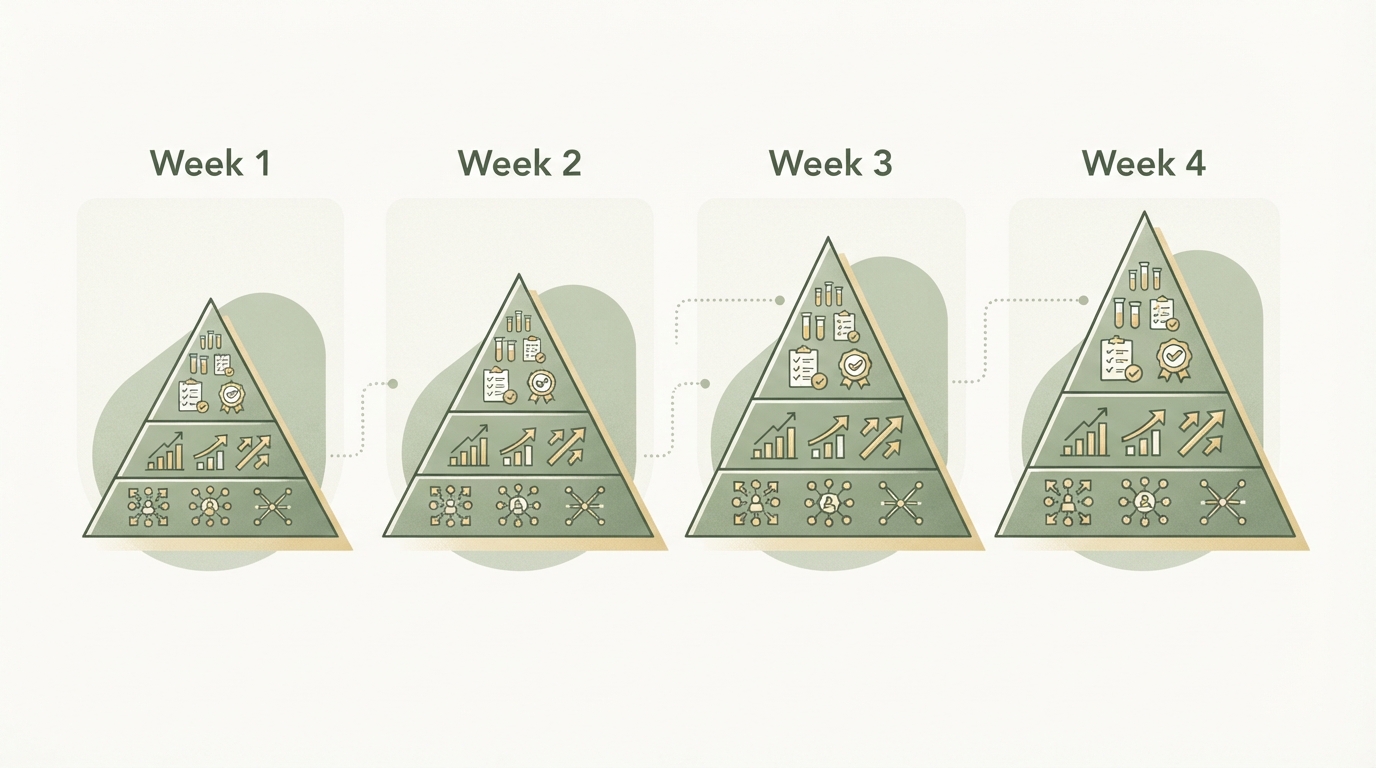
The best combo from Week 2 gets more budget and runs longer. In parallel, you start testing Segment 2 (Optimizers) with 2–3 new angles.
That doesn't mean starting over every week. It means you're building knowledge. Every test teaches you what works.
Turning it into a campaign strategy
Once you have a few winners, you assemble them into a campaign strategy.
It's simple: you stack the creatives that work by audience and put them into rotation.
After 4 weeks of testing, you might know, for example:
- Beginners convert best with the Speed angle + 15s video.
- Optimizers convert best with comparisons + carousel.
- Scalers convert best with ROI numbers + case study.
Your campaign no longer runs as a single ad. It runs as a cluster:
- Beginners see Video 1, Video 2, Video 3 (all Speed-angle, slightly varied).
- Optimizers see Carousel 1, Carousel 2, a Facebook article.
- Scalers see Case Study 1, Case Study 2, a webinar announcement.
In practice, that also means setting a frequency cap in Ads Manager, so the same user doesn't see the same ad more than 2–3 times a week. The beginner doesn't see "an ad" — they see one theme from several angles, but not to the point of fatigue. That feels trustworthy, not manipulative.
Your ad strategy then comes down to: how much budget per segment, in what order, on which channel? You tie that to your numbers. If beginners cost you 5x more but convert 2x better, that can still be worth it. If scalers cost you $100 per click, maybe not.
At the start: 3–5 creatives to test. Once you have winners: at least 10–15 variations in active rotation, otherwise your audience goes blind to them. Facebook and Instagram also learn faster when more creatives are in play.
Start with one segment. Let it run for 2–3 weeks until you have a working combo. Then branch out to the next segment. If you test everything at once, you need 3–4x the budget and end up with muddled data.
This happens. It often means your angle isn't landing with the audience, your landing page isn't converting, or your targeting is off. Not every combo works — that's normal. If you've tested for 4 weeks and nothing's working, it's time to change the angle or the audience, not the creative format.
At least 50–100 clicks. Below that, it's statistical noise. With 100 clicks you see a real signal. With 500+ clicks, you know whether it works.
What I'm describing here is something a lot of teams do alone in spreadsheets, and it takes weeks. There are faster ways to do this. This exact process — research to angles to test structure — is something we've built out across hundreds of projects, and we run the creatives through live campaigns while most people are still planning. If you'd like a free strategy call to walk through this for your project, just reach out. It's free.
Almost everyone makes the same mistake here: they jump to "scaling" too fast. They find one creative that works and immediately dump millions into it. Then the creative goes blind. Instead: test first, then scale. Understand first, then advertise. It takes an extra week, but it saves you from real money burned.
To learn what ads are actually working for others and how to find out, check out Analyzing Competitor Ads.
Frequently asked
How many audience segments do you need for a creative strategy?
You should work with 3–5 psychographic segments — more gets unmanageable, fewer and you lose important nuance. Each segment thinks differently, fears different things, and sits at a different point in the buying journey, so each one needs its own creative.
What is an angle in a creative strategy?
An angle is the perspective from which you tell a problem's story — the same customer benefit can be communicated through five different angles (speed, fear, envy, efficiency, understanding). One will land, one won't, which is why you test several in parallel.
Which creative formats work best?
It depends on your segment: beginners often like short videos (6–15 seconds), optimizers prefer case studies and comparisons, scalers care about data and ROI. The best strategy is to test 3–5 different formats and see which gets the highest click-through rate.
How long does it take for a creative strategy to start working?
You should plan for at least 3–4 weeks: in Week 1 you test 3–5 baseline variations, in Week 2 you refine the winner with new variables, and in Weeks 3–4 you scale the best performer while starting to test additional segments in parallel. This isn't random experimentation — it's systematic learning.
Written by
Bohdan BernatekFounder, Starte.ai
Founder of Starte.ai. Built a business to 125,000+ organic leads and seven-figure revenue — and now works with founders personally, deriving a strategy for their own brand from data across thousands of real projects and producing the creatives for it.