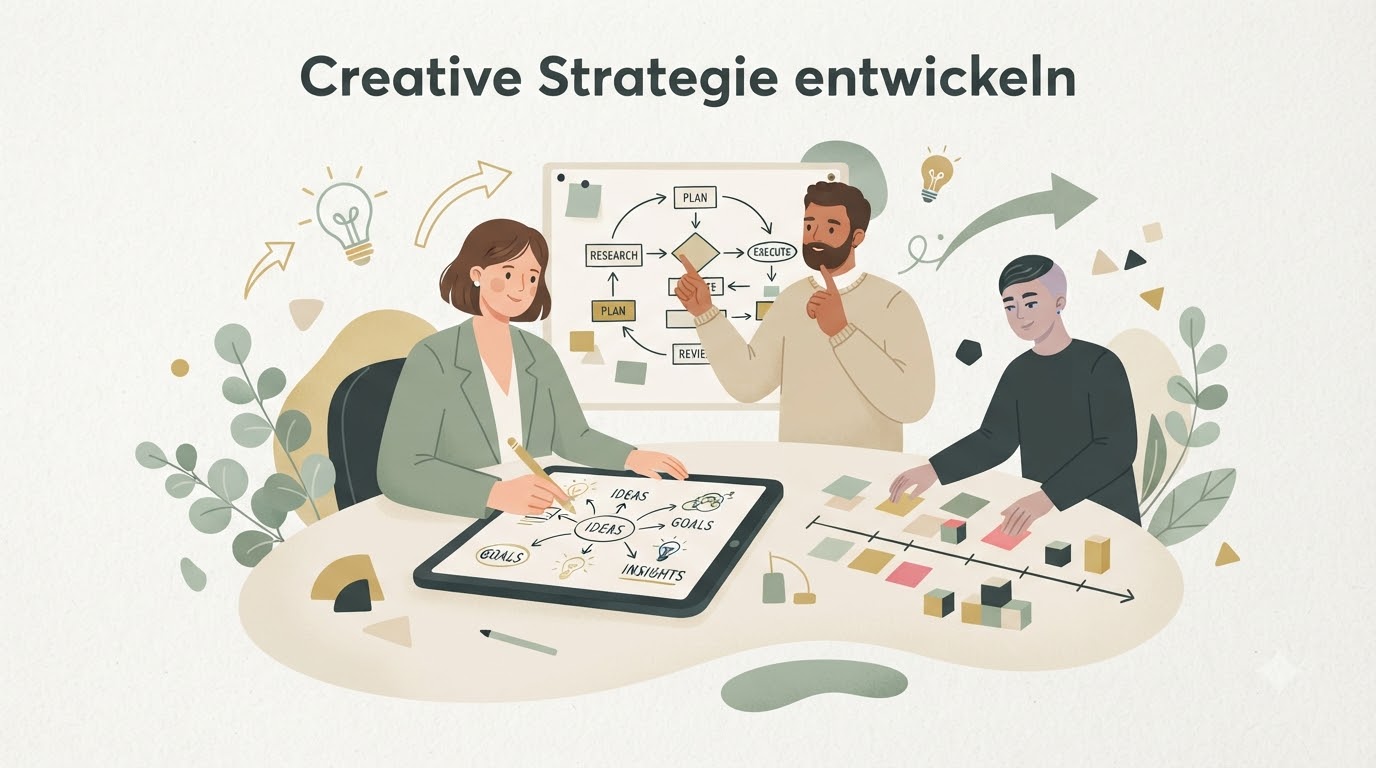
What is UGC content, actually – and why "nicely shot" isn't enough?
UGC stands for User Generated Content – but in marketing today it usually means creator content that looks like it was filmed organically, but was deliberately produced for advertising. No studio look, no perfect lighting. Phone camera, real voice, real face. If you want to find UGC creators, keep that in mind before you even write your first message.
That's exactly why this often works better on TikTok and Instagram than classic ads – because the algorithm and users both treat it the same way: as content, not advertising.
The thinking error many founders make: they look for a creator who "looks good" or has a lot of followers. That's the wrong filter. A UGC creator doesn't need to be famous. They need to look and sound like your target audience – not like an influencer.
UGC Creator vs. Influencer: the difference that determines the price
An influencer sells their reach. A UGC creator only sells the raw material – the video itself, without a post on their own channel. That's also why UGC content can often be significantly cheaper than a classic influencer partnership: you're paying for production, not for reach. You build the reach yourself, through your own channels or paid campaigns.
| UGC Creator | Influencer | |
|---|---|---|
| Paid for | Video production | Reach on own channel |
| Typical cost | often lower, depending on scope | often higher, depending on follower count |
| Content usage | mostly on your channels/ads | mostly on their channel |
| Selection criteria | fits target audience visually/verbally | has reach and trust |
| Scalability | multiple creators can be booked in parallel | limited by number of partnerships |
Step 1: Define your target audience first, not the creator
Before you even start looking for a creator, you need a clear picture of who your customer is. Sounds obvious, but it gets skipped constantly.
A creator is basically a mirror of your target audience – age, look, language, tone. If your product is aimed at mothers in their mid-30s, a 22-year-old fitness creator won't help you, no matter how professional the video turns out.
Before you start searching, write down three things: the age and life situation of your target audience, the platform the content will run on, and the tone you want – honestly curious, funny, or more matter-of-fact and advisory. These three points often determine the success of the video more than the budget does.
If you're still unsure about your target audience, it's worth checking out how to find product-market fit – without a clear picture of your customer, even the best creator won't help you.
Step 2: Where to find UGC creators
There are three realistic ways to find creators, and each comes with a different price-to-effort trade-off.
Specialized UGC marketplaces are the most direct route: you set up a briefing, creators apply or get suggested to you, and you choose. The advantage is speed – you often get your first offers within a few days. The downside: quality varies a lot, and you have to do the filtering yourself.
The second route is social media directly. On TikTok and Instagram, you specifically search for smaller accounts (often between 1,000 and 20,000 followers) in your niche and message them directly. This takes longer, but is often cheaper since you're not paying a marketplace markup.
A third route that's often overlooked: your own customers. Someone who already uses and likes your product knows it better than any booked creator. A short post in your community or an email to active customers often brings the most authentic results – because the enthusiasm is real, not performed.

Step 3: Booking a UGC creator – what to look for in the first contact
When you book a UGC creator, whether the collaboration works is often decided in the very first message. Ask for references – not follower counts, but examples of previous creator content, ideally in a similar industry. A good creator has a small portfolio, even without a big following.
Also clarify three things upfront: delivery time, number of revision rounds, and whether you need to ship the product or a digital briefing is enough. These points sound like small stuff. They're not – most conflicts between brands and creators arise exactly here, because nobody asked beforehand.
Always pay after approving the final video, not fully upfront. A deposit of 30 to 50 percent is common and fair – for both sides.
Step 4: The UGC briefing – the part that determines quality
A good UGC briefing is the most important lever in the whole process – more important than the choice of creator itself. A weak briefing produces weak content, no matter how talented the creator is. That's the lesson almost everyone learns only after their first disappointing video.
A briefing that actually works includes:
- The core problem your product solves – in one sentence, the way a customer would say it themselves
- Three to five concrete talking points, no vague keywords
- The desired hook for the first three seconds – which decides between scroll or stop
- Examples of tone and style, ideally one or two reference videos
- Technical specs: format (9:16), length, with or without text overlay
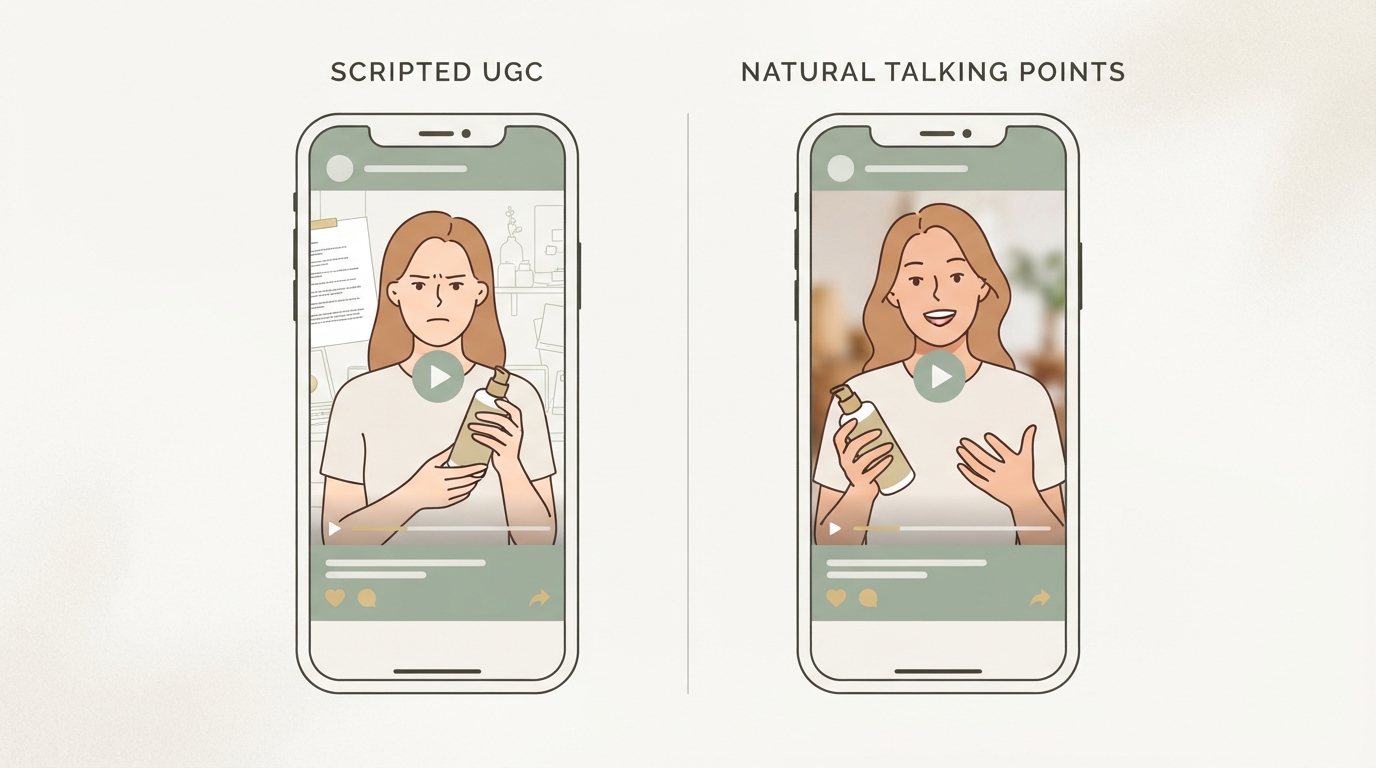
What you should deliberately leave out: a script to read off. The moment a creator is visibly reading, the video loses exactly the authenticity you booked them for. Give talking points, not text.
The same logic that applies to good ad copy applies here too, by the way. If you've already looked into how to write good ad copy, you'll find plenty of principles there that transfer one-to-one to a UGC briefing – clear language, one problem, one solution, no jargon.
Step 5: Clarify usage rights – before the video is finished, not after
Usage rights need to be clarified in writing before production starts, not once the video is done. This is the point that most often leads to disputes in practice – and it's the most important one legally.
Clarify specifically: are you allowed to use the video only organically on your own channels, or also as a paid ad? For how long – 6 months, 12 months, unlimited? Is the creator also allowed to post the video on their own channel? Any of these questions can get expensive later if it wasn't settled beforehand.
As a rule of thumb: unlimited usage rights including ad usage typically cost more than a time-limited, purely organic license. That's fair – the creator gives up more, so they should get more in return.
Put it all in writing, even if it's just a short email confirmation.
Typical rights packages compared
| Package | Usage | Typical price range (estimate) |
|---|---|---|
| Organic, limited | own channels, 3-6 months | lowest price bracket |
| Organic, unlimited | own channels, open-ended | mid price bracket |
| Whitelisting / Ads | use in paid campaigns | often significantly higher |
| Full rights | all channels, all purposes, unlimited | highest price bracket |
Step 6: Test content before you put budget behind it
Once you have finished creator content, test it small before you scale big. A single video that looks good doesn't tell you anything yet about whether it actually converts.
Run two to three variants against each other with a small budget before deciding which one to scale up. This is exactly where a lot of people fail – not with the content itself, but with the scaling afterward.
If you want to know which mistake happens most often here, it's worth checking out how to scale ad campaigns properly. And if you want to see what competitors with similar creator content are running right now, take a look at analyzing competitors' ads – you'll often quickly find out which style is currently working in your niche.
This exact step – from first creator contact to a tested, scaled video – is something almost nobody pulls off cleanly on their own. At Starte.ai, we build the strategy behind it together with you: which content style is currently working in your market, which briefing fits it, and how you roll out the finished videos organically and through paid campaigns. We've already helped build over 350 projects this way, many of them focused on organic reach with no big ad budget at all. The first strategy call is free, and getting started can be tested with no obligation.
Which industries benefit especially from UGC content?
UGC content works best for products that need to be explained or shown – not for pure brand messaging.
Physical products like cosmetics, supplements, kitchen gadgets, or fashion benefit strongly, because people want to see the product in action. It often works well for software and SaaS too, though usually as screen recording combined with a talking head, rather than as a pure product video.
An example of what data-driven B2B tools built for visibility can look like: {{saas:vector.co}} shows how a B2B SaaS identifies anonymous website visitors – a product where UGC-style explainer content ("here's how I set this up for our company") can often work better than a classic ad spot, because the product needs explaining.
UGC is less suited for pure enterprise tools with a very long sales cycle – there, the personal conversation often counts for more than the video.
What a UGC creator costs – realistic ranges
Prices for creator content vary a lot, depending on experience, scope of rights, and effort. As a rough guide: a single simple video without extended usage rights usually falls in a low-to-mid double-digit to low triple-digit euro range, while packages with multiple videos, extended rights, and whitelisting can get significantly more expensive.
These are rough guidelines, not fixed prices – ultimately the market, the creator's experience, and your specific briefing decide.
More important than the price alone is often the question of whether the content actually fits your target audience. A cheap video that doesn't speak to anyone in your target audience ends up more expensive than a slightly pricier one that hits the mark.
In the end, it matters less how many creators you message, and more how clear your briefing is and how cleanly the rights are settled. Start small, test, and scale only once a video is really working.
Frequently asked
What's the difference between a UGC creator and an influencer?
A UGC creator only sells the finished video – not the reach of their own channel. So you're paying for production, not for someone with 100,000 followers posting your product. That often makes UGC content cheaper and more flexible, because you can use the video on your own channels or in paid campaigns.
What should I look out for in my first contact with a UGC creator?
Don't ask about follower counts – ask for concrete examples from previous projects, ideally from a similar industry. Also clarify delivery time, number of revision rounds, and whether you need to ship the product. Most conflicts arise exactly at these points, because nobody addressed them beforehand.
What belongs in a good UGC briefing?
A briefing that works contains your product's core problem in one sentence, three to five concrete talking points, and a suggested hook for the first three seconds. Important: no fully written script to read off – the moment a creator is visibly reading, the video loses exactly the authenticity you booked them for.
When should I clarify usage rights with a UGC creator?
Usage rights need to be settled in writing before production starts – not once the video is already finished. Clarify specifically whether you're allowed to run the video as a paid ad too, how long the license lasts, and whether the creator may also publish the video themselves. Unlimited rights including ad usage typically cost more than a time-limited organic license.
Written by
Bohdan BernatekFounder, Starte.ai
Founder of Starte.ai. Built a business to 125,000+ organic leads and seven-figure revenue — and now works with founders personally, deriving a strategy for their own brand from data across thousands of real projects and producing the creatives for it.