Influencer marketing for SaaS: why most people pick the wrong horse
Influencer marketing for SaaS works best with small, highly specific creators, not big names. If you chase reach instead, you'll pay a lot for clicks that never turn into users. I see this mistake with almost every SaaS company working with creators for the first time.
The problem isn't influencer marketing itself. The problem is who you pick.
Why SaaS founders fail at influencer marketing
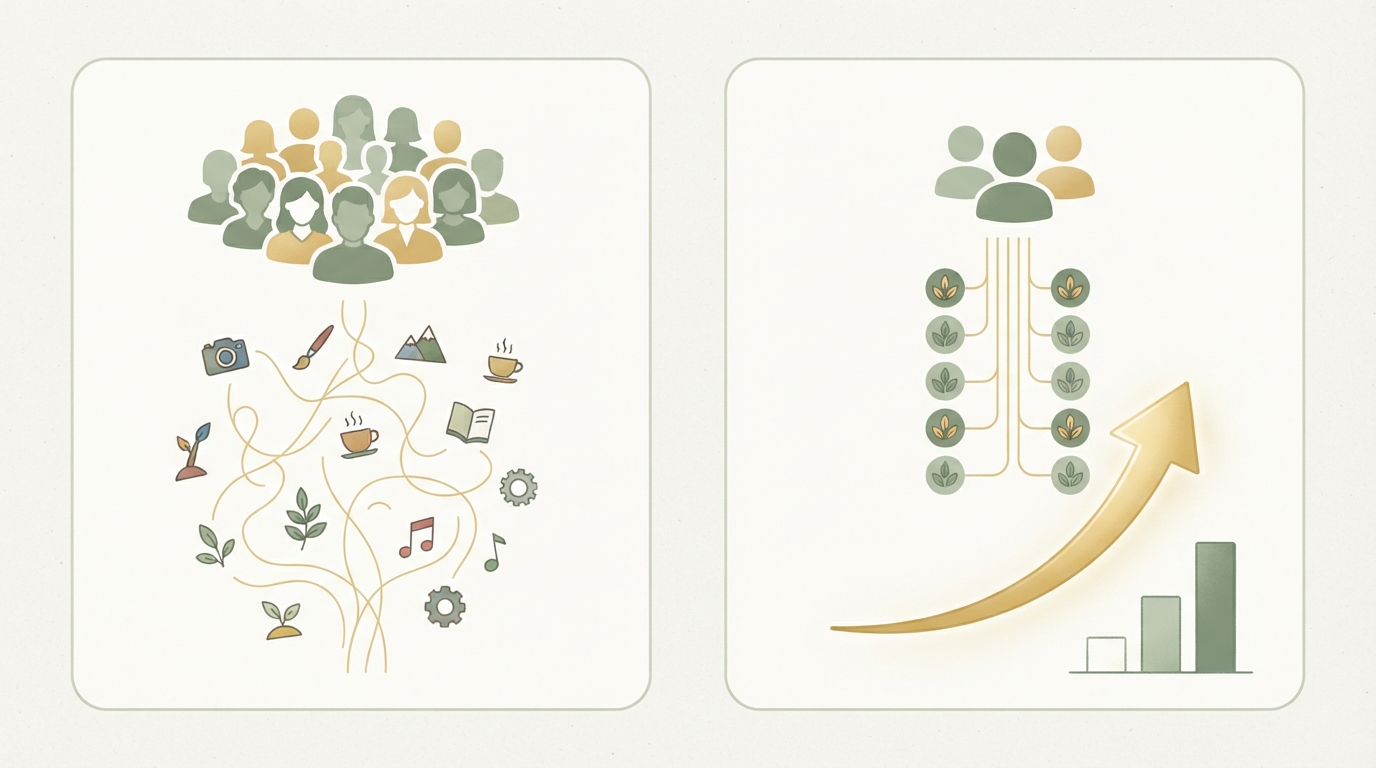
Most SaaS teams book the creator with the most followers they can afford. Sounds logical, but it's the wrong approach. A creator with 500,000 followers in a broad lifestyle niche might have only 200 followers who are actually relevant to your tool. Everyone else just watches, maybe even clicks, but never buys.
What almost always works better: a creator with 8,000 followers who all work in the same job as your target audience. Less reach, but nearly every viewer is a potential customer.
What is a micro influencer, and why does it fit SaaS
A micro influencer is a creator with typically 1,000 to 50,000 followers who has specialized in a narrow topic and built a community with real trust in their niche. That narrowness is exactly what makes micro-creators more interesting than big names for B2B and SaaS products.
Picture two creators. One does general business tips for 300,000 followers. The other posts exclusively about Excel automation for financial controllers, with 6,000 followers. A tool that makes life easier for exactly those controllers strikes gold with the second creator. Their audience isn't a random mass. Almost all of them are your target audience.
This lines up with a pattern you also see when searching for a profitable niche: narrow, "boring" topic areas often have less competition and an audience that knows exactly what it needs.
Nano, micro, and macro influencers: the differences
Not every creator size is equally suited to every goal. Nano-creators with under 1,000 followers often have the highest level of trust, but also very little reach. Macro influencers with over 100,000 followers bring visibility, but rarely focus.
| Category | Followers (approx.) | Typical strength | Good fit for SaaS? |
|---|---|---|---|
| Nano-creator | under 1,000 | Very high trust, personal contact | Yes, for early tests and case studies |
| Micro-creator | 1,000–50,000 | Clear niche, engaged community | Yes, usually the best choice |
| Mid-tier | 50,000–500,000 | More reach, still some focus | Only for very broad products |
| Macro/celebrity | over 500,000 | Big visibility, brand building | Rare, expensive, low audience precision |
For most SaaS companies with a limited budget, the micro tier remains the sweet spot. You get real trust and an audience that matches your product, without paying big-name prices.
How to reach out to the right influencer
Reaching out to an influencer works best when you show real value first and only talk about money afterward. A cold message saying "Hey, want to post for us?" almost always ends up in the trash, or gets ignored.
What works instead: show that you genuinely know the creator's content. Reference a specific video or post they made. Explain in one or two sentences why your tool fits exactly this topic. And make a concrete offer instead of staying vague.
A structure that has proven itself in cold outreach in general, and translates one-to-one to creator outreach: devote most of the message to the other person's situation, a smaller part to your proposal, and only a small remainder to proof. If you lead with yourself and your product, the message reads like an ad. If you lead with the creator's audience and their problem, it reads like an opportunity.
One thing many people miss: don't ask for a paid post right away. Ask first for a short conversation or free trial access. That lowers the barrier significantly, and many creators respond far more openly to an invitation than to a booking request.
Creator partnerships: which compensation models actually work
A good creator partnership usually combines a fixed fee with a performance-based component, rather than relying on just one or the other. A flat fee gives you predictability, but little incentive for the creator to actually perform. Pure commission sounds fair, but many good creators reject it because they'd be taking on your risk.
Model 1: Flat fee per post
The creator gets a fixed amount, regardless of the outcome. Simple to manage, predictable for your budget. The downside: you pay even if the post underperforms.
Model 2: Affiliate link or discount code with commission
The creator gets their own link or code and earns per conversion. This lowers your risk, and also motivates the creator to speak honestly about your product, since their income directly depends on whether viewers actually convert.
Model 3: Product access plus a small flat fee
Especially with early-stage micro-creators, free access to the tool plus a small fee is often enough, depending on the creator's size. Important here: be honest about the scale. A nano-creator with 800 followers doesn't expect $2,000, but working completely unpaid isn't fair in the long run either.
| Model | Your risk | Incentive for creator | Good fit for |
|---|---|---|---|
| Flat fee | Higher | Neutral | Established creators with reliable quality |
| Affiliate/commission | Lower | High | Early tests, small budget |
| Product access + small flat fee | Very low | Medium | Nano and micro creators starting out |
In practice, many SaaS teams combine all three: a small flat fee as a sign of appreciation, plus an affiliate link for the long-term relationship.
How to make results from creator partnerships measurable
Without your own tracking link or discount code, you can't really evaluate a partnership, no matter how good it felt. This is where most SaaS teams get sloppy. They run the partnership, enjoy the nice comments, and end up not knowing whether anyone actually bought.
Three things you should set up before every partnership:
First, a dedicated UTM link or discount code per creator. That's the foundation. Without it, you can't attribute anything afterward.
Second, a clear observation window. Most purchases don't happen in the first 24 hours after a post, but are spread out over one to two weeks. If you only check analytics the next day, you'll almost always underestimate the real effect.
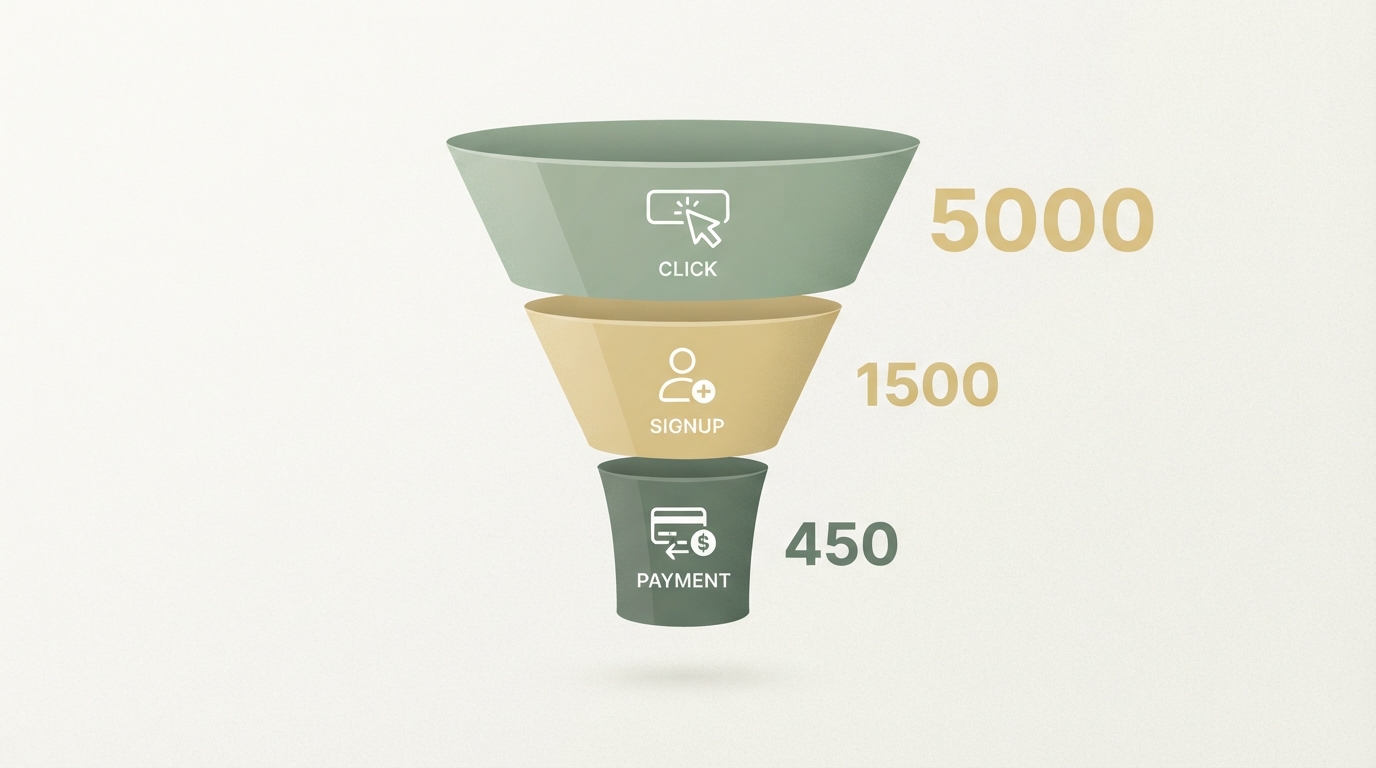
Third, look at more than just clicks. Clicks tell you someone was curious. Signups tell you someone tried your product. And paying customers tell you whether the partnership was actually worth it. If you only look at click numbers, you'll overestimate almost every partnership.
If you're just getting started, it helps to treat the whole thing like a small test, similar to the fake-door approach for validating an idea: you test first with a small budget and one or two creators before scaling up. And just like with paid ad campaigns, the numbers matter more than gut feeling. If you rely on gut feeling instead of hard data when scaling ad campaigns, sooner or later you'll make the same mistake with creator partnerships too.
Where to actually find the right creators
The search for the right creator usually doesn't start on some big platform, but right in the niche your product lives in. Look at who your own audience follows. Ask existing customers directly which creators they trust. And check the comment sections of bigger accounts in your topic area — that's often where smaller, highly engaged creators show up who get overlooked at first glance.
An approach that's often underrated: look at which B2B tools in your topic area are already working with creators, and who's especially active and knowledgeable in the comments there. These people are often potential micro-creators themselves, even if they don't have a large channel of their own yet.
Systematically figuring out which channels and creators actually work in your specific market, based on real data instead of gut feeling, is exactly the kind of work almost nobody does. Starte.ai continuously analyzes data from thousands of real projects to determine which channels and audiences work in which markets, evaluated by people who have generated over 125,000 leads and built 350+ projects themselves. What you get isn't a generic list, but an assessment tailored to your specific market.
Examples from our data
Even for products with a fairly technical or niche audience, influencer marketing through micro-creators can work — precisely because the audience there is especially well-defined.
A tool like Diode, aimed at hardware developers, would hardly benefit from a broad lifestyle creator. But a micro-creator who regularly talks about PCB design on YouTube or in a community has exactly the right audience watching, even if the reach itself is modest.
For a B2B product like Vector, which identifies anonymous website visitors, the better fit would be creators from marketing and sales who regularly give their community practical tips, rather than big brand testimonials.
What sets creator partnerships apart from classic advertising
The biggest difference lies in credibility. A classic ad is immediately recognized as advertising and often ignored automatically. A recommendation from someone you've followed for months, on the other hand, feels like a tip from a colleague. People buy more out of curiosity than under pressure, and a good creator partnership takes advantage of exactly that — when the product isn't the main topic, but shows up as one of several helpful tips within the content.
That also means: the best creator partnerships don't feel like advertising. They feel like a post that would fit the channel anyway, except your product happens to be one of the tips in it. When a creator works your tool into their usual style of content, instead of bolting on an artificial "ad post," it typically performs noticeably better.
This echoes a principle that also holds true for good ad copy: the strongest message often feels the least like advertising. If you've ever worked on writing compelling ad copy, you know this effect.
How to set up your first partnership, step by step
At the start, a small, clearly scoped test is enough — no need for a big campaign setup.
Step 1: Narrow down your audience
Write in one sentence who your ideal user is and what topic they follow online. The narrower, the easier it'll be to find matching creators later.
Step 2: Research three to five creators
Instead of building a huge list, three to five candidates whose content genuinely fits your audience are enough to start. Fit quality beats list quantity.
Step 3: Reach out personally and specifically
Use the problem-proposal-proof structure from the section above. Show that you know their content, and make a concrete, low-barrier offer.
Step 4: Set up tracking before the post goes live
No post without your own link or code. This isn't negotiable — otherwise you won't be able to evaluate anything afterward.
Step 5: Evaluate results after two weeks, not after 24 hours
Look at clicks, signups, and, if possible, paying customers. Only then can you decide whether a second round with this creator is worth it.
This varies a lot depending on the niche and follower count, but roughly speaking, many micro partnerships fall somewhere between a few hundred and low thousands of dollars, often combined with a commission on actual sales. You should always negotiate specific numbers directly with the creator — there are no fixed standard rates.
For very specific audiences, the data usually favors micro-creators, because the match between audience and target group is stronger. For very broad products with a large target audience, a bigger creator can still make sense — it depends on the individual case.
Three to five well-chosen creators are entirely enough for a meaningful first test. What matters more than the number is that each one genuinely fits your audience.
Yes, this is often possible with nano and small micro-creators, usually through free product access instead of payment. That said, it's only a truly fair deal if both sides agree to it openly — and not every creator will go for it.
In short
Influencer marketing for SaaS works most reliably with small, tightly focused creators rather than big reach. Choose three to five micro-creators who genuinely fit your audience, negotiate a fair model combining a flat fee and commission, and set up tracking before the first post goes live. If you follow this order, you get real insights instead of just a good feeling.
Frequently asked
What is a micro influencer for SaaS?
A micro influencer is a creator with typically 1,000 to 50,000 followers who has specialized in a narrow topic and built a community with real trust. For SaaS, this is often more interesting than big names because nearly all viewers genuinely fit the target audience. That narrowness is exactly what makes more clicks actually turn into users.
How many followers should an influencer have for SaaS marketing?
There's no fixed minimum, but the micro tier with 1,000 to 50,000 followers is generally considered the sweet spot. Nano-creators under 1,000 followers often have the highest trust, while macro influencers with over 500,000 followers bring visibility but rarely have the necessary focus on your target audience. For most SaaS companies with limited budgets, reach is worth less than relevance.
How do you reach out to an influencer for a partnership?
It's best to show real value first instead of talking about money right away. Mention a specific video or post from the creator, briefly explain why your tool fits exactly that topic, and ask first for a conversation or free trial access instead of jumping straight to a paid post. This significantly lowers the barrier, and many creators respond more openly to it than to a plain booking request.
How much does an influencer partnership cost for SaaS?
It depends heavily on the compensation model: a flat fee per post is predictable, but you pay even if performance is weak. Affiliate models with commission lower your risk, since the creator only earns on actual conversions. Especially with nano- and micro-creators, free product access plus a small flat fee is often enough to start, depending on the creator's size.
Written by
Bohdan BernatekFounder, Starte.ai
Founder of Starte.ai. Built a business to 125,000+ organic leads and seven-figure revenue — and now works with founders personally, deriving a strategy for their own brand from data across thousands of real projects and producing the creatives for it.