What is a Product Hunt launch, and is it worth it?
A Product Hunt launch is the day you release your product and fight for the top spots with upvotes and comments. If you make the top 5, you can get several thousand visitors in a single day, completely free. Whether it's worth the effort depends heavily on how well you've prepared.
At its core, Product Hunt is a community of early adopters, indie hackers, and tech journalists who look for new tools every day. The whole thing costs nothing but time. But that's exactly the catch: most people underestimate how much preparation a day like this actually takes.
Who a launch is really worth it for
A launch pays off most when your product is self-explanatory and can be understood in under a minute. Complex B2B tools with long sales cycles often have a harder time on Product Hunt, because the audience there tends to try things quickly rather than evaluate them at length. That doesn't mean it's not worth it — it just means you should adjust your expectations: a niche tool for compliance teams will probably get fewer upvotes than a new note-taking app, but the leads can still be higher quality.
Product Hunt strategy: the three phases that matter
A working Product Hunt strategy breaks down into three phases: the weeks before the launch, launch day itself, and the time after. If you only think about launch day, you're giving away most of your potential reach.
The prep phase is about building a network that will show up for you on launch day. Weeks in advance, start interacting with other makers on Product Hunt, upvoting and commenting on their products, and showing up in relevant Slack and Discord communities. The same principle that works in B2B sales through warm introductions applies here too: you build social proof first, before you ask for attention.
On launch day itself, every hour counts. The first few hours often determine whether you make it into the day's top 5, because Product Hunt's algorithm weighs early engagement heavily.
Then comes the follow-up phase, which a lot of people forget entirely: following up with the leads from launch day, actually acting on the feedback from the comments, and continuing to use the visibility from a SaaS launch in the weeks after instead of letting it fizzle out.
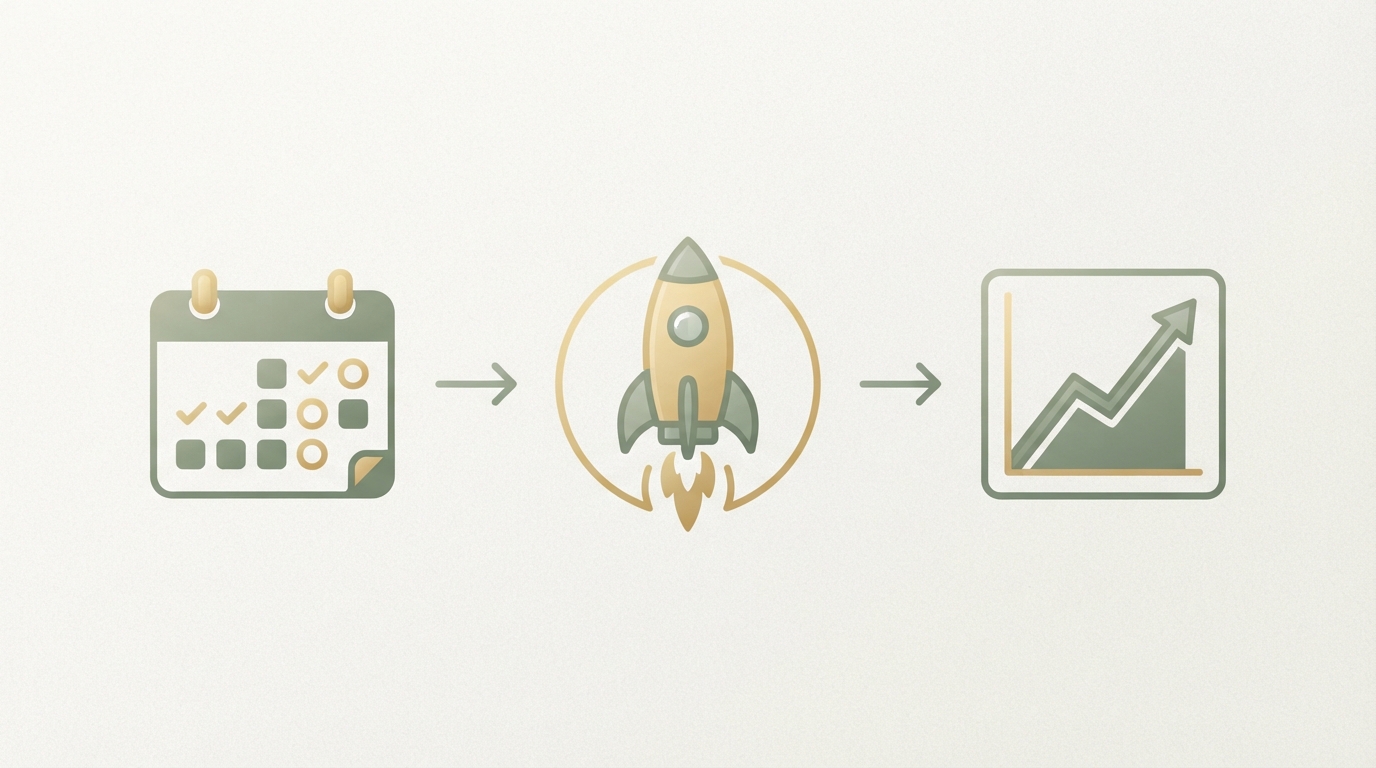
Planning launch day: step by step
Step 1: Pick the right date
A good launch day usually falls on a Tuesday, Wednesday, or Thursday, since fewer active users are around on weekends and Mondays. Product Hunt resets the leaderboard at midnight Pacific Time — 9am German summer time, or 8am in winter. From that point on launch day, your team should be online and ready to reply to comments and gather early upvotes. It's also worth keeping an eye on major holidays or conferences like SaaStr, so you can avoid weeks when a lot of other tools are launching and competing for the same attention.
Step 2: Prepare your maker profile and assets
Your Product Hunt profile should already be active weeks before the launch, with genuine comments on other products — not just an empty account that suddenly shows up out of nowhere. Alongside that, you need your actual launch assets: a gallery image or short video that shows what your tool does in seconds, a punchy tagline under 60 characters, and an initial description that clearly states the problem and the solution. A tool that can be understood in three seconds will almost always get more upvotes on Product Hunt than one that needs explaining.
Step 3: Activate your community and supporters
It helps to build a network of supporters ahead of time — people who won't just hit the upvote button on launch day, but actually leave comments too. These can be existing users, people from your network, or other makers you support in return. Important: don't send mass DMs saying "please upvote" — the community spots that instantly and it comes across as dishonest. A better approach is a personal message that briefly explains why the product might be relevant to that person. If you've ever done cold email outreach, you know the principle: personalized messages beat any mass campaign.
Step 4: Prepare content for launch day
Write your comments, answers to common questions, and social media posts ahead of time, so you're not improvising on the day itself. Many makers also use launch day to share a story on LinkedIn or Twitter/X about why they built the product. Important: you should already have a clear idea of who your target audience actually is, because a launch post that's too broadly worded won't really reach anyone. The more clearly you know who's supposed to buy your product, the sharper your messaging can be on launch day too.
Step 5: Execute launch day itself
On the day itself, you really only need three things: fast replies to every comment, an active presence in the communities you were already part of beforehand, and patience. The Product Hunt leaderboard shifts throughout the day — products from the US often overtake others only in the afternoon German time, simply because that's when morning starts over there. Stay reachable, thank people for their feedback, and respond to critical comments with kindness rather than defensiveness.
After the launch: what actually matters
The real value of a launch often only becomes clear in the days that follow. Visitors who show up on launch day are usually curious, but not yet ready to buy. This is where it's decided whether that traffic turns into real users.
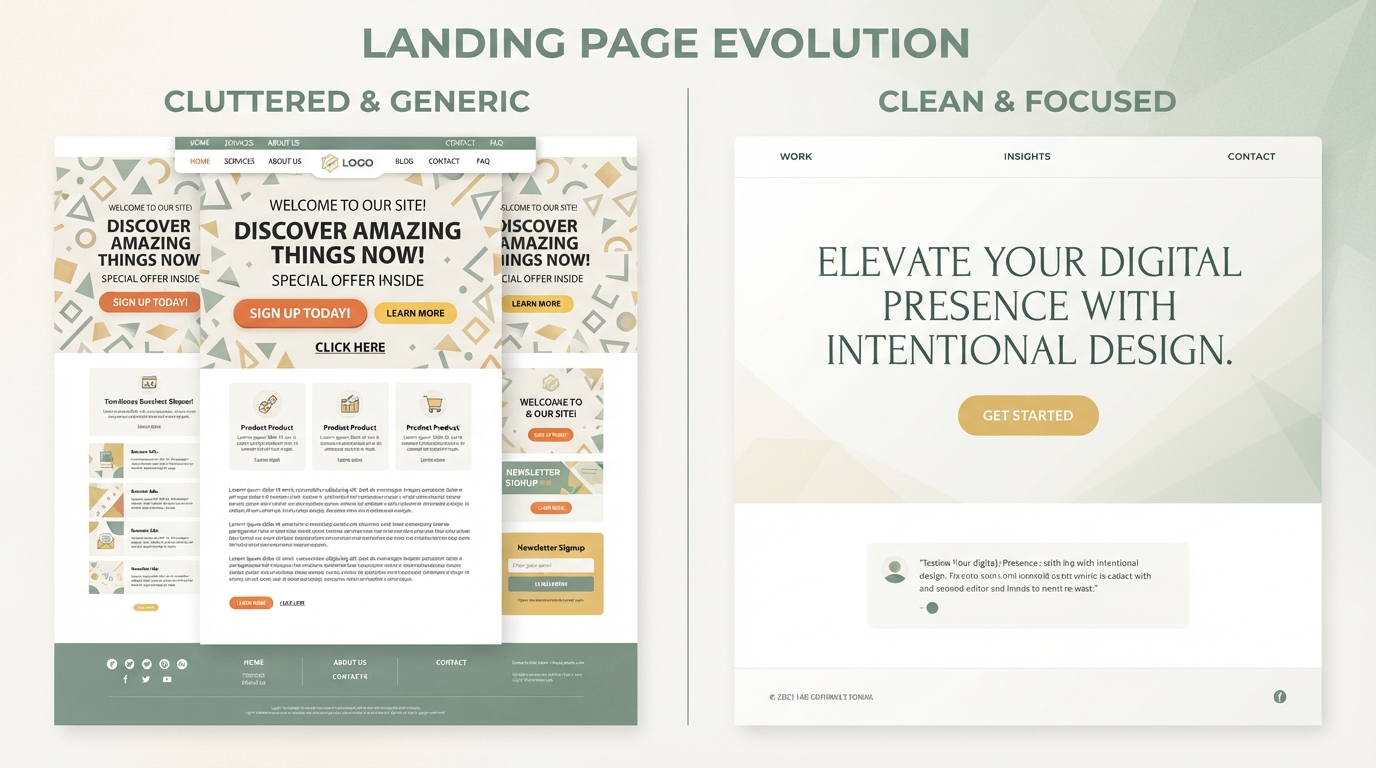
Look at how many visitors sign up, and how many of those actually become active. If a lot of people show up but hardly anyone converts, the problem usually isn't the launch itself — it's the landing page or the onboarding afterward. A launch can go as well as it possibly can: if the page behind it doesn't convince people, a huge chunk of that impact just evaporates.
The most common Product Hunt launch mistakes
The biggest mistake is treating the launch as a one-off event instead of a process. If you only start activating your network on launch day, you're already too late. A few other mistakes I keep seeing:
- Not enough prep on onboarding. When hundreds of new visitors arrive at once and the app doesn't explain what it's for, a lot of them bounce right away.
- No clear positioning. If nobody can understand what your tool does and who it's for within five seconds, even the best launch day won't help much.
- Mass DMs instead of real conversations. This almost always comes across as dishonest on Product Hunt, and can even cost you upvotes if the community notices.
- Server issues on launch day. Sounds trivial, but it happens a lot: the site isn't prepared for a sudden traffic spike and loads slowly or not at all.
- No follow-up. Launch day ends, and nobody checks in on what happens to the new users.
Examples: how real SaaS tools have grown
Some tools use Product Hunt as just one of several channels and actually build their growth through other paths. One example is Vector, a tool that identifies anonymous website visitors and lets B2B marketers reach out to them directly.
With an estimated roughly 99,156 monthly visits and an estimated MRR of about $1.16 million, Vector shows that while a launch day can generate attention, real growth usually comes from a longer stretch of repeated marketing, content, and outreach. Another example is Diode, a platform for PCB design.
With an estimated roughly 142,243 monthly visits, Diode shows that even technical niche products can build significant reach when the positioning is right. These figures are estimates from our research database, not official company numbers.
As for the SEO effect of a launch, I'll be honest — I'm skeptical. You'll almost always pick up a few backlinks from aggregator sites, but I think that gets massively overrated. If you want to be found on Google long-term, you need your own content and keyword strategy, not just hoping for side effects from one good day.
Just as important: before you even launch, you need to know who's supposed to buy your product. A launch without a clear target audience brings plenty of upvotes but few paying customers. The article Defining Your Target Audience: The Mistake That Costs You Customers can help you sort that out before launch day, not after.
Product Hunt launch vs. other launch channels compared
A SaaS launch can run across multiple channels. Product Hunt is one of them, but not the only one worth doing.
| Channel | Reach | Effort | Typical audience |
|---|---|---|---|
| Product Hunt | High short-term, one to two days | Medium, needs a lot of prep | Early adopters, makers, tech-savvy users |
| Reddit/communities | Medium, spread over weeks | Low to medium, ongoing | Niche audience with a specific problem |
| LinkedIn outreach | Targeted, builds slowly | High, individual outreach | B2B decision-makers |
| Cold email | Targeted, plannable | High, individual outreach | Specific target customers |
| SEO/organic traffic | Long-term, grows over time | High, but sustainable | People with a specific search intent |
A combination usually works best. A Product Hunt launch can bring short-term attention and early users, while LinkedIn outreach and SEO can deliver stable traffic long-term. If you rely solely on that one big launch day, you're building your growth on shaky ground.
Starting your launch with a clear idea
Before you even think about assets, dates, or community, you need a product that solves a real problem. Many founders start prepping their launch before they've actually validated whether enough people want the product. Rob Walling describes exactly this pattern in his work on bootstrapping: talk to real potential customers early, rather than spending months building features nobody ends up needing.
If you're still looking for an idea to launch on Product Hunt yourself, it's worth looking at niches with genuine demand instead of just chasing the next trend. That's exactly why we built Starte.ai: a research base where you can see which micro-SaaS ideas already have users and revenue, before you write a single line of code.
A Product Hunt launch can be a great day, but it's only as good as the weeks before and after it. If you take your network, assets, and follow-up seriously, you've got a much better shot than someone who just hits a button and hopes for the best.
Frequently asked
When should you launch on Product Hunt?
The best days to launch are Tuesday, Wednesday, or Thursday, since fewer active users are around on weekends and Mondays. The leaderboard resets at midnight Pacific Time, which is 9am German summer time. It's also worth watching out for major holidays or conferences so you're not competing for attention against a lot of other launches at once.
How do you prepare for a Product Hunt launch?
Preparation starts weeks in advance: your maker profile should already be active, and you should be commenting on and upvoting other products to build social proof. At the same time, you need your launch assets ready — a gallery image, a punchy tagline, and a clear description. You should also build a list of genuine supporters who'll show up for you on launch day.
How many upvotes do you need for a good Product Hunt launch?
There's no fixed number, because the first few hours of the day are decisive and the algorithm weighs early engagement heavily. A niche tool for compliance teams often gets fewer upvotes than a new note-taking app, but can still bring in higher-quality leads. What matters more than the raw number is how well the quality of your visitors matches your product.
What are the biggest mistakes people make with a Product Hunt launch?
The biggest mistake is treating the launch as a one-off event instead of a process that plays out over weeks. On top of that, there's often too little prep on onboarding, unclear positioning, and mass DMs asking for upvotes, which comes across as dishonest to the community. Follow-up is often forgotten too, even though that's what determines whether traffic turns into real users.
Written by
Bohdan BernatekFounder, Starte.ai
Founder of Starte.ai. Built a business to 125,000+ organic leads and seven-figure revenue — and now works with founders personally, deriving a strategy for their own brand from data across thousands of real projects and producing the creatives for it.