"""
What is sales psychology for founders, really?
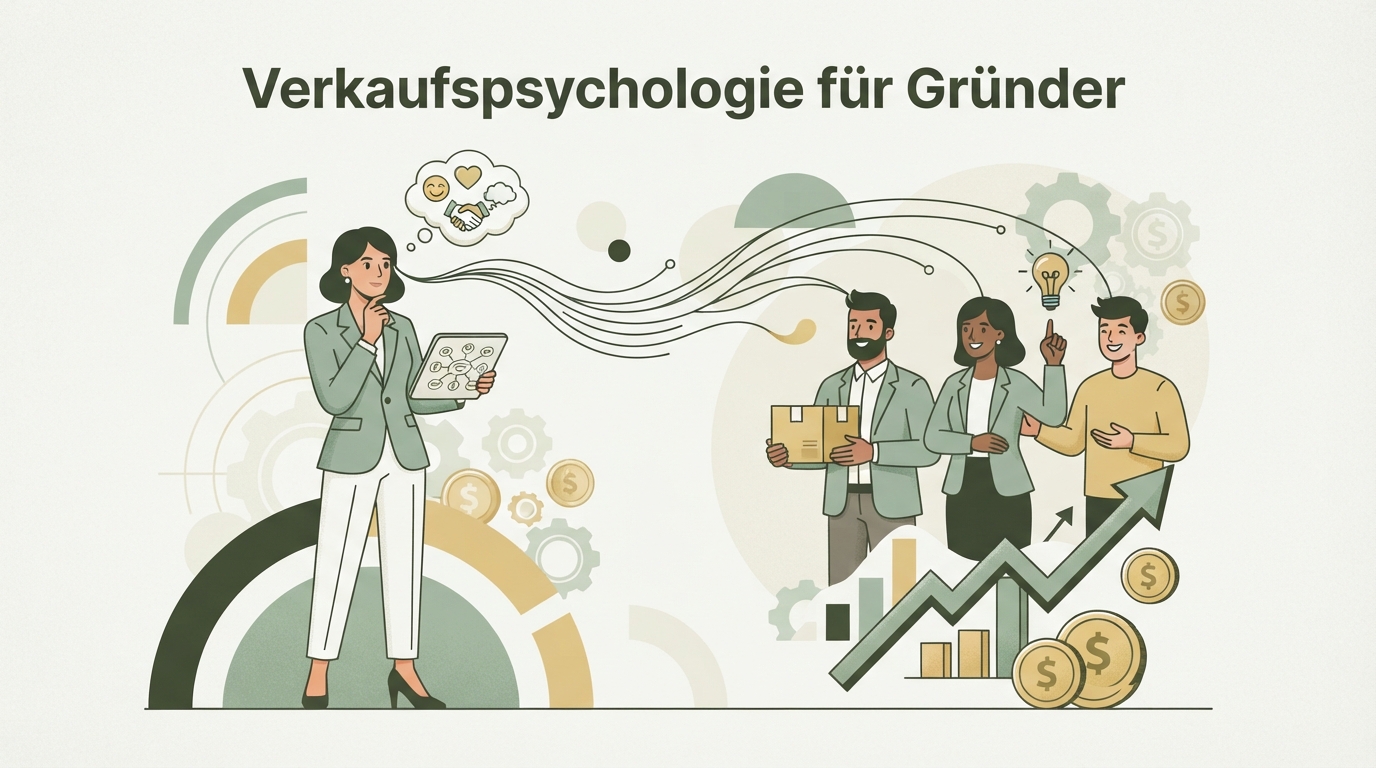
Sales psychology for founders comes down to this: your core message has to land emotionally before the facts kick in, because people decide intuitively and only look for reasons afterward to justify that decision to themselves.
For you as a founder, that means: if your landing page just lists facts without triggering any feeling — relief, curiosity, or that "finally, someone gets it" moment — you're only selling to people who were already convinced. Everyone else keeps scrolling.
I went through this myself. My first landing page was a checklist of features, with built-in analytics explained in a sentence I thought was pretty clever. The conversion rate sat well below what's typical for the industry. It wasn't until I ripped out the checklist and replaced it with a single sentence that said exactly what the tool does for the user that signups noticeably picked up. Not because I got smarter. Because I stopped stacking arguments and started speaking to a feeling.
Why feeling comes before argument
That doesn't mean facts don't matter. They just come second. Feeling first, then confirmation. People decide intuitively and then search for reasons that justify the decision — to themselves and to others.
One core message beats ten promises
A credible core message convinces more reliably than a long list of promises. This is one of the things I underestimated the most. A lot of founders try to speak to every possible need at once: faster, cheaper, easier, safer, smarter. In the end nothing sticks, because nothing is concrete enough.
Pick one single statement instead — one that's true and that you can back up. Not ten half-baked ones. If your tool genuinely nails one task, say exactly that. Be concrete, use an example, use a number if you can. "We save you time on bookkeeping" is weak. "Enter your receipts once, the tool handles the rest" is concrete and verifiable.
Patrick McKenzie (known as patio11) has written for years, in essence, along these lines in his work on pricing and positioning: customers don't buy a feature list, they buy the solution to a problem they're feeling right now. That's not a direct quote — more my own summary of something that keeps coming through in his writing. The more clearly you name that one problem, the more credible you come across, even without overselling.
A good example of this would be technical B2B products that could easily need ten pieces of jargon to explain themselves, yet stick to one simple sentence instead: input X goes in, finished result Y comes out. That's a statement people remember and can pass on to a colleague in a single sentence, even if that colleague has never heard of the product before.
That's the real test for your own core message: can a user repeat it in one sentence?
Psychological triggers that actually work (and where the line is)
Psychological triggers like social proof, scarcity, or authority work not because they're tricks, but because they tap into real human patterns. The difference between sales psychology and manipulation isn't the technique — it's whether what you're showing is actually true.
A few triggers that are realistic for founders in German-speaking markets to use:
- Social proof: Real user numbers, real quotes, real screenshots. No invented testimonials.
- Authority: Show that you understand the problem — for example, through a blog post that explains the niche better than the competition does.
- Loss aversion: People fear a loss more strongly than they enjoy an equivalent gain. Show what's lost in time or nerves without a solution, instead of just listing benefits.
- Reciprocity: Give something useful first, before you ask for anything. A free guide, an honest answer in a forum, a tool people can try without signing up.
Where the line sits: the moment you invent a number, artificially shorten a deadline ("today only," when the same offer holds tomorrow too), or make up a testimonial, you've left sales psychology behind and entered deception. In Germany, that can also cause problems under competition law (UWG). Stick to what you can actually back up.
Convincing without pressure: why it works better
Convincing without pressure means leaving the prospect in control of their own decision instead of pushing them toward one. Sounds paradoxical, but that's exactly what builds more trust — and, in the end, often more closed deals.
If you respond to every objection with "but you'll miss out on...," people feel the pressure immediately. People don't like buying from someone who clearly needs the sale. They'd rather buy from someone who comes across as confident and shows them: you can say no, and that's fine.
One concept that fits well here comes from content marketing, best translated as "stealth selling": you mention your product as one of several helpful options within genuinely useful content, instead of presenting it as the main pitch. If you give an honest answer to a problem in a Reddit thread, for instance, and mention your tool as just one possible option, that comes across as far more credible than a blunt ad. People buy out of curiosity, not under pressure.
Help first, sell second. That's really the core of reciprocity as a principle — not as a trick.
For more on how to actually figure out what your target audience is searching for before you write a single line of ad copy, check out our article on validating SaaS ideas.
Addressing objections before they come up, instead of fighting them afterward
The strongest sales technique is often addressing the objection yourself before the prospect voices it. That takes away their need to get defensive.
This plays out a specific way with B2B products: even an affordably priced tool will still constantly run into the objection "too expensive." A discount is rarely the fix. What usually helps more is laying out, right there on the page, what the actual problem costs without a solution — in lost time or missed deals, for instance — which is usually far more than what the tool costs per year. The objection doesn't disappear because the product gets cheaper; it disappears because the point of comparison shifts.
When the objection is "sounds complicated, I don't have time to learn a new tool," an extra feature rarely helps — if anything, it makes things worse. What often works instead: a single screenshot of the first step, right under the headline, with no explanatory text around it. Sometimes the best answer to "too complicated" isn't an answer in words at all.
And then there are the cases where people are simply unsure because they don't know you. No clever sentence fixes that — only time and real references you can show. Some objections can't be written away; you just have to sit with them and answer with substance.
Using sales psychology on your pricing and landing pages
Your pricing page and landing page are where sales psychology works most directly, because that's where the actual decision gets made. Two things matter most here: the order of information, and how honest the presentation is.
People don't read a landing page top to bottom like a book. They scan. The feeling has to come first — right at the top, in the headline and the first sentence. The rational backup — numbers, comparisons, FAQ — comes further down, for people who are already convinced and just want to clear up one last bit of doubt.
Sales psychology also plays a role in pricing itself, for instance in how you name and tier your plans.
Two real examples: what triggers are actually at play
Trust is often an even bigger issue with B2B products, since larger sums and more people are usually involved.
SnapTrade connects fintech apps to brokerage accounts for real-time portfolio data — a space where trust is everything. The psychological trigger the site leans on is mainly loss aversion, but flipped around: instead of pitching features, it puts security and loss of control front and center — what's at stake in a data breach or unauthorized access. On top of that comes authority through technical clarity: exactly what happens to the data, who has access, what kicks in if something goes wrong — the page answers all of that directly, no detours. That combination of risk framing and technical transparency is the real trust mechanism here, not a marketing promise.
Vector identifies anonymous website visitors and makes them addressable for B2B marketing. Because the product works with data about other people, its messaging leans heavily on authority and clarity rather than scarcity or urgency — a trigger that would come across as unsettling rather than convincing here. The positioning shows exactly what problem gets solved and how, without exaggeration, which builds more trust on a sensitive data topic than a flashy promise ever could.
Building trust before you ever sell
Trust is usually built long before someone even sees your pricing page — often through content you published well before that. If someone's already read several useful articles from you before landing on your page, half the convincing is already done.
That's exactly what Paul Graham describes in his well-known essay "Do Things That Don't Scale": in the early stages, it's worth helping individual users manually and personally, even if it doesn't scale. That builds a level of trust no ad can replace.
A newsletter can help here too, since it lets you build a relationship over time instead of relying on a single sales moment.
The biggest mistake: promising too much, too early
The biggest mistake in sales psychology for founders is promising too much early in the conversation just to win someone over fast. It feels like a good strategy in the moment, because the reaction is immediately positive. The problem shows up later: when the product doesn't deliver on the promise, the loss of trust is bigger than the original doubt ever was.
I see this a lot with founders under pressure to show quick results. They start saying things like "this solves your problem completely" or "this will definitely save you time." That might work short-term. Long-term, you pay for it with customers who end up disappointed — and who talk about it, especially in small niche markets where word gets around about who actually delivers.
It's better to be upfront about what the product can do and what it can't. Rob Walling, known for his work on bootstrapping, often frames this as a core principle of sustainable SaaS businesses: customers who know exactly what they're getting stick around longer and cancel less often out of disappointment.
If you're just getting started, you don't need an elaborate sales strategy. You need one true statement — and the discipline to leave the rest out. If you want to systematically figure out which problem actually hurts for your target audience before you even build a landing page, that's exactly the point where I'd reach for Starte.ai. """
Frequently asked
What does sales psychology for founders mean?
It means customers decide emotionally first and then look for reasons that justify that decision. A feature list alone rarely convinces anyone; a sentence that triggers a feeling like relief or curiosity is far more likely to. Facts come second, as confirmation.
Why do so many landing pages fail even when every fact on them is accurate?
Because they just stack arguments instead of speaking to a feeling. Listing nothing but checkmarks and features mostly convinces people who were already decided — everyone else keeps scrolling. A single clear core message that's concrete and provable usually works better than ten half-baked promises.
What psychological triggers can I use as a founder without crossing a line?
Social proof with real numbers and quotes, authority through genuine niche expertise, loss aversion by showing what's lost rather than just the benefits, and reciprocity by giving something useful first. The key is that everything has to be true and provable — otherwise psychology quickly turns into deception, which in Germany can also run into problems under competition law (UWG).
How do I convince customers without applying pressure?
By leaving the prospect in control of their own decision instead of pushing them, rather than reaching for lines like "but you'll miss out on...". Concepts like "stealth selling" show that mentioning a product as one of several helpful options within genuine content feels more credible than a straightforward ad. Addressing objections before they come up, rather than fighting them afterward, also keeps the other person from getting defensive.
Written by
Bohdan BernatekFounder, Starte.ai
Founder of Starte.ai. Built a business to 125,000+ organic leads and seven-figure revenue — and now works with founders personally, deriving a strategy for their own brand from data across thousands of real projects and producing the creatives for it.