Testing Ads: The Right Structure
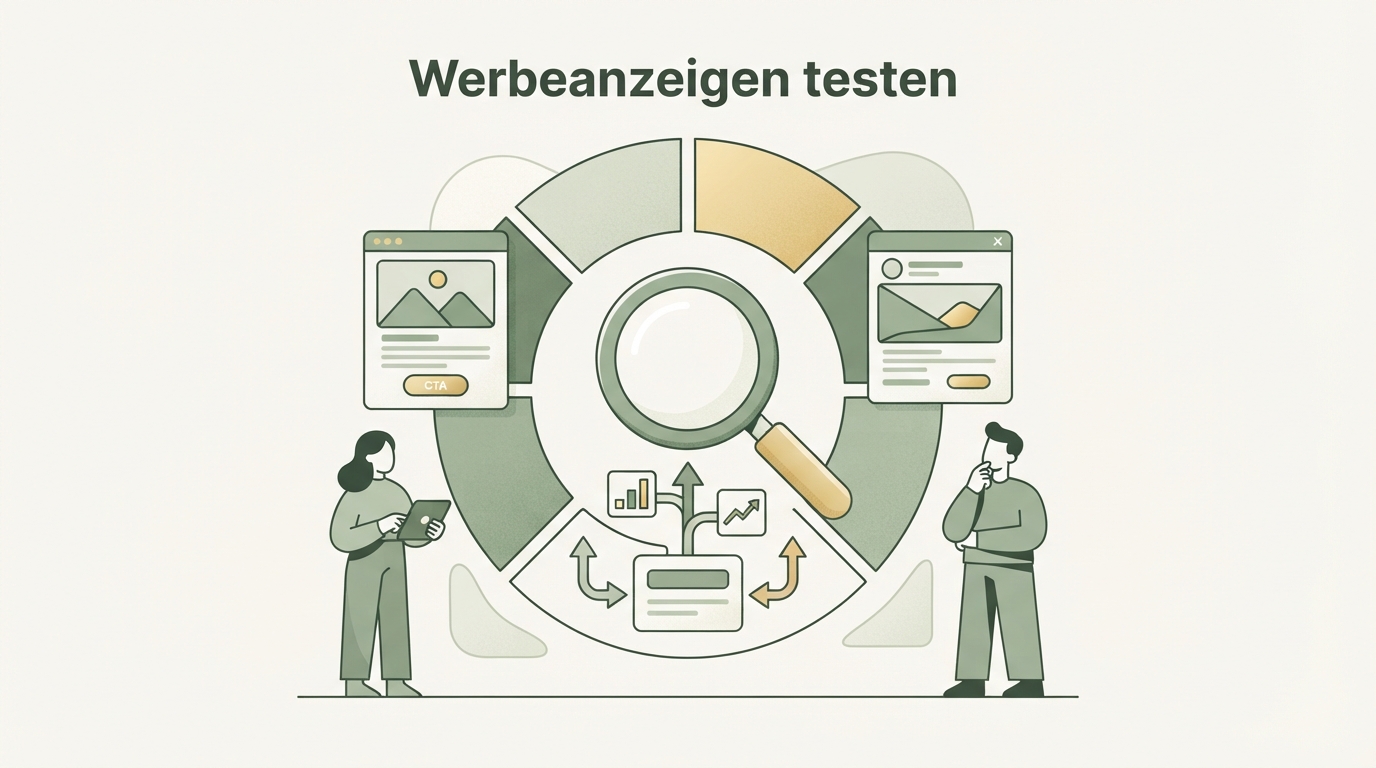
Testing ads means: change one variable per test, hook first, then bridge, then image, then audience. Everything else is noise. Sounds simple, but most founders ignore exactly this.
You have an idea for a new ad. New hook, new copy, new image, new audience. All launched at once. The ad flops, and now you don't know which of the four things sank it. So you sit there, stare at the numbers, and guess. That's not science, that's gambling with your ad budget.
Step 1: Pick your baseline (your best ad so far)
Before you test anything, you need a starting point. That's the ad that's performed best so far. Not the newest one, not your favorite — the one with the best numbers.
Screenshot it. Write down the metrics: click-through rate, conversion rate, cost per lead, everything. That's your baseline.
Why? Because now you know where you're starting from. If your next test performs worse, it was a bad idea. If it performs better, you've learned something.
People who skip this keep changing everything and don't notice they already had better ads. They forget where they started.
Step 2: Testing ads — hook or bridge first, not the image
Here's the mistake I see everywhere: founders test the image first.
They think the visual is the most important part. New image, new color, new person in the photo. Nothing changes, and they're confused.
That's wrong.
The hook — the first line someone sees — is the only thing that decides whether they click or not. The image is secondary. If the hook doesn't work, nobody lands on your page, no matter how good the image is.
So: test the hook first. Change only the first line, keep everything else the same.
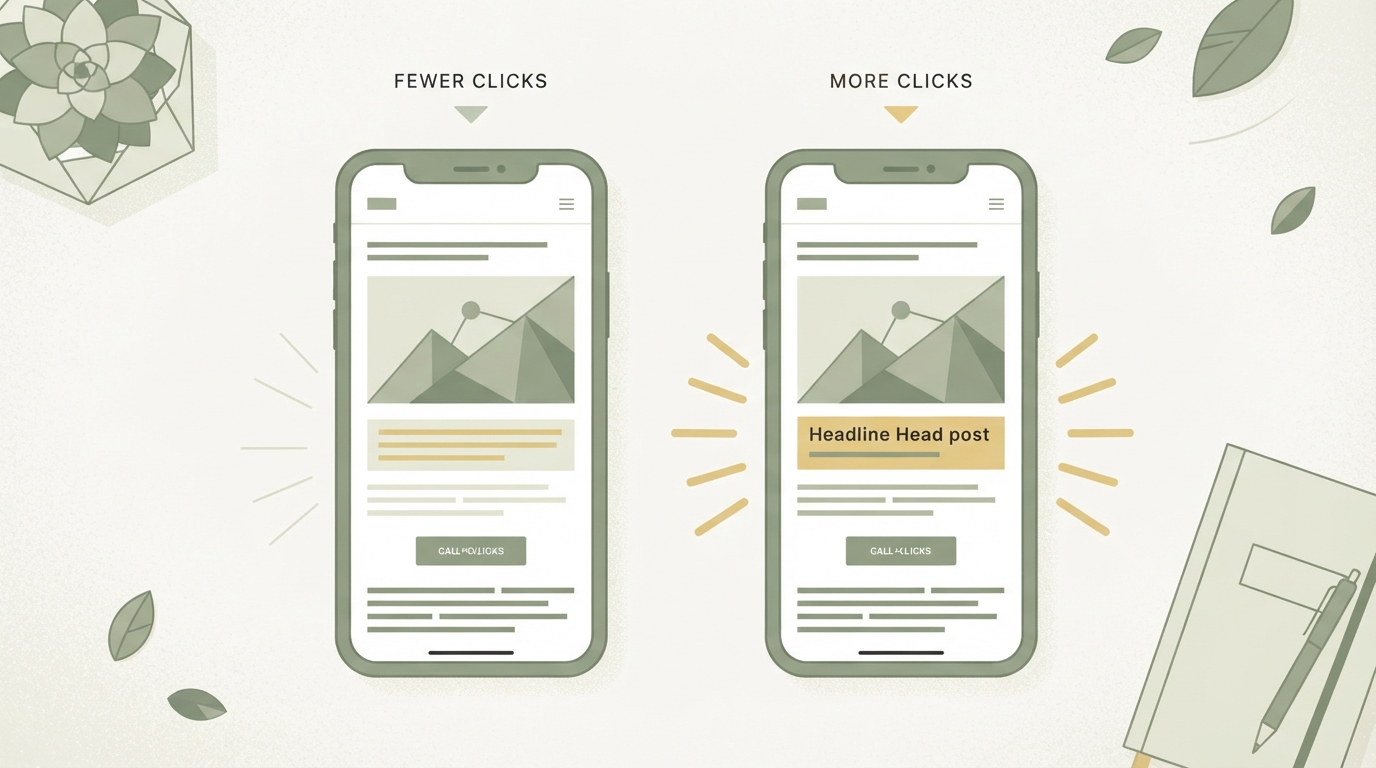
A real-world example: two ads, same image, same body copy. One hook says: "Why most SaaS founders go broke." The other: "SaaS founders: the numbers you need to know." The first got an estimated 60% more clicks. Why? Because it hits a pain point. The second only sparks curiosity.
If your hook tests do well, test the bridge (the second line, which makes the problem concrete). Then comes the image.
Always: Hook → Bridge → Image → Audience.
Step 3: A/B testing ads — but structured properly
You've picked a hook. Now you test two versions of it.
That's a real A/B test for ads: Variant A vs. Variant B, everything else identical.
A lot of people get this wrong. They create Ad A and Ad B, run them, wait a week, look at the numbers. Done.
The problem: a week is often not enough. If you're only getting 100 clicks a day, 700 clicks a week isn't enough for a statistically solid result. You need roughly 500 to 1,000 conversions per variant before you have a real signal.
How long does that take? Depends on your budget. Some get there in 3 days, others need 3 weeks.
There's a rule of thumb: don't end the test until one variant is ahead with at least 95% confidence — meaning the gap is big enough that it can't just be chance.
Every test series follows the same logic: one variable, two variants, one clear metric. The table below shows which elements to test in which order, and how long a meaningful test typically takes.
| Element | What's tested | Example | Duration |
|---|---|---|---|
| Hook | First line | "Why…" vs. "Most…" | 3–7 days |
| Bridge | Second line | Specific problem vs. general | 3–7 days |
| Image | Visual | Person vs. screenshot vs. graphic | 5–10 days |
| Audience | Targeting | Age 25–40 vs. 35–55 | 7–14 days |
After each test: note the winner. That becomes your new baseline.
Step 4: Optimizing ads through iteration
You won a test. Hook A beat Hook B.
Now Hook A becomes the baseline, and you test Hook A against Hook C.
The pattern is clear: every winning ad becomes the opponent for the next test. This is called continuous optimization — not rewriting everything overnight, but slowly getting better, step by step.
Many founders run all their ad tests at once, tests 1 through 5 in parallel. I've done this myself, and it cost me weeks of learning time, because in the end I no longer knew which variable had caused which difference. That's fine if you have enough budget, but then you can't just mash all the winning combinations together afterward — that's guessing again, not testing.
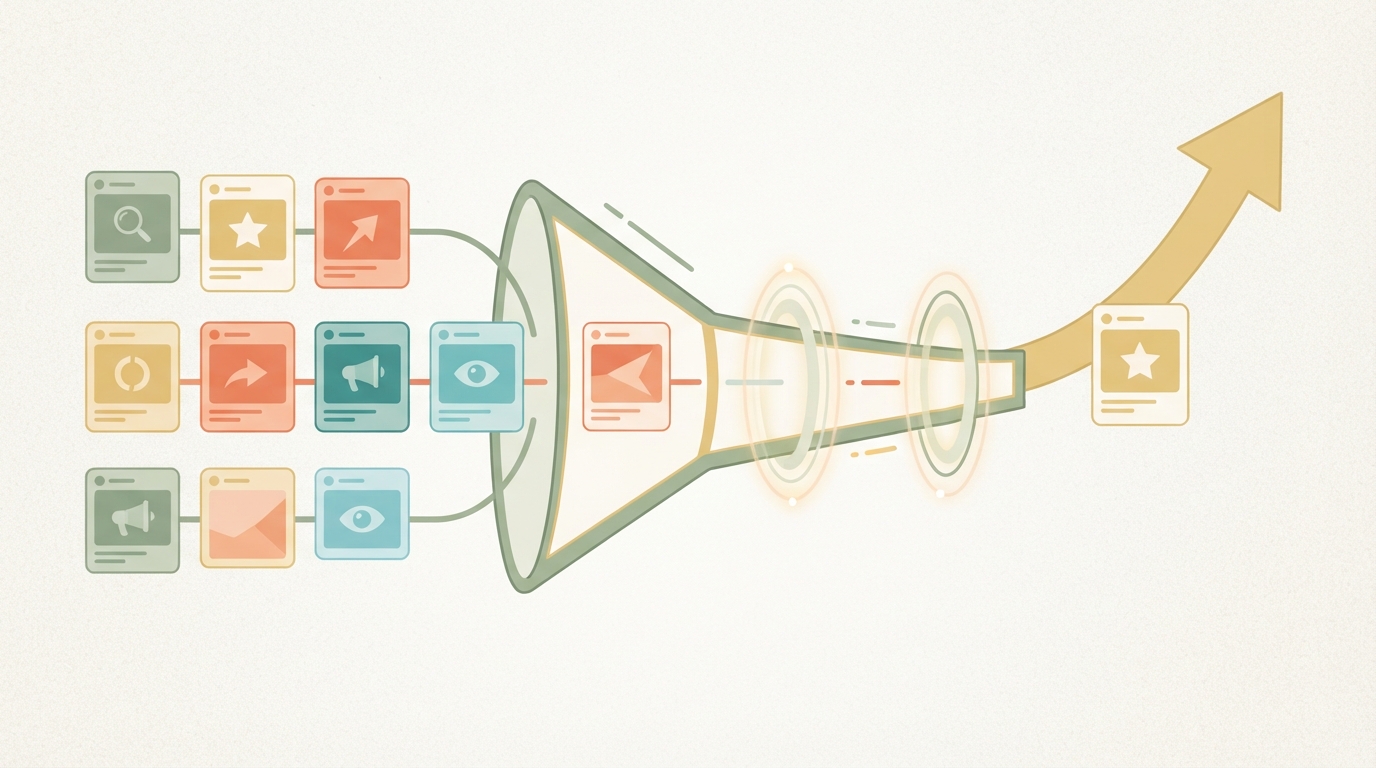
What I keep seeing: people test for a week, pick the best ad, and then find out two weeks later it's stopped working. That's normal. Algorithms change. People see ads more often and start tuning them out. So you test again.
That's not a failure. That's the business.
When to stop a test
Sometimes an ad just doesn't work.
Rule: if the click-through rate is below 0.5% or the conversion rate is below 0.1% after a week, pause it. Don't keep waiting forever hoping it'll improve.
Second rule: don't stop a test that hasn't run long enough. A B2B ad (longer sales cycle) needs more time than one for a consumer product. An ad with a smaller budget needs more time than one with a bigger budget.
Typical: pause after 7 days or after at least 500 interactions, whichever comes first.
When you pause an ad, write down why. What didn't work? Was it the hook? The image? The audience? That way you learn from the failure instead of just throwing out a new ad and hoping again.
That's the difference between founders who keep improving and those who keep making the same mistakes.
Why most founders fail at testing ads
I see this constantly: someone runs a test, checks the numbers after two days, and already draws conclusions.
Or: they test five things at once and end up not knowing what worked.
Or: they test, win with Ad A, then make three changes to it, and wonder why it stops working. I did exactly the same thing at the start — I thought I was optimizing, but really I was just creating chaos and wondering why the numbers didn't add up.
It's not malicious. It's just that nobody has patience. Founders want fast results. But proper testing is slow. Fast and wrong is more expensive than slow and right — I learned that the hard way.
Some people prefer to look at competitors' ads instead, to see what's working, rather than testing it themselves. That's not wrong, it's faster. But it's risky, because competitors' ads might be running in a different market, with different audiences, at different prices.
Better: learn from them, but test yourself.
A real example
One more case from real work: a B2B client with a compliance SaaS. The first hook was: "Most companies violate data privacy rules every day."
Click-through rate: an estimated 1.2%. Not bad.
Next we tested Hook 2: "Data privacy checkup: what your company is missing."
Click-through rate came in at an estimated 2.1%. Winner.
Next, Hook 3: "We've done 500 compliance audits. The results are scary."
Here the click-through rate dropped to an estimated 1.8%. Lost against Hook 2.
Could we have said: "Okay, Hook 2 is perfect, done"? Instead, we tested the bridge.
Hook 2 (winner), old bridge: "Find your risk areas in 10 minutes."
Hook 2, new bridge: "Find the compliance mistakes that could cost you big, in 10 minutes."
That pushed the click-through rate up to an estimated 2.6%. Even better.
Finally, we tested the image (software screenshot vs. graphical chart). The screenshot won.
End result: Hook 2 + new bridge + screenshot came out to an estimated +120% compared to the original ad.
That was only possible because we tested one thing at a time, not everything at once.
This exact process — find an idea, test it, scale it — is what we help with at Starte.ai, backed by real market data from an estimated 350+ projects we've built. Not as theory, but as a concrete next step. The first strategy call is free, and you can also jump in for free right away to see what could work for your market right now.
Practical checklist for your next tests
Before you launch a new ad:
- Note your baseline: Which is your best ad so far? Write down the numbers.
- Pick one variable: Hook, bridge, image, or audience — just one.
- Create a variant: Change only that one thing. Everything else stays identical to the baseline.
- Run it for at least 3–7 days: Depending on budget and traffic volume.
- Reach statistical significance: At least 500 interactions per variant before deciding.
- Note the winner: What worked better, and why?
- Set a new baseline: The winner becomes the baseline for the next test.
- Repeat: Test 2, test 3, test 4 — keep going until you know which combination truly works in your market. This never fully ends, because algorithms and audiences keep changing. But over time, you'll get much faster at separating signal from noise.
The key takeaway: creative testing isn't complicated, but it is slow. It takes patience, structure, and honesty with your numbers. Most founders aren't untalented — they're just too fast. They don't test properly, and then they wonder why their ads don't work.
Once you start testing one variable at a time, you'll be surprised how much your campaigns can improve over time. Not because you suddenly got more talented. But because you're finally seeing what actually works.
Frequently asked
How many variables should I change at once in an ad test?
You should always change just one variable per test — for example, only the hook, only the image, or only the audience. If you change several things at once and the ad doesn't work, you won't know what the problem was. That's the only way to get a clear signal about what actually works.
What should I test first in an ad: the image or the copy?
Test the hook first — the first line of your ad — not the image. The hook decides whether someone clicks at all; a beautiful image won't help if the first line doesn't grab anyone. The recommended order is: hook → bridge → image → audience.
How long should an A/B test for ads run?
An A/B test should run at least until you've collected around 500 to 1,000 conversions per variant — only then is the result statistically solid. As a rule of thumb: don't end the test until one variant is ahead with at least 95% confidence, meaning it's no longer likely to be chance. Exactly how many days that takes depends on your budget and audience.
When should I stop an ad test?
Pause an ad if, after seven days, it has a click-through rate below 0.5% or a conversion rate below 0.1% — waiting longer rarely changes that. But don't stop too early either: B2B ads or campaigns with small budgets simply need more time than consumer products with big budgets. It's important to note down why an ad didn't work after every pause, so you can learn from it for the next test.
Written by
Bohdan BernatekFounder, Starte.ai
Founder of Starte.ai. Built a business to 125,000+ organic leads and seven-figure revenue — and now works with founders personally, deriving a strategy for their own brand from data across thousands of real projects and producing the creatives for it.